| Features |
|
Competitor 1 | Competitor 2 | Competitor 3 |
|---|---|---|---|---|
| Michigan Approved | Yes | Yes | Yes | |
| Virtual Instructor | No | No | No | |
| Modern Content | Sometimes | No | Sometimes | |
| Hands-On Learning | No | No | No | |
| Mobile-Friendly | Partially | Yes | No | |
| Self Paced | Minimum time requirements | Minimum time requirements | Minimum time requirements | |
| Free Year of Wavve! |
|
No | No | No |
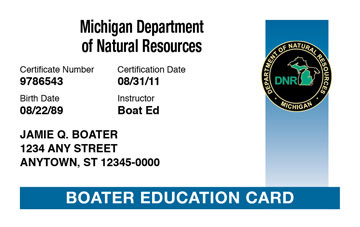
In Michigan, you must complete a Michigan DNR-approved boating safety course and earn a boating safety certificate to operate certain motorized vessels legally. Michigan does not issue a traditional “boating license,” but it does require boater education, and completion of an approved course results in a boating safety certificate that must be carried on board when required.
State law sets age- and engine-specific requirements:
- Born on or after July 1, 1996: Must have a boating safety certificate to operate a boat with a motor over 6 hp.
- Under 12 years of age: May operate a boat powered by 6 hp or less without restrictions. May operate a boat powered by more than 6 hp up to 35 hp only if they have a boating safety certificate and are supervised by someone at least 16 years old. May not operate boats over 35 hp under any circumstances.
For personal watercraft (PWC) such as jet skis:
- Under 14 may not operate a PWC.
- Ages 14-15 may operate a PWC with a boating safety certificate and must be accompanied on board by a parent/legal guardian or designated adult at least 21 years old, or within 100 feet of that adult.
- Those 16 and older born after December 31, 1978, must have a boating safety certificate to operate a PWC.
- Those born on or before December 31, 1978, may operate a PWC without a boating safety certificate.
Operators required to hold a boating safety certificate must carry it on board when operating a vessel and present it to law enforcement upon request.
You can earn your Michigan boating safety certificate by completing a Michigan DNR-approved boating safety education course and passing the course exam. Approved courses include:
-
Virtual / Interactive Course:
This format lets you complete the Michigan boating education requirement using interactive lessons and approved online materials. Upon successful completion, you receive your boating safety certificate, which you must have in your possession when operating vessels under the requirements above. -
Classroom Course:
Michigan also authorizes in-person classroom boating safety courses taught by approved instructors. These cover state boating laws, navigation rules, safety practices, and other key topics. Upon successful completion, participants receive their boating safety certificate.
Certificates issued under Michigan’s requirements do not expire and do not require renewal.
Michigan’s boating safety certificate is recognized by many other states that follow NASBLA standards, and Michigan also accepts NASBLA-approved certificates from other states for compliance on Michigan waters. Boaters should always verify the requirements of the state they plan to visit before boating there.
Boat-Ed+ is produced by Kalkomey Enterprises, LLC. Kalkomey is dedicated to providing print and online boating education courses for North American boaters in Canada and the United States. Boat-Ed is the only boating safety education course and exam provider that develops online courses, eBooks, and print materials on behalf of government boating and boater safety agencies in North America. Completing your Michigan boating safety course through Boat-Ed+ ensures you receive a DNR-approved, NASBLA-compliant education that meets all state requirements for earning your Boating Safety Certificate.
Michigan Department of Natural Resources
P.O. Box 30028, Lansing, MI 48909
Made in the U.S.A.
This safety course is proudly made to serve students, agencies, and organizations worldwide.
Is it the Boating safety license?
Boating safety education certification is not the same thing as a Boating license.
What you really need is the Boating Safety Education Certificate.
You can get the
Boating Safety Education Certificate
by taking this boat safety course
at boat-ed.com.
Find out if you need the card.
Did you lose your card? Replace it here.
GET CERTIFIED
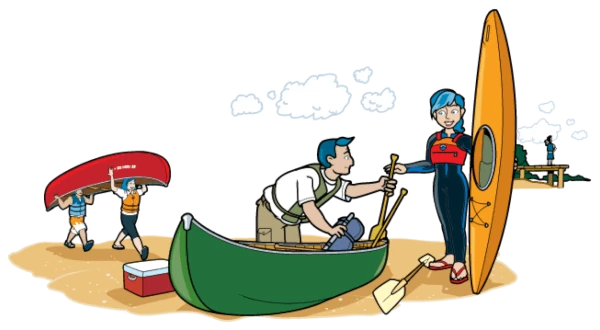
You can take a free, NASBLA-sanctioned paddling safety course to learn safe practices for non-motorized crafts such as canoes, kayaks, and paddleboards. This course focuses on paddlesports safety but does not replace Michigan’s boating safety certificate requirement when operating motorized vessels.
Protect your on-water adventures
Relaxing on the water is easy when you’re protected with a leader in boat insurance. Progressive has the coverages you need to explore carefree and full of adventure! Discover how we can protect your boat today with coverage we offer to the 1 million+ watercraft we already insure.
Get a Quote
Michigan’s waterways are a boater’s paradise, featuring four of the five Great Lakes, inland lakes, rivers, and protected bays that offer diverse boating experiences. With thousands of miles of freshwater shoreline and over 11,000 lakes, Michigan supports recreation for powerboaters, sailors, anglers, paddlecraft enthusiasts, and families alike.
Popular Boating Locations
Grand Haven (Lake Michigan)
Offers scenic coastal boating, beaches, and access to Spring Lake with diverse conditions for watercraft.
Lake Charlevoix
A large inland lake known for crystal-clear waters and boating opportunities for fishing, cruising, and watersports.
Lake Huron
Extensive Great Lakes shoreline with numerous islands, fishing, and open-water cruising.
Torch Lake
Famous for its clear blue waters, ideal for boating, swimming, and anchoring.
Lake Superior
The largest freshwater lake in the world, offering rugged scenery, fishing, and expansive boating areas.