| Features |
|
Competitor 1 | Competitor 2 | Competitor 3 |
|---|---|---|---|---|
| North Carolina Approved | Yes | Yes | Yes | |
| Virtual Instructor | No | No | No | |
| Modern Content | Sometimes | No | Sometimes | |
| Hands-On Learning | No | No | No | |
| Mobile-Friendly | Partially | Yes | No | |
| Self Paced | Minimum time requirements | Minimum time requirements | Minimum time requirements | |
| Free Year of Wavve! |
|
No | No | No |
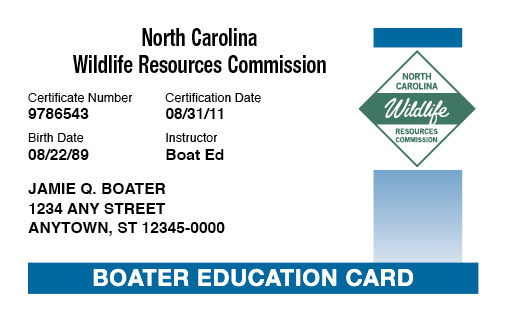
In North Carolina, certain operators must have boating safety education (often carried as a boater education card/certificate) to legally operate a vessel on North Carolina public waters. North Carolina does not issue a traditional “boating license,” but it does require boater education for specific operators.
North Carolina boating safety education requirements are administered by the North Carolina Wildlife Resources Commission (NCWRC).
North Carolina law requires boater education for the following operators:
- Anyone born on or after January 1, 1988, who operates a vessel with a motor of 10 horsepower or greater on public waters in North Carolina.
In lieu of a NASBLA-approved boating safety certificate, an operator is considered in compliance if they have one of the following items:
- A state-approved nonrenewable temporary operator's certificate to operate a vessel for 90 days that was issued with the certificate of number for the vessel (if the boat was new or sold with a transfer of ownership), or
- A rental or lease agreement from a vessel rental/leasing business that lists the person as the authorized operator of the vessel.
Operators who are required to have proof of boater education must be able to provide it when requested by law enforcement.
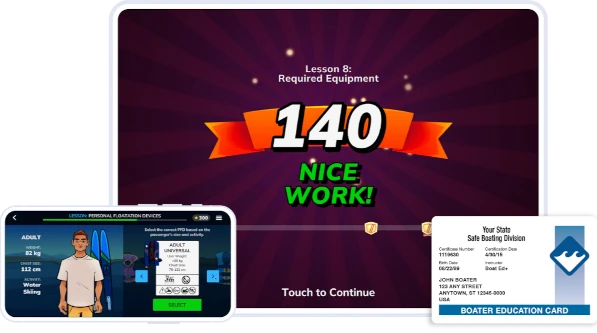
You can earn a North Carolina Boater Education Card by completing an approved boating safety education course. North Carolina provides more than one way to become certified, allowing boaters to choose what works best for their schedule.
Virtual/Internet Course:
North Carolina allows boaters to complete a NASBLA-approved online boating safety education course through approved providers.
After successfully completing the course and passing the test, students receive boating safety certification
as proof they have met North Carolina's requirements.
Classroom/In-Person Option:
North Carolina also offers in-person boating safety education courses, including free courses offered by the NCWRC.
Additional approved classroom options may be offered through partners such as the U.S. Coast Guard Auxiliary
and the U.S. Power Squadron.
After successful completion, students receive boating safety certification as proof they have met North Carolina's requirements.
North Carolina boating education and operator requirements apply to operation on North Carolina waters. When boating outside North Carolina, operators should always review the laws of the destination state, since boating education requirements and minimum operator ages may vary by location.
Boat-Ed+ is produced by Kalkomey Enterprises, LLC. Kalkomey is dedicated to providing print and online boating education courses for North American boaters in Canada and the United States. Boat-Ed is the only boating safety education course and exam provider that develops online courses, eBooks, and print materials on behalf of government boating and boater safety agencies in North America. Completing your North Carolina boating safety course through Boat-Ed+ ensures you receive an NCWRC-approved, NASBLA-compliant education that meets all state requirements for earning your Boater Education Card.
North Carolina Wildlife Resources Commission
1751 Varsity Drive, Raleigh, NC 27606
Made in the U.S.A.
This safety course is proudly made to serve students, agencies, and organizations worldwide.
Is it the Boating safety license?
Boating safety education certification is not the same thing as a Boating license.
What you really need is the Boating Safety Education Certificate.
You can get the
Boating Safety Education Certificate
by taking this boat safety course
at boat-ed.com.
Find out if you need the card.
Did you lose your card? Replace it here.
GET CERTIFIED
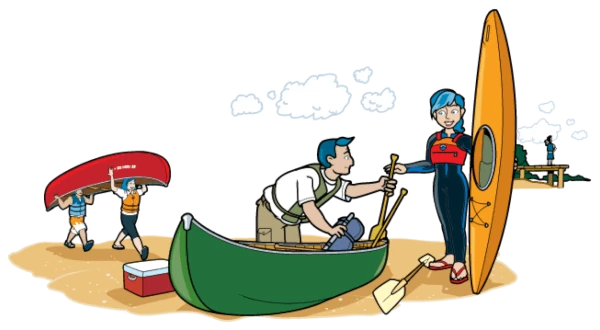
You can take a NASBLA-sanctioned paddlesports safety course to learn safe practices for non-motorized crafts such as canoes, kayaks, and paddleboards. This course focuses on paddlesports safety but does not replace North Carolina's boater education requirement when operating motorized vessels.
Protect your on-water adventures
Relaxing on the water is easy when you’re protected with a leader in boat insurance. Progressive has the coverages you need to explore carefree and full of adventure! Discover how we can protect your boat today with coverage we offer to the 1 million+ watercraft we already insure.
Get a Quote
With over 300 miles of coastline, the Tar Heel State offers plenty of options for boaters. Whether you're chasing the thrill of offshore fishing, seeking the serenity of marshland estuaries, or craving the charm of historic harbors, there's something here for every boater to enjoy.
What makes boating in North Carolina especially unique is the mix of barrier islands, coastal beaches, and waterfront communities that reflect the state's seafaring history. Boaters can explore historic lighthouses, maritime museums, and working harbors in destinations like Wilmington, Beaufort, and Kitty Hawk.
Beyond the oceanfront, North Carolina's sounds, rivers, and lakes open up another side of the state. The Intracoastal Waterway provides a more protected route along much of the coast, while inland waters deliver calmer cruising, paddling, and wildlife viewing. From dolphins and seabirds near the coast to birds and other wildlife in marshlands and quieter backwaters, it's a boating state that rewards exploration.
Popular Boating Locations
Lake Norman
A central hub for boating, offering over 500 miles of shoreline, marinas, and plenty of on-the-water stops.
Outer Banks
A string of barrier islands offering access to the Atlantic Ocean and iconic coastal scenery.
Neuse River
A scenic eastern river route with wildlife, historic towns, and classic coastal water views.
Cape Fear River
A major coastal river that connects inland cruising to port towns and ocean access.
Lake Gaston
A popular border lake known for boating-friendly development, dining access, and relaxed cruising.