Boat Sound Signals: What Do They Mean?
When you're boating, clear communication can mean the difference between a fun time and a serious accident. Unfortunately, radios and voices don't always carry well across the waves.
That's why boaters rely on boat sound signals for critical communications.
This universal language of horn blasts is required by navigation rules and a vital part of a safe boating experience. Here's what to know about what boat sounds mean and how to use them properly.
Why Boat Sound Signals Matter
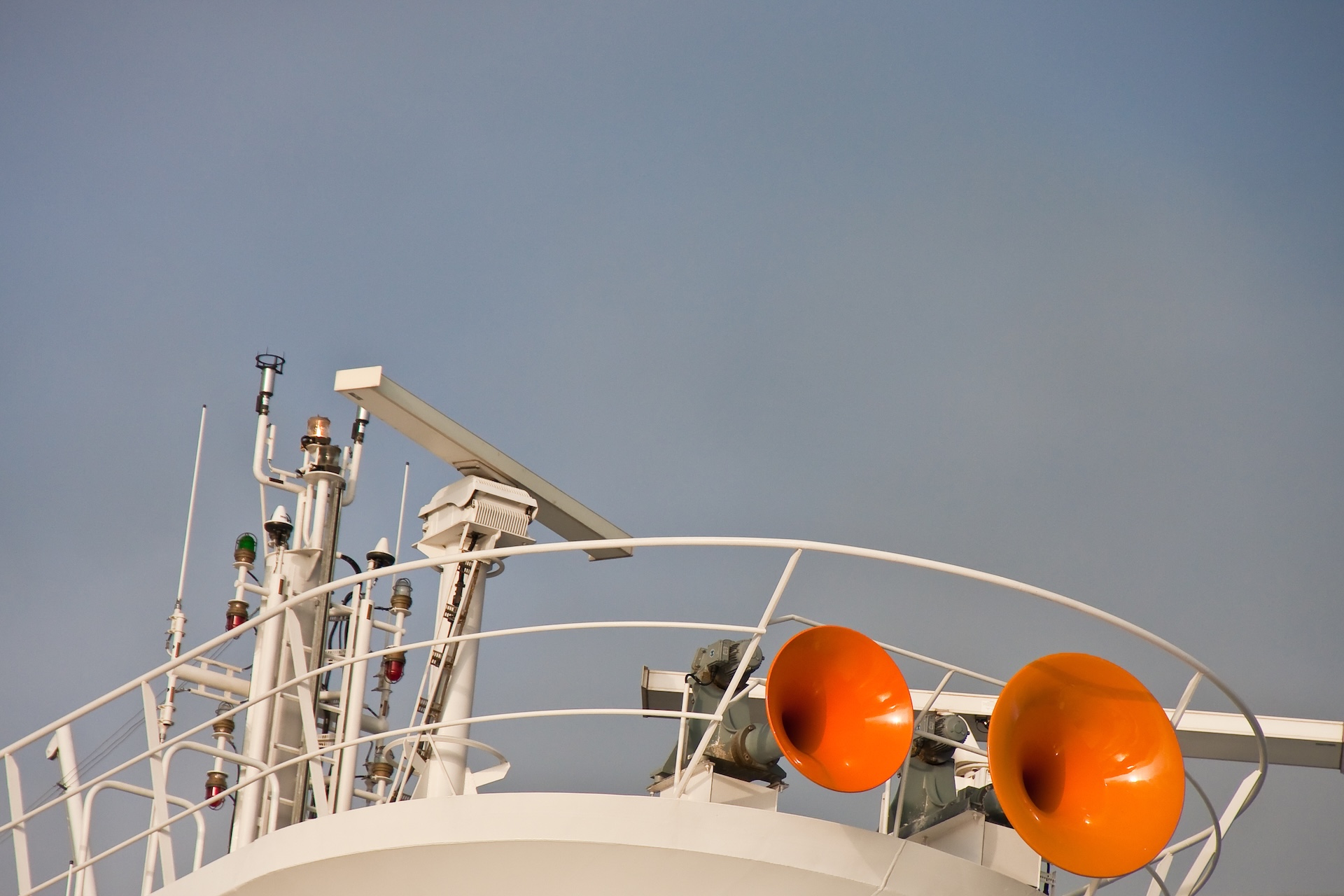
The sound signals used on a boat are essential for marine safety and communication. Especially when dealing with low visibility conditions, such as fog or nighttime travel, it's critical to ensure other boaters are aware of you. This is also crucial on busy waterways where you want to alert people to your presence as quickly and efficiently as possible.
Using sound signals helps prevent collisions and clarifies your intentions when maneuvering your vessel. In short, these signals are a great way to warn others of a potential accident and let them know what you plan to do, which reduces risk and keeps waterways safer and more enjoyable for everyone.
What Are the Types of Ship Horn Signals?
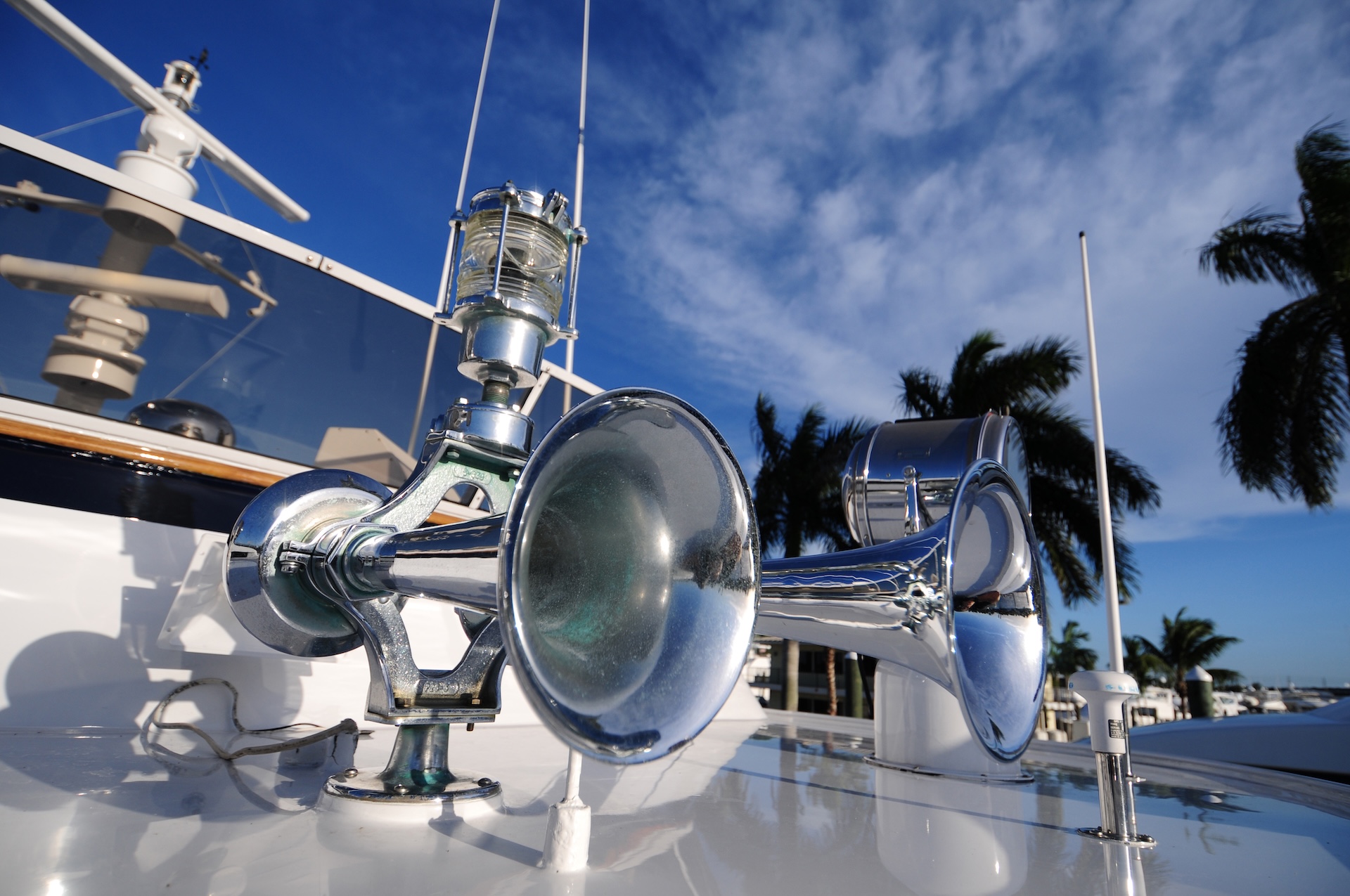
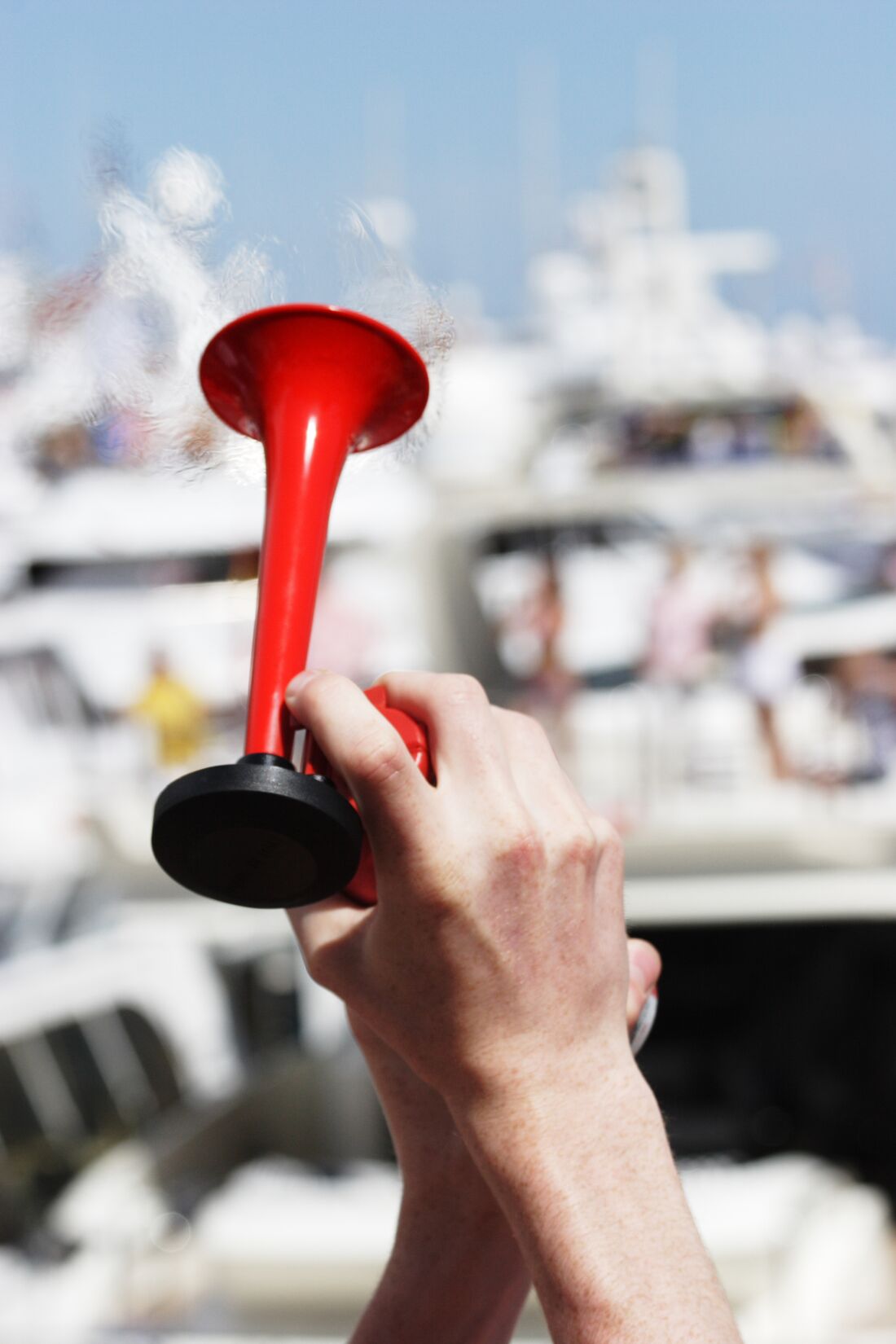
There's more to using your boat's horn than just making noise. The length of the horn blast matters and can convey essential information.
For example:
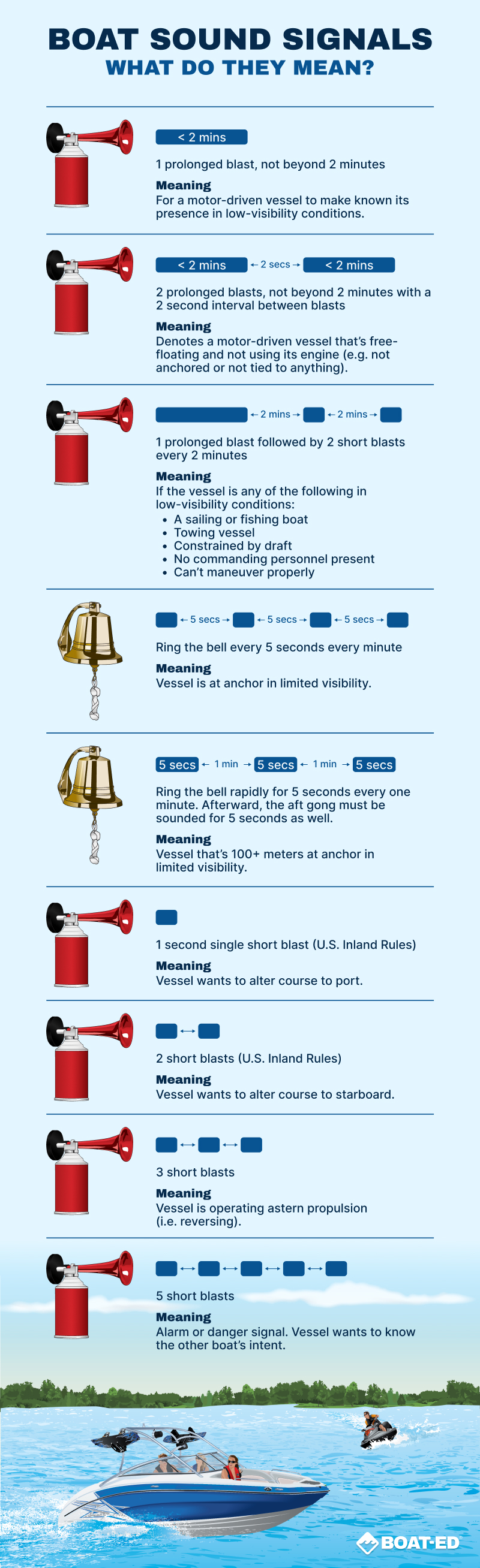
- Short Blast: Lasting around one second, this sound is used for alerts or indicating maneuvering intentions.
- Prolonged Blast: These longer blasts last between four and six seconds, so there's no mistaking them. They're generally used to indicate your location or that you're moving in fog or other restricted visibility situations.
When using a horn signal on a boat, it's vital to ensure you're using the correct one. This will reduce confusion that can lead to accidents and related safety issues.
Common Maneuvering Sound Signals
It's not only the length of the blast that matters when using ship horn signals, as the number of blasts also conveys critical information. Here are the basics when communicating with other vessels:
- 1 short blast means you're altering your course to starboard (right).
- 2 short blasts indicate you're altering your course to port (left).
- 3 short blasts show you're operating astern propulsion (backing up).
- 5 short blasts are a danger signal, or a warning that you don't understand another boater's intentions. Use this signal only when there is potential danger or confusion.
Whether you're new to boating or an experienced vessel owner, using the right boat signals at the right time is a crucial part of navigation, safety, and communication.
Meeting, Crossing, and Overtaking Scenarios
If you're meeting another vessel head-on, standard practice is to exchange one short blast each, with both boats passing one another port-to-port. However, if you're passing starboard-to-starboard, which is less common, you'll want to exchange two short blasts each, instead.
When overtaking another vessel, one short blast means you intend to overtake that vessel on its starboard side, while two short blasts mean you intend to overtake the ship on its port side. The vessel that's about to be overtaken should reply with the same signal if your intentions are safe to carry out, or five short blasts if it's unsafe.
In a crossing situation, any vessel that has a boat on its starboard side should give right-of-way to the other ship. Sound signals can be used to indicate actions being taken or to alert another vessel of your intentions.
Restricted Visibility Maritime Horn Signals
When visibility is limited, such as during fog, heavy rain, or at night, vessels must use maritime horn signals regularly to communicate and inform others of their location and intended actions.
If you're operating a power-driven vessel that's underway (not anchored, docked, or aground) and making way (moving under its own power), you must provide one prolonged blast every two minutes. If your boat is underway but not making way (such as drifting with the current), it's two prolonged blasts every two minutes instead.
Sailing vessels, fishing boats, or any vessels restricted in their ability to maneuver should use one prolonged blast followed by two short blasts every two minutes. In contrast, vessels at anchor should ring their bell rapidly for five seconds every minute, and can optionally follow up with one short, one prolonged, and one short blast.
Sound Signals at Anchor or Aground
If you're anchored in restricted visibility, focus on bell ringing, along with the optional whistle or horn signals. However, if you're aground, you should use three strokes of the bell followed by rapid ringing (and a gong if over 100m), plus three more strokes of the bell afterward.
Safety First: Always Have a Horn Onboard
Always be prepared to communicate with other vessels using sounds.
Boats under 39.4 feet must carry a means of making a proper sound signal, such as a horn or whistle. If you have a larger vessel and are required to use more boat sound signals, you may need a bell or gong, as well.
Practice Boat Sound Signals and Learn Safety Essentials with Boater Education
Understanding signals and using them properly helps reduce accidents and keep waterways safer. It's essential to practice using your vessel's horn and any other required devices properly, especially when you're in low-visibility conditions or high-traffic areas.
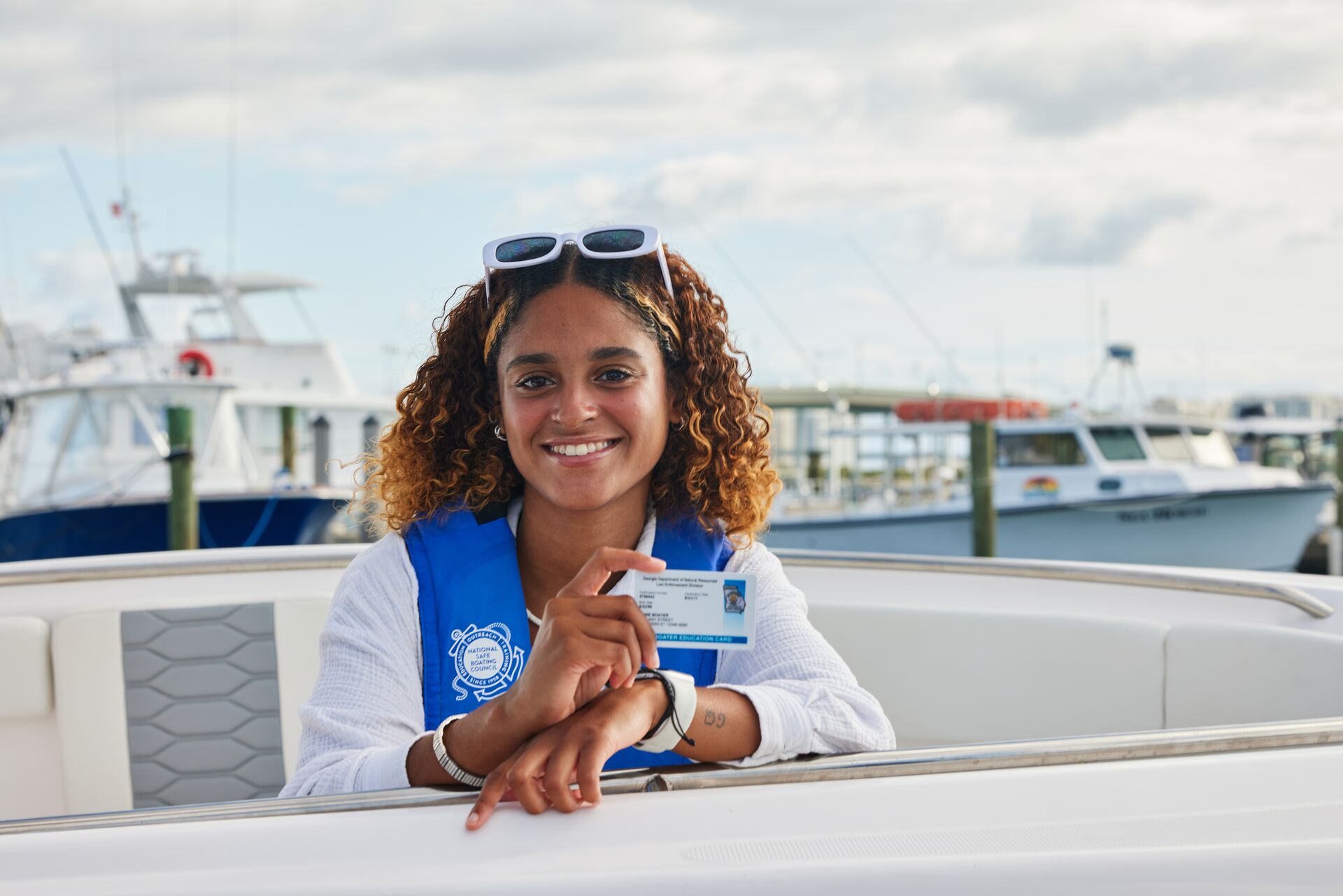
Before hitting the water, learn more about sound signals and other vital boating safety information by taking a boat education course. Through an online Boat-Ed course, you'll gain valuable knowledge to help you operate your boat with confidence and protect yourself and others on the water.
Plus, most states require boaters to pass an approved boater safety course before operating a motorized vessel.
Get certified and stay safe on the water by taking the Boat-Ed course for your state.
Or, if you're in Canada, take our boater course for Canadians!
Frequently Asked Questions (FAQs)
We have answers to common questions about boat sound signals!
Q: What are the sound signals for boats?
A: Boats use short and prolonged blasts of the horn or whistle to signal maneuvers, warnings, or danger.
Q: What do the different boat sounds mean?
A: Each pattern of blasts has a specific meaning, such as overtaking, turning, or signaling danger.
Q: What does 4 boat horns mean?
A: Four short blasts aren’t a standard maneuver signal. However, this sequence is often used for special situations, like pilot vessels.
Q: What does 5 blasts mean?
A: Five short boat horn blasts mean "danger," or "I don’t understand your intentions."
Q: What does 2 short blasts mean?
A: Two short boat horn blasts mean "I intend to turn to port (left)."
Get certified and stay safe on the water by taking the Boat-Ed course for your state.
If you're in Canada, take our boater course for Canadians!