How to Anchor a Boat
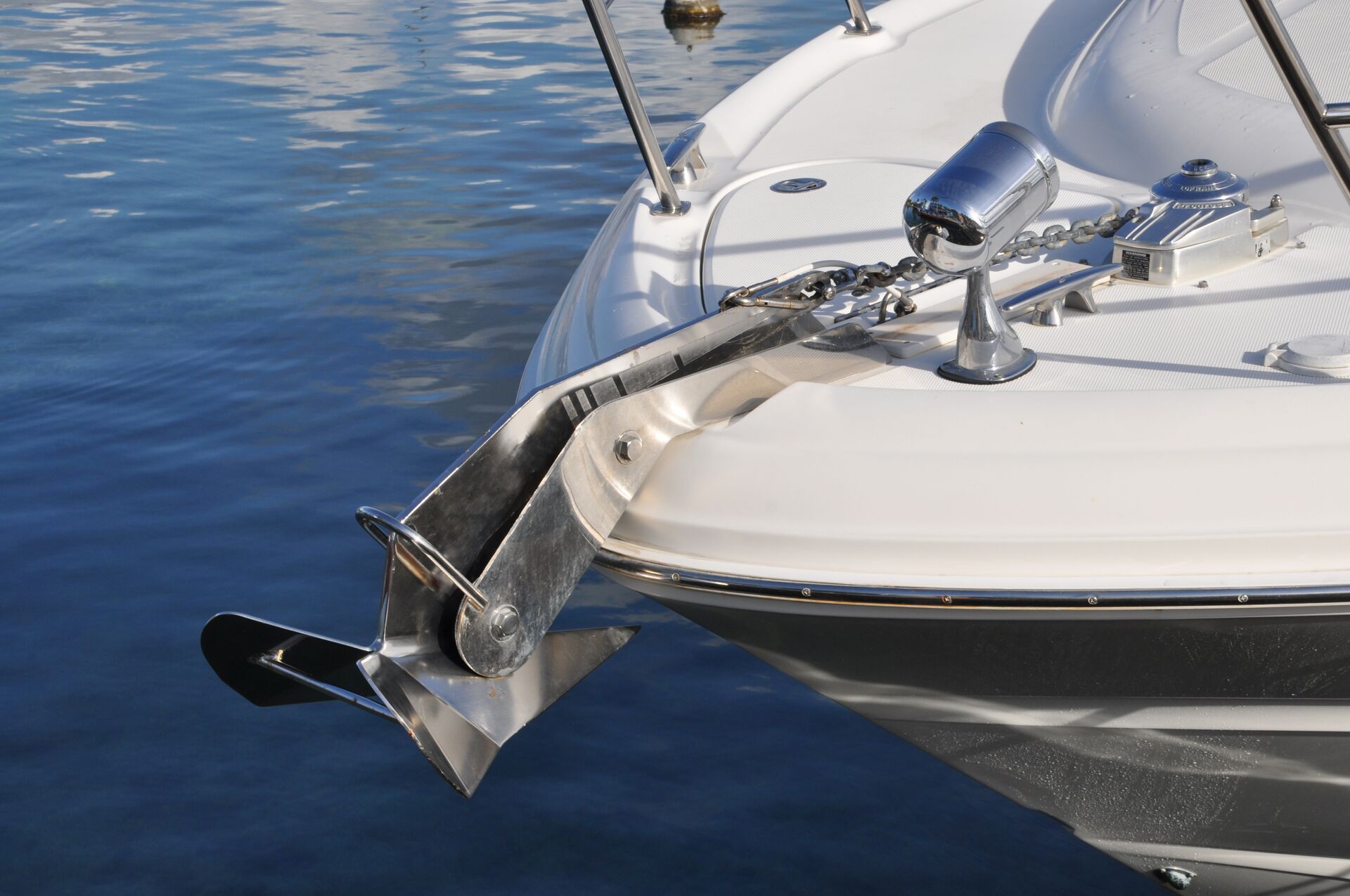
When anchoring a boat, always approach your anchoring spot against the wind or current, then stop the boat and lower the bow anchor. As your boat drifts back, lower the anchor to the bottom, ideally with a 5:1 to 7:1 rope-to-depth ratio. Secure your line to a bow cleat before slowly reversing in low power to set the anchor, ensuring it sits firmly.
To ensure your anchor is holding, pick two fixed objects such as pylons, trees, or buildings. If the position relative to each other changes, you're dragging and will need to reset the anchor. You can also use GPS to see if your position is shifting.
Whether you're fishing, going for a dip, or taking in the scenery, knowing how to anchor a boat is an essential safety skill. Anchoring can help stop drift, keep the boat stable, and reduce the risk of incidents.
Let's explore three steps for successful anchoring, along with other tips for successfully anchoring your boat.
How to Anchor a Boat in 3 Steps
When you're ready to anchor, don't just throw a chain overboard and hope for the best. With a little practice, you'll be able to learn how to tie a boat anchor and keep your boat stable in a range of conditions and environments.
If you're a new boater, consider building your confidence by taking a few practice runs with an experienced boater.
1. Prepare and Approach
When approaching an anchoring location, always check your surroundings for hazards, such as rocks, reefs, shallow areas, or other vessels. Avoid busy channels or high-traffic areas, which increase the risk of collision.
An ideal anchoring spot has solid holding ground, such as sand or mud, room for the boat to swing as the conditions change, and allows for tidal changes. Flat-bottomed areas with minimal weeds or reefs are ideal. As you approach, motor in on low power, moving slowly into the wind or current, so the boat stops gently at your intended drop point.
2. Set the Anchor
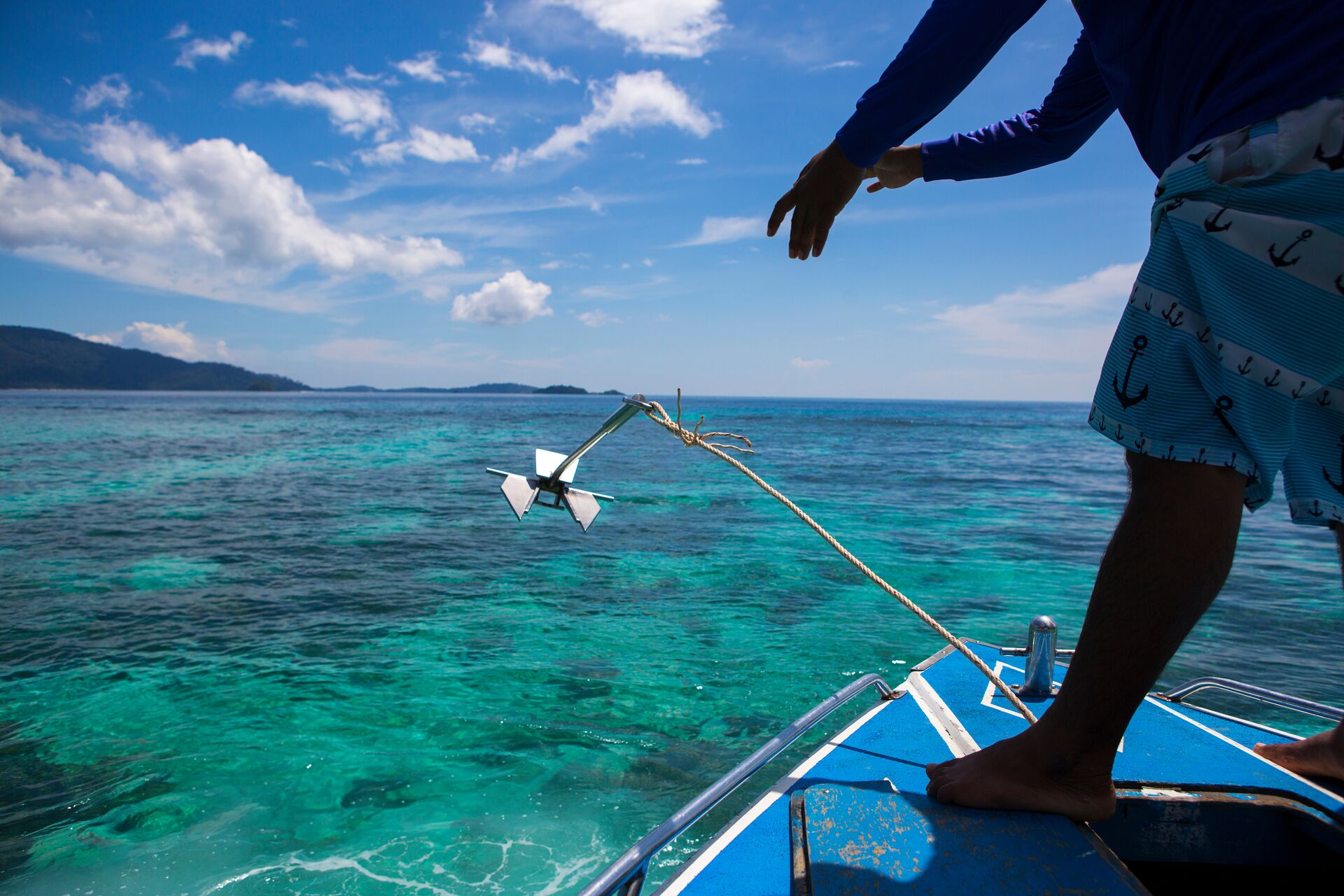
Be sure to stop the boat completely before dropping the anchor. Once in position, a controlled, slow release of the anchor from the bow will allow it to reach the bottom without tangling.
Keep your hands and feet away from the chain while lowering it, and make sure any passengers—especially children—keep their distance during this process. Let the boat drift back while paying out the line, allowing it to settle on the seabed.
To ensure the anchor holds steady, remember the 5:1 to 7:1 ratio of line length to water depth. Once you've reached that magic ratio, mastering how to tie an anchor to a boat is easy: secure the anchor line to a strong bow cleat, then gently reverse to set the anchor on the sea bottom and let it dig in.
3. Confirm and Monitor
To confirm your positioning, pick two landmarks, such as a jetty and a tree, and note their relative positions. Then, slowly reverse to straighten the line and let the boat drift back into position. Your structures should be in the same spot; if they're not, you will have drifted and will need to reset the anchor.
Manually confirming your position is always a great practice, even if you're using a GPS or depth/electronic cues. You never know when technology might go down or when you might forget to bring it on board.


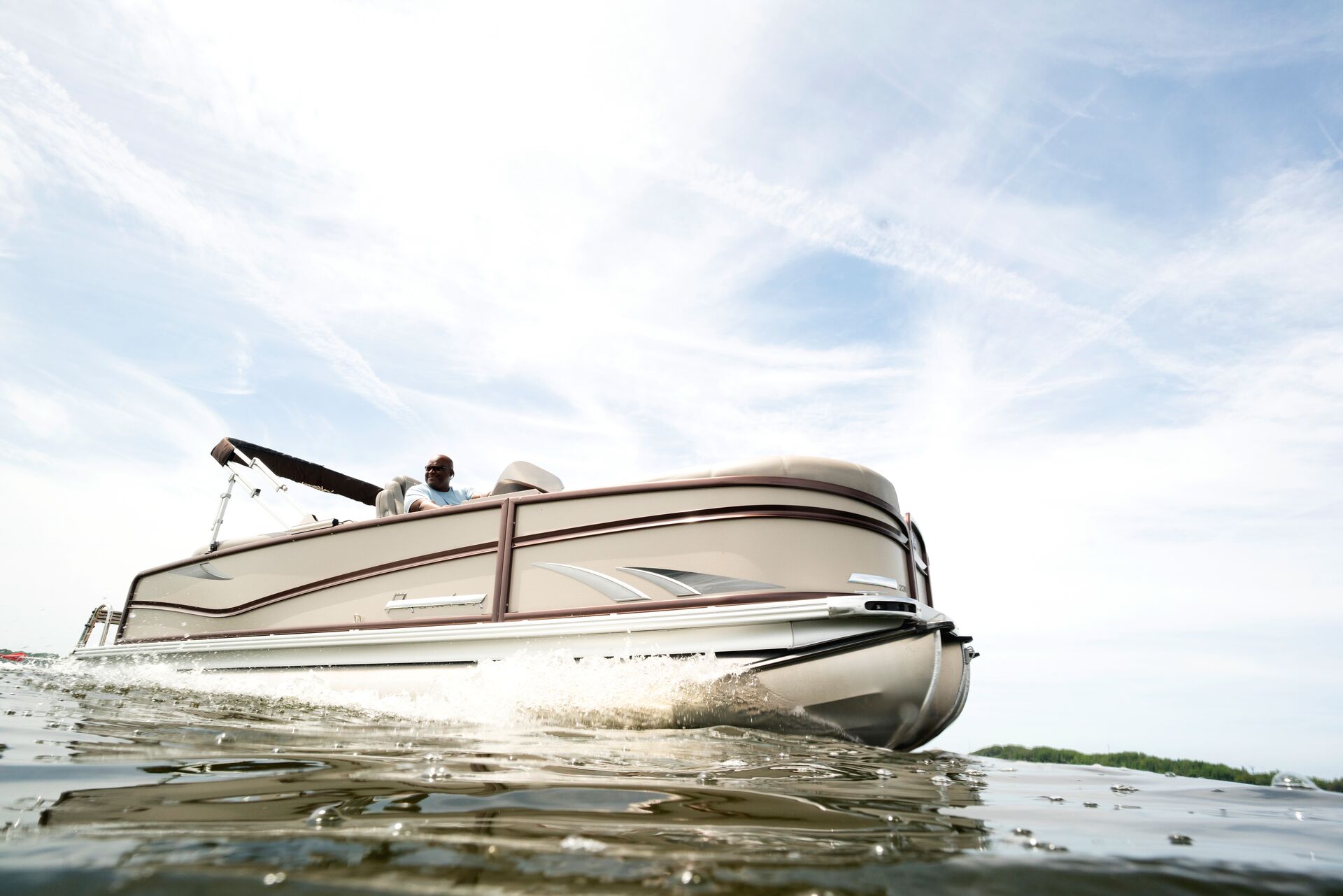
How to Anchor a Pontoon Boat
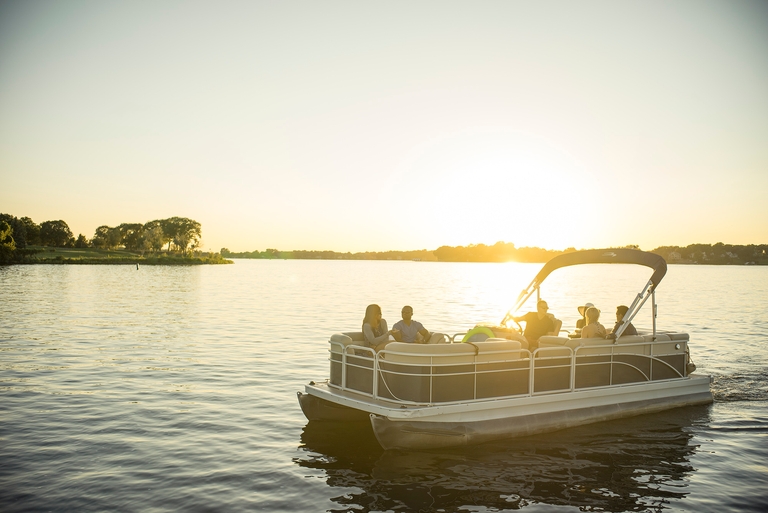
Determining how to anchor a pontoon boat requires some additional steps due to its shape, size, and high sides, which can increase wind resistance.
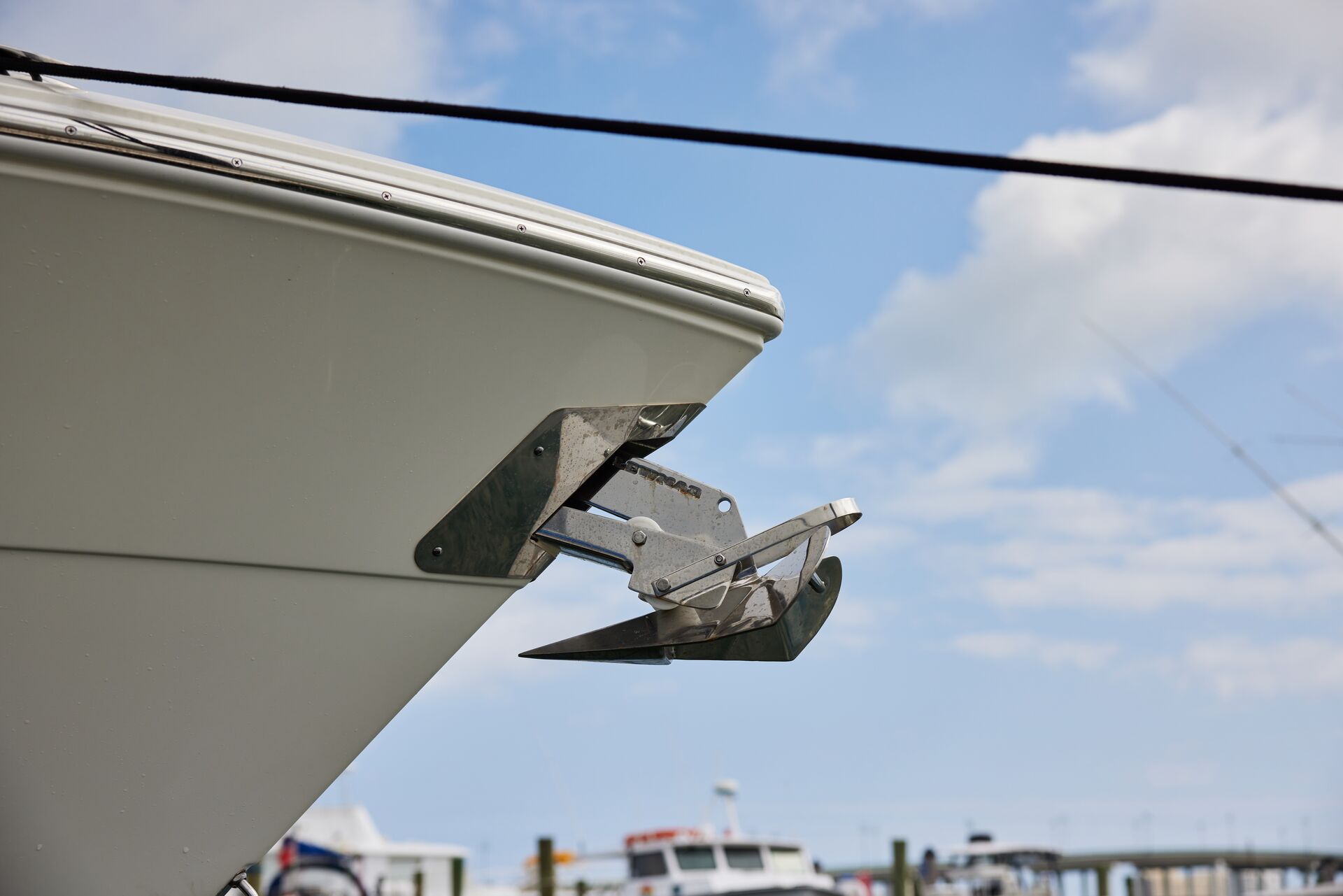
In windy conditions, it's best to use more scope and a fluke-style anchor (Danforth), which is ideal for secure holding and deeper digging capacity. In shallow, sandy areas, consider a second anchor from the stern to limit swinging.
Pontoon boats tend to swing more, so drop anchor away from other boats, structures, and shallow areas. Never assume that other boats, even smaller vessels, have the same scope as yours. For optimal safety, maintain plenty of distance when anchoring.
What Does "4 Shackles in the Water" Mean?
In nautical terms, an anchor chain is measured in shackles, each equal to 90 feet (27.5 meters). Therefore, the expression "four shackles in the water" means 360 feet of chain have been let out.
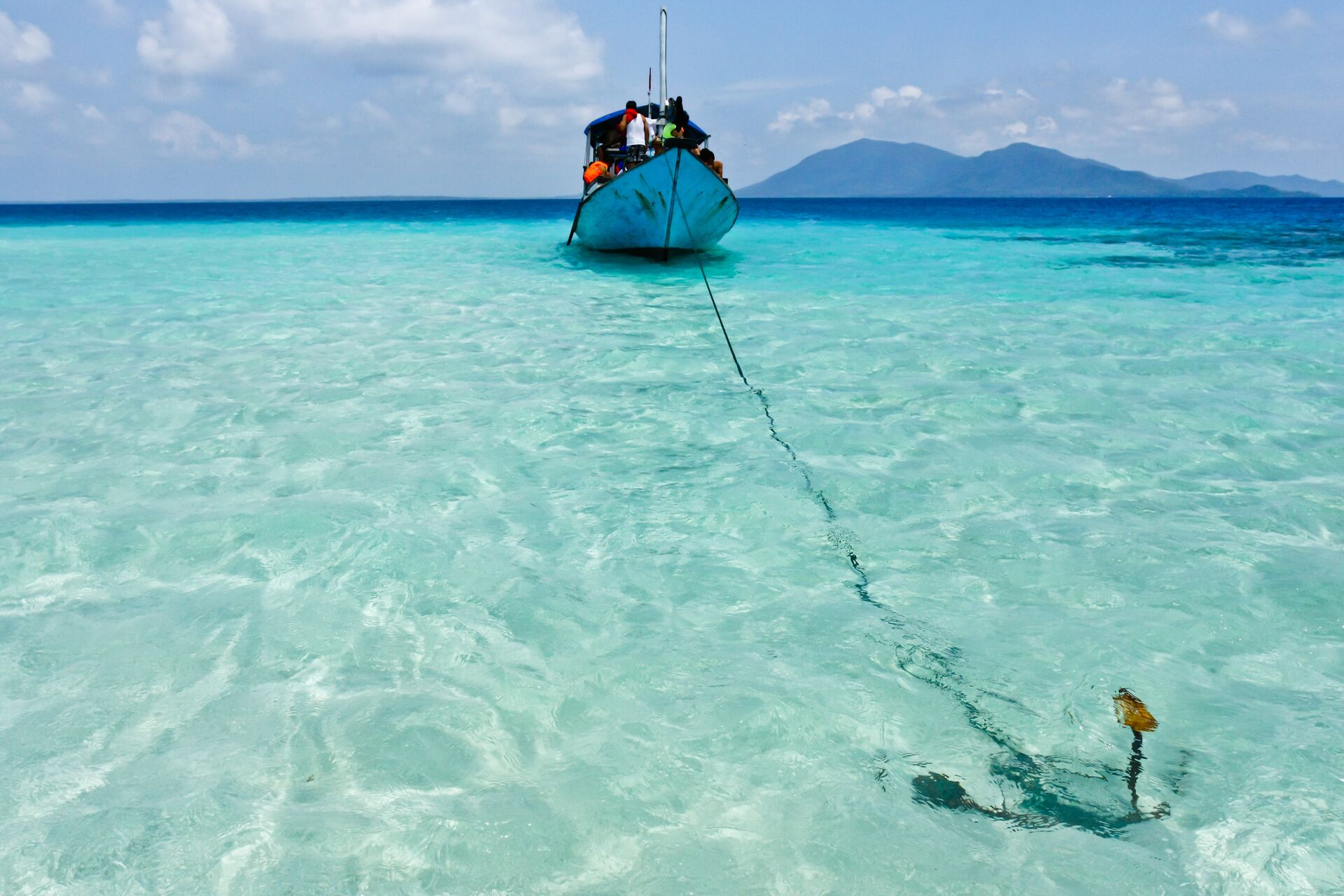
The expression is most common on large commercial vessels that require a long chain rode for anchoring.
Where Should a Boat Avoid Anchoring?
When choosing an anchoring location, avoid reefs, seagrass beds, and other protected marine environments that anchors could damage. If in doubt, reach out to your local maritime authority for clarification. For optimal safety, avoid busy channels, shipping lanes, and any restricted or private areas, including naval or military zones.
Always be aware of underwater cables, pipelines, or poor holding ground such as rock or heavy seaweed beds. Keep a sufficient distance between your vessels and other anchored boats, and check depths and tide forecasts to uncover any hidden shoals.
How Can I Learn More About Operating a Boat?
The most convenient way to learn about boat safety is to take an online boater safety course from a state-approved provider (like Boat-Ed). If you prefer in-person instruction, you can enroll in local boating safety courses offered by organizations such as the U.S. Coast Guard Auxiliary or the United States Power Squadrons. However, these courses are not offered year-round and may have limited scheduling availability.
If you want to brush up on the basics (including how to anchor a boat), you can review state boating handbooks and online training modules. To boost your boating confidence—including practice in anchoring a boat—you can learn on the water with a certified instructor or an experienced boater.
Be Safe on the Water and Get Boater Safety Certified with Boat-Ed
There's a lot more to anchoring a boat than throwing an anchor overboard, but by following the steps above, you can keep your boat and passengers secure.
Before hitting the water, ensure your boating knowledge and certification are up to speed with Boat-Ed. Our self-paced, state-approved courses give you the knowledge to build your skills and stay safe on the water.
Many U.S. states and Transport Canada require motorized boaters to pass a boater safety course. Take the course for your state before launching this season!


Frequently Asked Questions (FAQs)
We have answers to some of the top questions about how to anchor a boat!
Q: What are the six steps of anchoring a boat?
A: The six steps of anchoring a boat are: 1. choose a spot with good holding ground, 2. approach slowly into the wind, 3. stop the boat and lower the anchor, 4. release enough line as the boat drifts back, 5. gently reverse to set the anchor, and 6. check your position and secure your line to a cleat.
Q: What is the 7:1 anchor rule?
A: The 7:1 anchor rule means you should use seven feet of anchor line for every foot of water depth—including the height from the waterline to your bow—to help your anchor hold properly.
Q: What does 4 shackles in the water mean?
A: Four shackles in the water means 360 feet of chain have been deployed; a shackle is equal to 90 feet.
Q: Where should a boat avoid anchoring?
A: Avoid anchoring a boat in channels near bridges, docks, or boat ramps, over coral reefs, seagrass beds, or underwater cables, in areas marked "no anchoring," and in areas with strong currents or limited swinging room.