What Is a Type 1 Life Jacket For?
Updated June 17, 2025
Are you planning to cruise blue waters? How about offshore deep-sea fishing for monsters? If so, you'll need a life jacket that is different from kayaking on calm inland waters or staying close to the shoreline.
The U.S. Coast Guard classifies five life jackets, also known as personal flotation devices (PFDs), as suited for different water activities and conditions. Understanding the different life jacket types and when they're required is essential for water safety and boating compliance.
Today, we'll discuss the Type 1 life jacket. We'll explain how they're worn, when they're required, how to choose the right one, and much more.
What is a Type 1 Life Jacket?
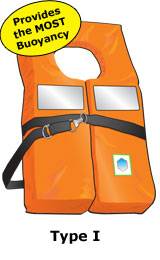
The Coast Guard classifies a Type 1 life jacket as the highest classification for a PFD. It's also known as an "offshore" life jacket because it's suitable for use in open waters where rescue may be delayed.
It provides a high level of buoyancy and is appropriate for rough conditions at sea.
Additional characteristics include:
- Safety standards: To qualify as a Type 1 life jacket, the device must turn most unconscious persons in the water from a downward position to a vertical position, keeping them upright and face-up in the water. This increases their chance of survival.
Due to the additional foam and fabric, it may also provide some protection against the onset of hypothermia. A Type 1 life jacket must be reversible, and an international orange must be used to assist in emergency visibility. - Buoyancy: A Type 1 life jacket is inherently buoyant, with a minimum buoyancy of 22 pounds for adults and 11 pounds for children.
- Design and construction: Due to the higher level of buoyancy, a Type 1 life jacket is bulky and constructed of inherently buoyant foam, such as closed-cell PVC or polyethylene foam. The outer shell, constructed of synthetic materials such as polyester or nylon, encloses the foam panels, which provide buoyancy to the wearer.
- Activities and environments: Type 1 life jackets are specially designed for offshore and remote waters and are perhaps most commonly found on commercial vessels and cruise ships. However, they're also excellent for offshore boating, deep-sea fishing, sailing, or other water activities far from shore.
If you're ever in doubt that your life jacket could turn you upright and keep you afloat until help arrives, it's probably best to choose a Type 1 jacket.
Choosing a Type 1 Lifejacket
To make sure a type 1 life jacket is right for you, consider the following questions:
- Will you be boating offshore?
- Will you be operating in rough waters?
- Will you require a life jacket that can turn you upright if unconscious?
- Do you require bright coloring for ease of rescue?
Once determined, consider a few additional factors to ensure the life jacket fits and is the right style.
Is It Coast Guard Approved?
Life jackets that are U.S. Coast Guard-approved have an approval number on the label. This number ensures the jacket meets the relevant Coast Guard laws and requirements.
Is It the Right Size?
Sizing is based on your chest size. You want a snug fit with some range of motion and comfort.
Read the manufacturer's instructions to find sizing and check the fit by having a friend pull upwards on the shoulder holes of the jacket once strapped in. If the life jacket remains tight, it's a good sign that it's a good fit.
However, you may want to reconsider your sizing choice if it slides upwards. Comfort is essential, as you don't want a total mobility restriction.
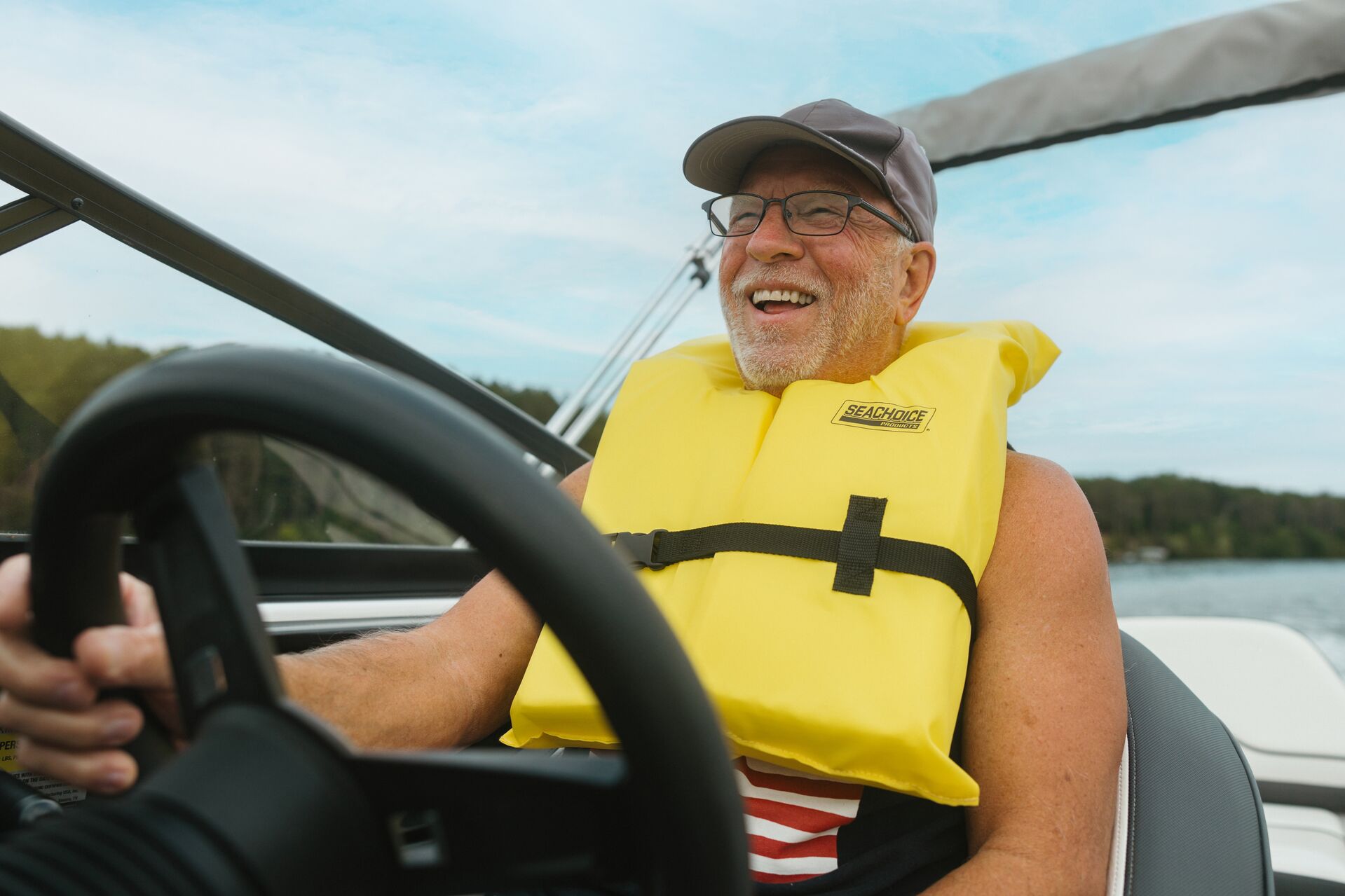
Does It Have the Right Features?
If you're operating in rougher conditions, you should consider additional safety features such as reflective strips or whistles for signaling. Pockets are also handy, allowing you to stash emergency gear and other survival items, such as tools or sunscreen.
Remember that the U.S. Coast Guard requires one life jacket per person on board a vessel and will check that the jackets are the appropriate sizes for potential wearers aboard.
Caring for Your Life Jacket
A life jacket is only helpful if it works. Therefore, the care and maintenance of your Type 1 life jacket are essential to maintaining its functionality and buoyancy.
You should only ever use a lifejacket for its intended purposes and consider the following insights for optimal life jacket care:
- Inspect the lifejacket regularly: Look for signs of wear and tear, such as broken zippers or clips. If a jacket becomes waterlogged, it should be thrown out and replaced.
- Clean and dry: Clean your life jacket with soap and water and dry thoroughly to avoid mildew buildup and waterlogging.
- Storage: Store your life jacket in an excellent, dry location when not boating.
By following the steps above, you'll ensure that your life jacket maintains optimal condition all year round.
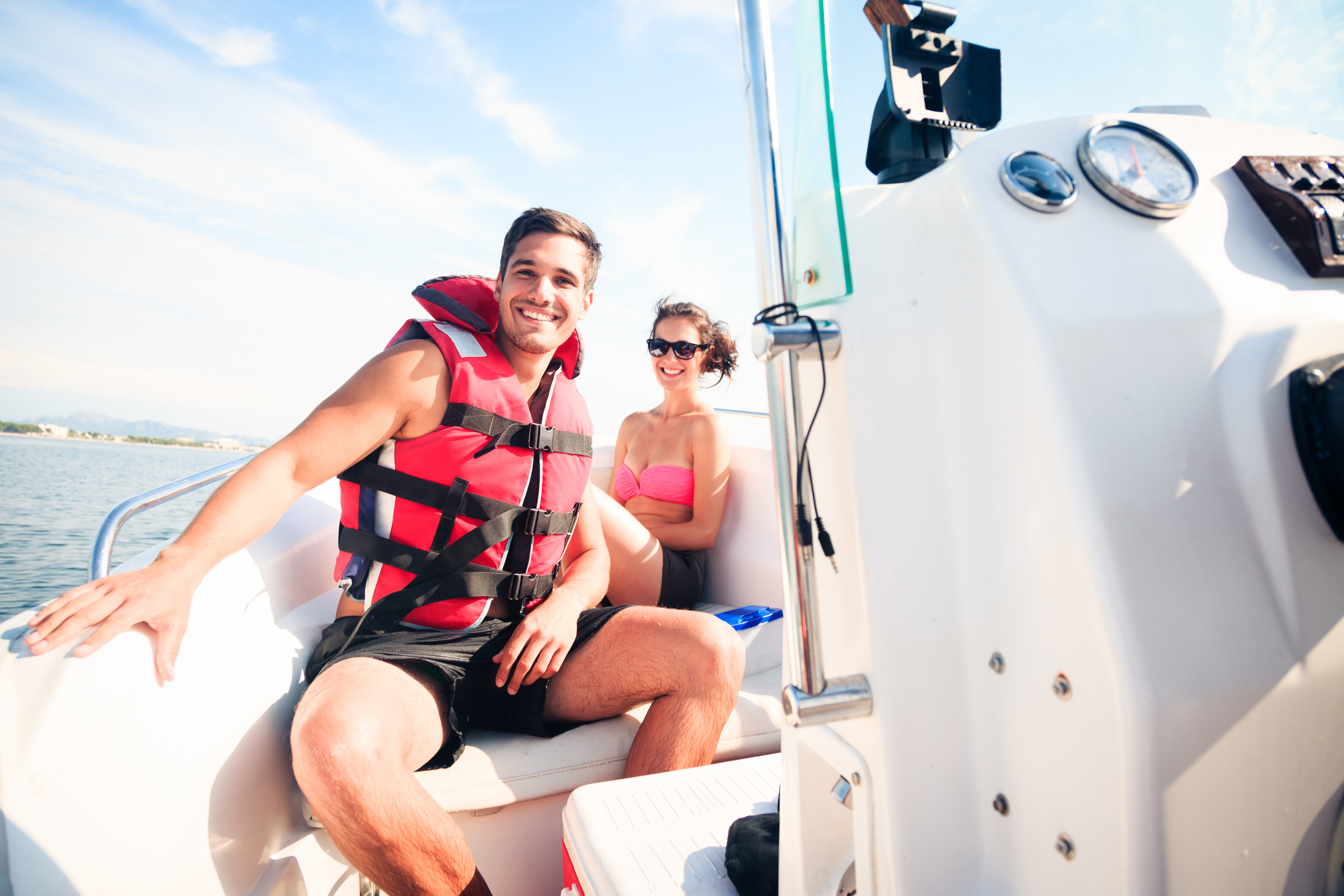
A Type 1 Life Jacket Can Save a Life
Unfortunately, some boaters and watersports enthusiasts consider lifejackets merely a compliance issue, carrying jackets to avoid fines without additional thought for their utility and importance. However, water safety, especially in open waters, is non-negotiable.
While life jackets are an essential component (whether it's a Type 1 life jacket or another type), there are a range of other factors that contribute to a safe day out on the water. Taking a boater safety course helps you learn more about the different uses of life jackets and how they fit into a holistic safety approach to boating.
Just like choosing the right life jacket, choosing the right boating safety course is crucial! Boat-Ed courses are state-approved or Transport Canada-approved and meet all requirements for boating education, so you can boat legally and safely.
Find the course for your region and start learning!
Content most recently reviewed and updated for recency and accuracy June 17, 2025.
Learn more about different types of life jackets, how they work, and how to find the right size and fit through our Life Jacket Technician course!
You'll also learn how to maintain life jackets so they serve you well in the water.