What To Do in a Boating Emergency on the Water
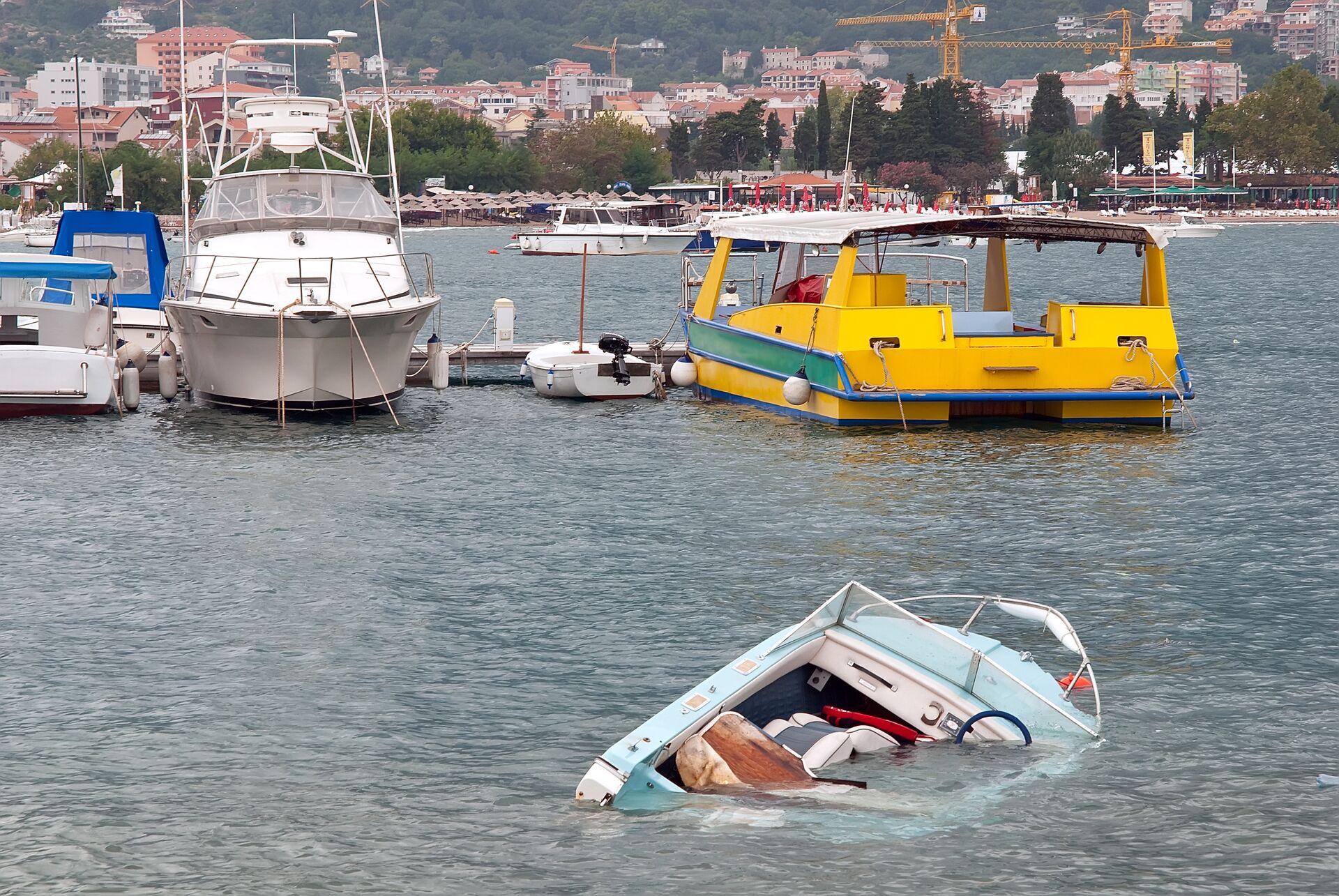
When you're out on the water, emergencies can happen in an instant. From a sudden storm that creates a marine warning to a passenger going overboard or a propeller strike, it's always possible that something could go wrong.
Unlike on land, it can take some time for help to get to you, so it's essential to know what to do in a boating emergency. With the proper preparation, you can more easily protect yourself, your passengers, and your vessel from danger.
Here's what you need to know about staying calm, responding to an emergency appropriately, and giving everyone the best chance to return to shore safely.
Stay Calm and Assess the Situation
The first thing to do when there's an emergency on your boat is to stay calm. That's not always easy, but panic is your worst enemy in an emergency. It can cloud your thinking and may paralyze you when you need to take action.
Instead of panicking, take a deep breath and evaluate the situation as quickly as possible. Determine the nature of the emergency, so you can begin taking steps to mitigate the damage.
Some of the most common emergencies that happen on boats include mechanical failure, fires, a person overboard, capsizing, or a medical emergency. If you need to evacuate due to an emergency, you should do so as quickly as possible to minimize additional risk.
Prioritize Life Jacket Safety
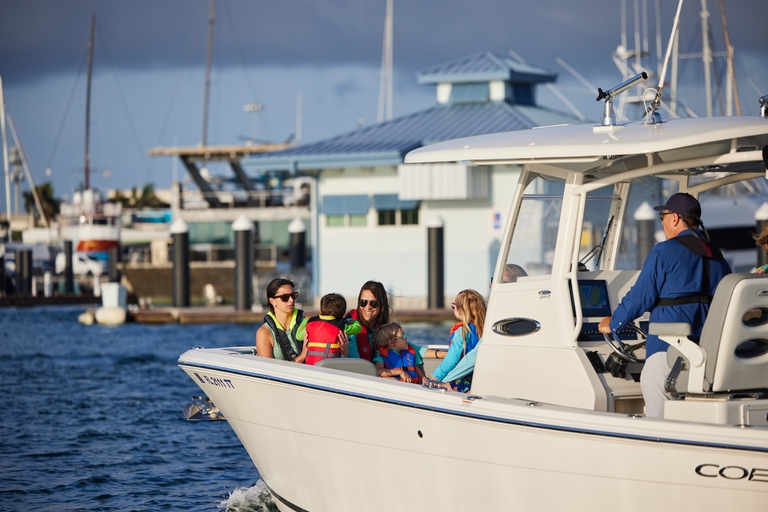
If the emergency isn't specific to one passenger, such as a medical event, you'll need to take steps to protect everyone as much as possible. Once you understand the nature of the emergency, make sure every passenger is wearing their life jacket.
Account for all passengers onboard, and check to see who may be injured, as well as the extent of those injuries. Then, move your passengers away from any hazardous areas, such as a fire in the engine or water damage resulting from a hull breach.
Use Your Marine Radio or Signaling Devices
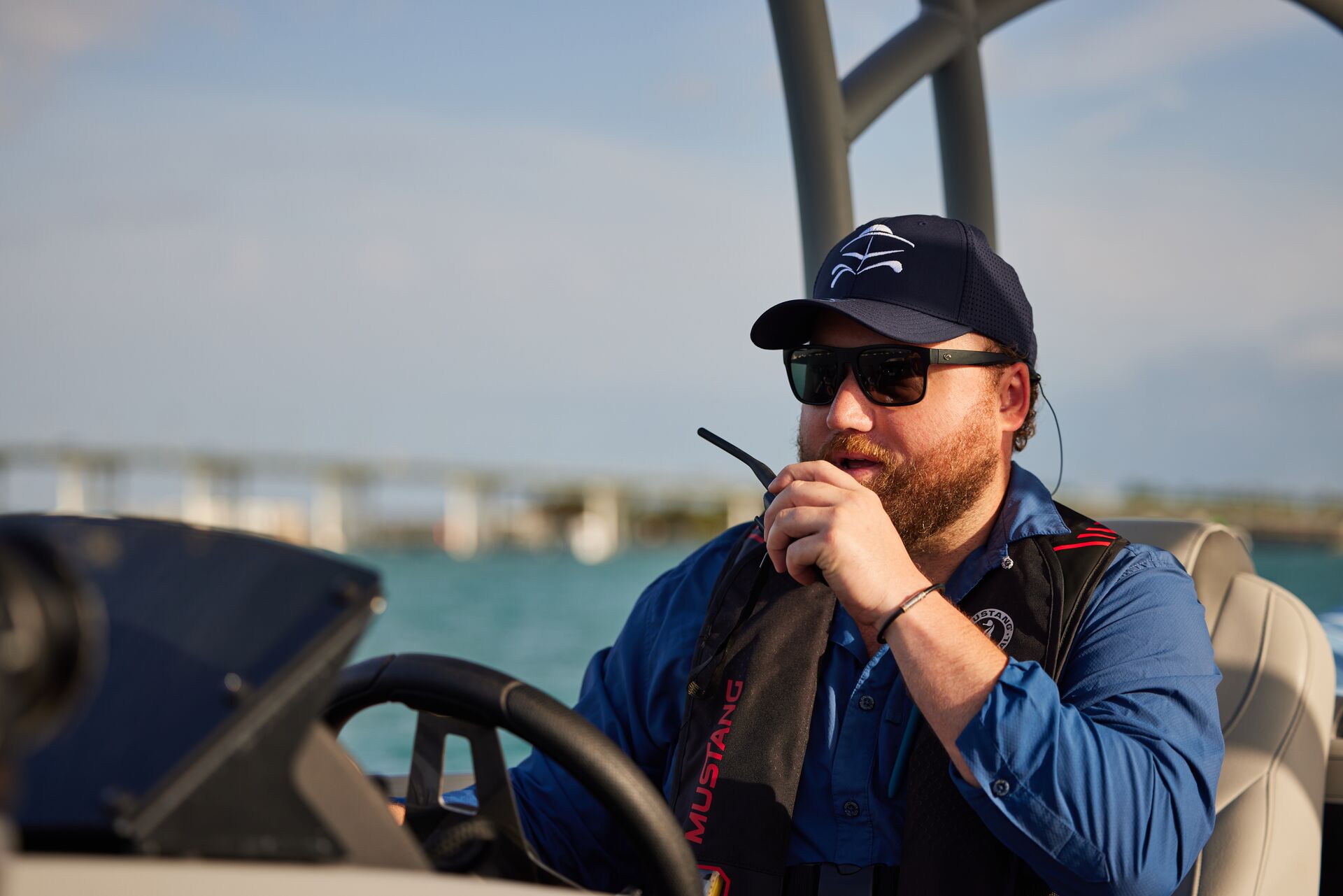
You should call for help using the "Mayday" signal if you have a life-threatening situation on your vessel. Use a VHF marine radio and tune it to Channel 16 before requesting assistance.
When reaching out for help in an emergency, be prepared to provide crucial information, such as the exact nature of the emergency, the number of people on board, and a description of your boat.
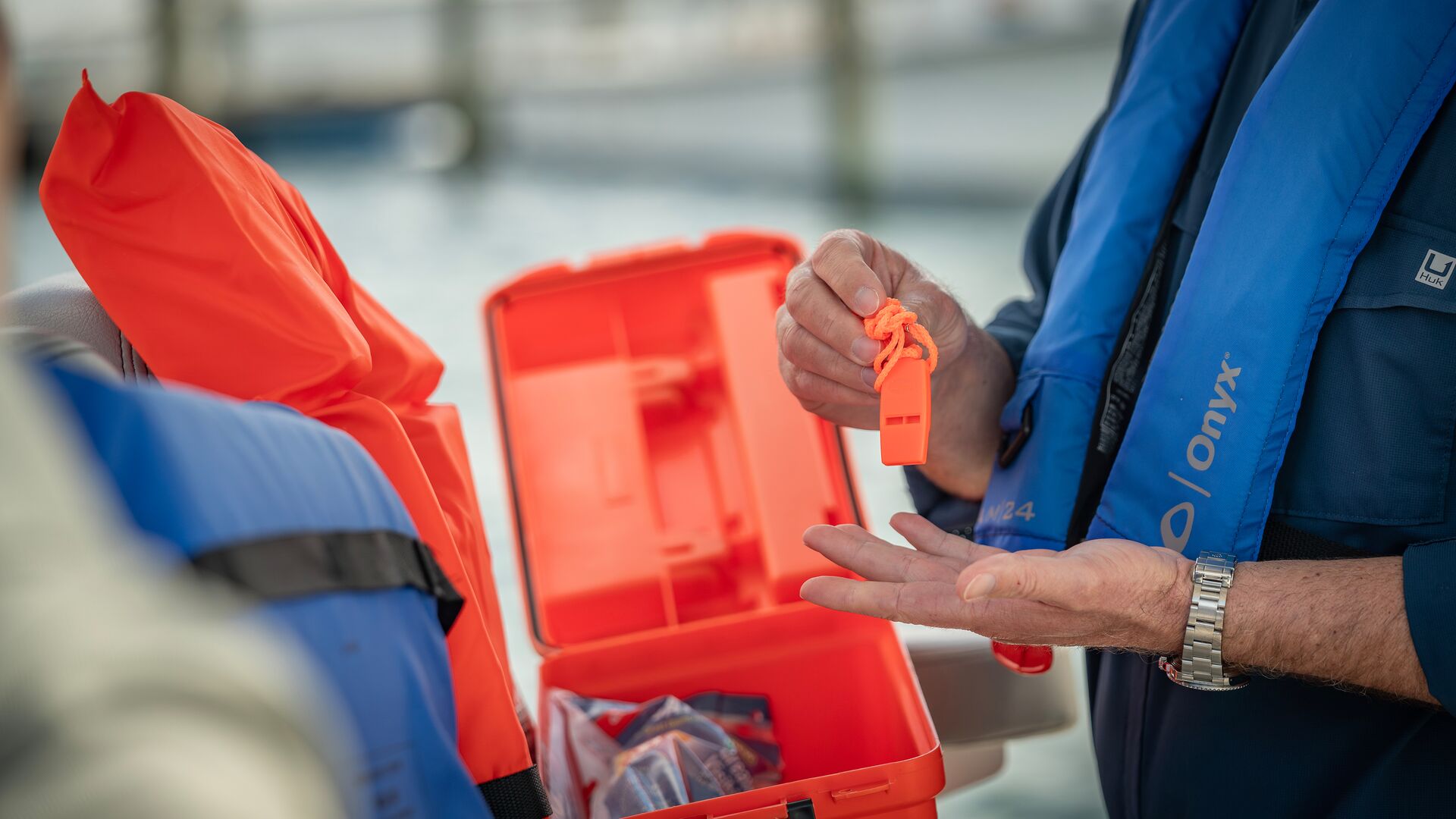
Another way to reach out for help is to use a whistle, flares, a horn, or a signal mirror to attract the attention of other boats in the nearby area. They may be able to get to you faster than emergency responders and can start rendering aid.
Deploy Emergency Equipment
If you have an EPIRB (Emergency Position Indicating Radio Beacon) or PLB (Personal Locator Beacon) onboard your boat, activate it to make finding your location easier for emergency personnel. It's essential to understand the distinction between an EPIRB and a PLB so that you can choose the best option for your vessel.
If you're drifting toward a hazard, also drop your boat's anchor. Taking on water can constitute an emergency, and if that occurs, you'll want to use bilge pumps or manual buckets to remove as much water as possible. Make sure your passengers are familiar with the basics of using emergency equipment so that they can assist during a stressful situation.
Know Person Overboard Procedures
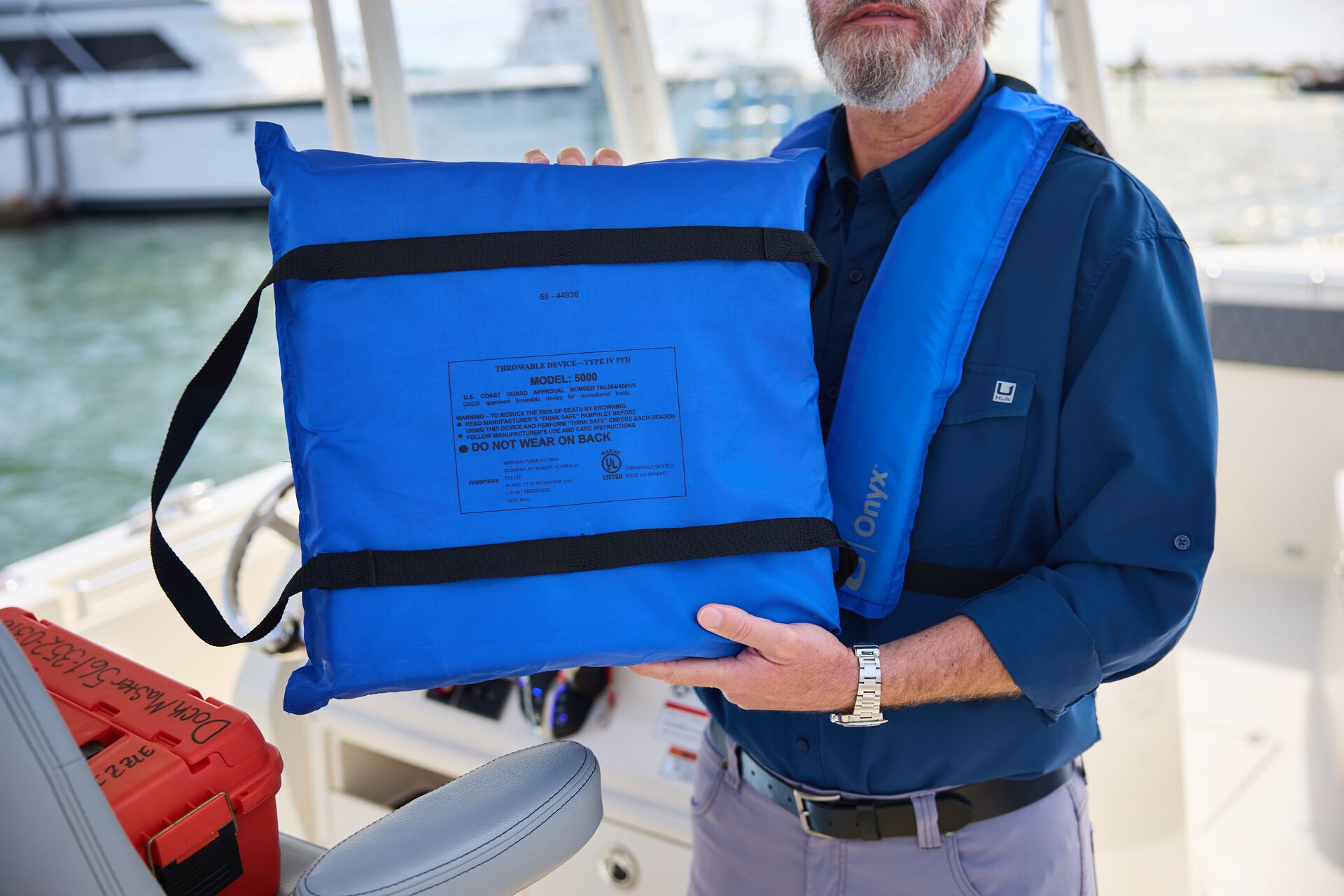
If someone on your boat falls into the water, immediately shout "man overboard." Then, keep your eyes on the person and toss them a flotation device. Slowly turn your boat around and approach them carefully.
You don't want to add to your boating emergency by putting anyone else in the water, so don't jump in to save them unless it's absolutely necessary. Instead, use a boat hook or throw a line to retrieve them.
How to Respond to a Fire Onboard
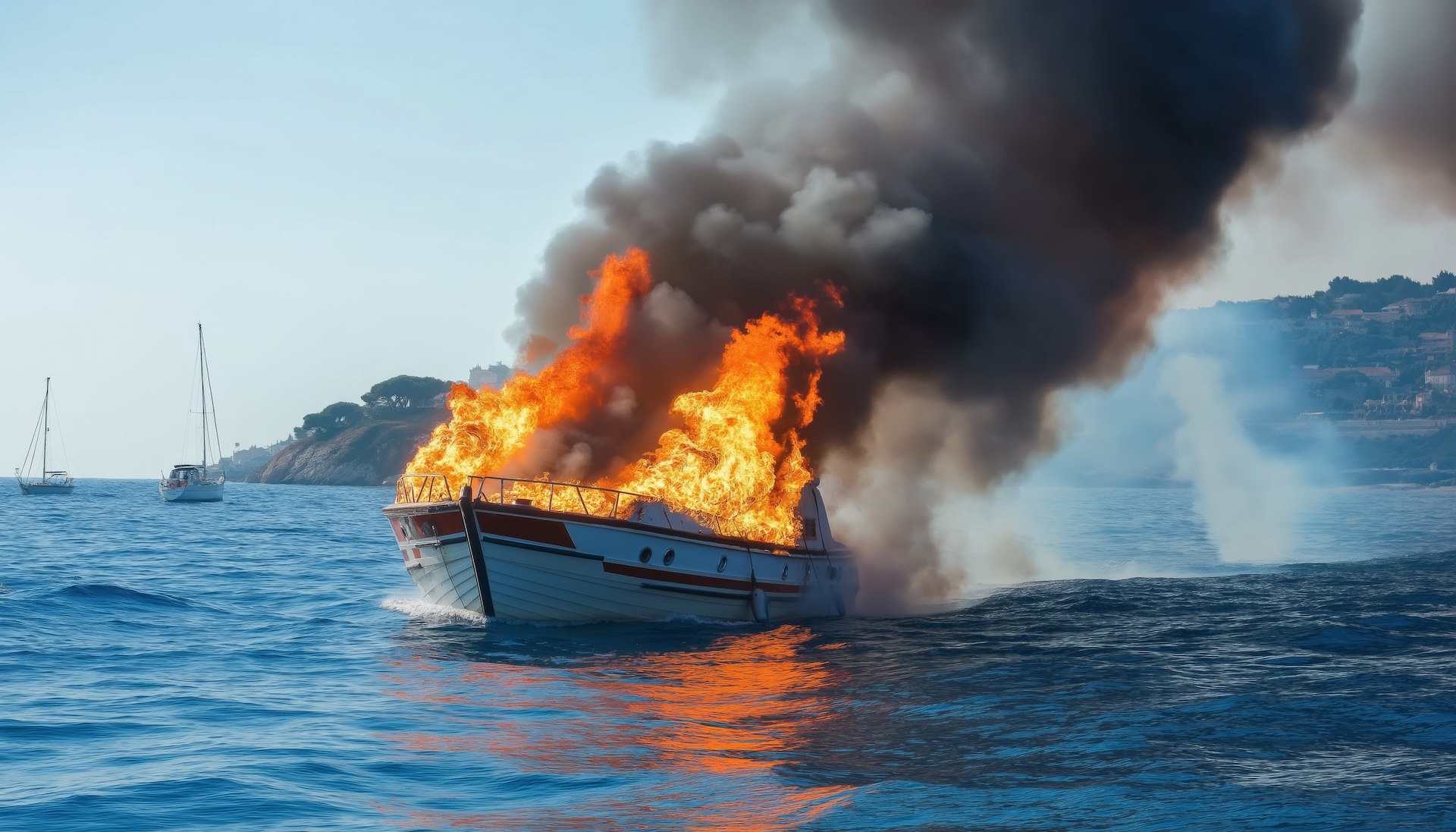
A fire on board your boat can be devastating.
If one occurs:
- Shut off fuel sources if possible
- Use a marine-rated fire extinguisher
- Aim at the base of the fire
- Move passengers away from the fire
- Prepare for possible evacuation
Never open the engine compartment if you suspect a fire, as this can fuel the flames and exacerbate the situation.
Abandoning Ship
You should only abandon ship if there are no other safe options and you can grab survival gear. If possible, stay with the floating vessel or get into a life raft, because it's much easier to spot than a person in the water.
If you have passengers, stay together as a group. Keeping warm is also crucial, especially in colder waters.
What to Include in a Boat Survival Kit
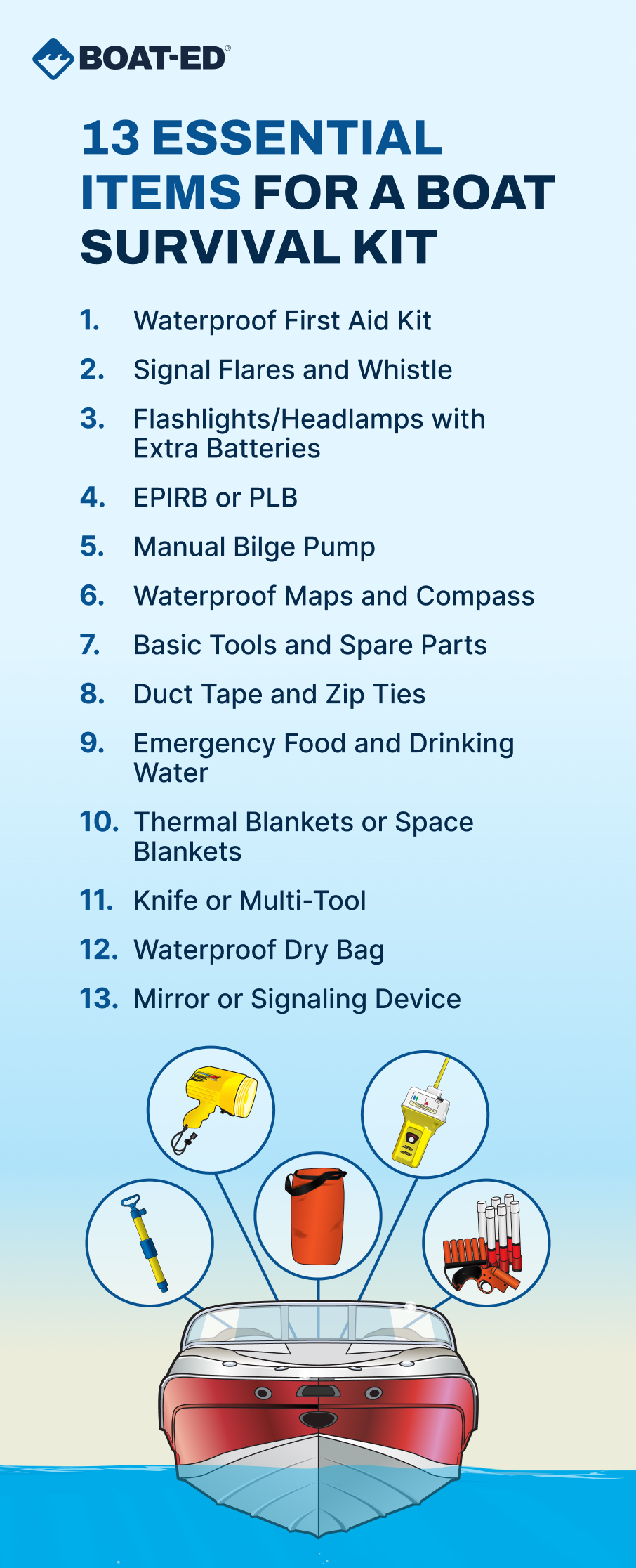
Having a boat survival kit can increase the chances of surviving a boating emergency. Here are 13 essential items to add to your kit:
- Waterproof first aid kit
- Signal flares and whistle
- Flashlights/headlamps and extra batteries
- EPIRB or PLB
- Manual bilge pump
- Waterproof maps and a compass
- Basic tools (hammer, screwdrivers, wrench) and spare parts (such as spark plugs, fuses, etc.)
- Duct tape and zip ties
- Emergency food and drinking water
- Thermal blankets or space blankets
- Knife or multi-tool
- Waterproof dry bag to keep documents (registration, licenses) and a cell phone
- Mirror or signaling device
Having these items available can make dealing with an emergency on your vessel easier and improve safety for you and your passengers.
Prevent a Boating Emergency With Smart Habits
While it's important to know what to do in a boat emergency, the best thing to do is avoid one. To reduce the chances of an emergency, ensure you check the local weather before heading out on the water.
Additionally, file a float plan with someone on shore, and perform a pre-departure safety check. This should include fuel, engine, electrical, and safety gear.
Also, be sure to inspect and service your boat and emergency equipment regularly, and educate all passengers on basic emergency procedures.
A Boater Education Course Helps You Avoid a Boating Emergency
Emergencies can happen to anyone, but being prepared makes a substantial difference. Focus on regular drills, a well-stocked survival kit, and level-headed decision-making to help save lives. Safety should be your top priority every time you leave the shore.
To help increase your knowledge and protect yourself and others in a boat emergency, take a boater education course through Boat-Ed. You'll learn emergency procedures, boating etiquette, navigation rules, and more, so you can avoid most emergencies on the water.
Plus, most states and Canada require boater operators to pass a boater education course — and Boat-Ed makes it easy.
In the U.S., take the Boat-Ed course for your state.
Boaters in Canada, take our course for Canadians.
Frequently Asked Questions (FAQs)
We have answers to common questions about what to do in a boating emergency.
Q: What to do in a boating emergency.
A: Stay calm, make sure everyone has a life jacket, signal for help, and follow emergency procedures based on the situation (fire, flooding, collision, etc.).
Q: What type of boating emergency?
A: Common boat emergencies include capsizing, fire, flooding, collision, man overboard, medical emergencies, or engine failure.
Q: How to stop a boat in an emergency.
A: To stop quickly, reduce the throttle, shift to neutral, drop the anchor if necessary, and use steering to avoid hazards.
Q: What are the three distress signals at sea?
A: The main recognized ones are a Mayday call over VHF radio, deploying flares (red or orange smoke), and raising a distress flag (a square flag with a ball or improvised visual signal).
In the U.S., take the Boat-Ed course for your state.
Boaters in Canada, take our course for Canadians.