Can You Boat Without a License? Fines and Consequences by State
In most states, it's illegal to operate a vessel without a boater education card, and the boating without license penalty includes fines of $100 to $500, even for a first offense. You could also have your boat impounded and your boating privileges suspended, along with your insurance invalidated if you're in an accident.
Fortunately, there's an easy fix: Take a course and get your US boating license. Most courses can be completed online in just a few hours.
If you plan to operate a boat, it's important to understand what kind of education and proof of competency you need. Here's what to know about boating without a license and how to get legal as quickly and easily as possible.
Is It Illegal to Boat Without a Boater Education Card?
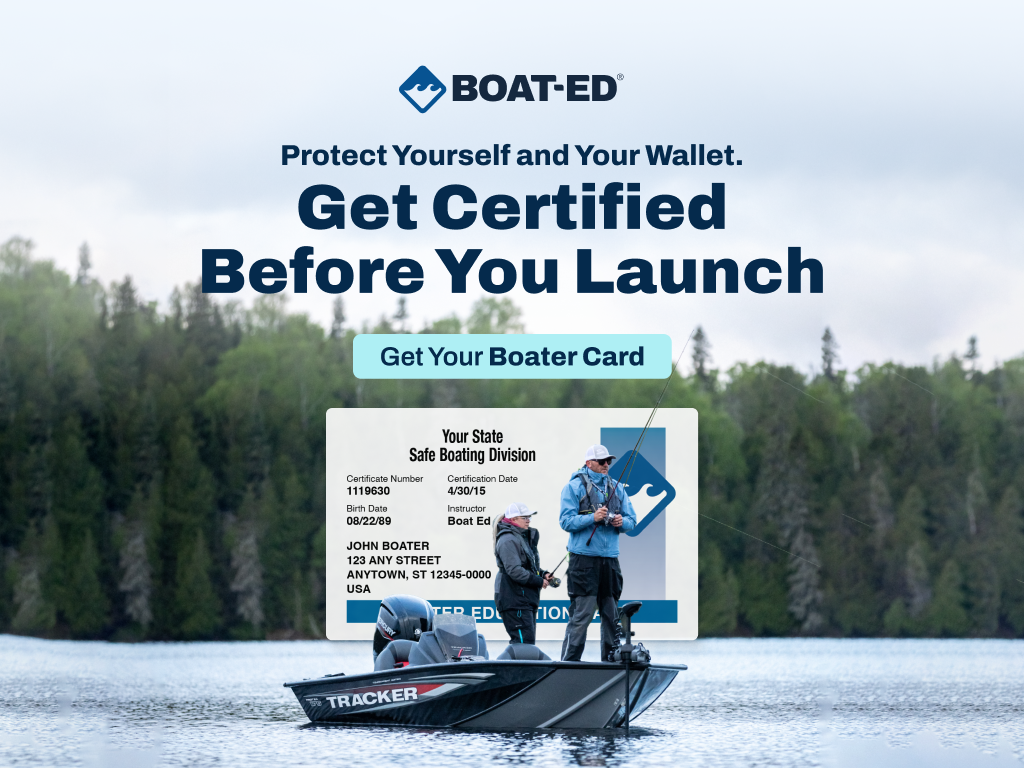
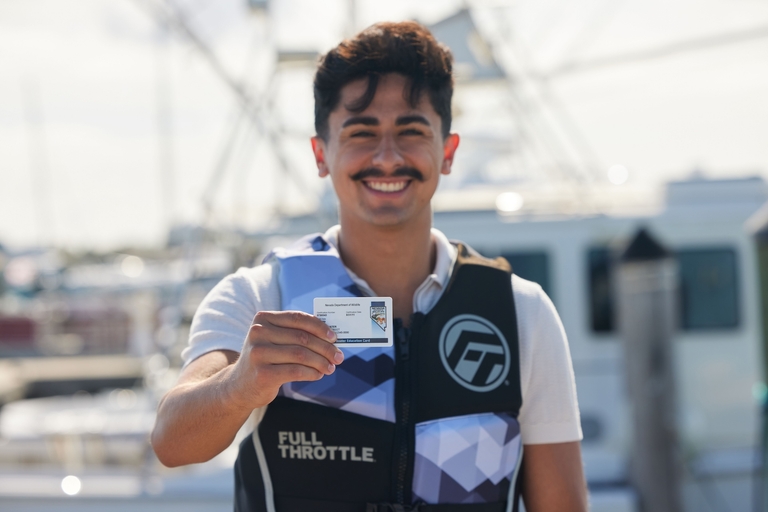
While many people say it's not legal to boat without a license, there's no official, national boating license. When they say "license," they're referring to a boater education card or boating safety certificate.
Most states require this proof that you've completed a boating course. In that sense, yes, it's illegal to boat without this card in most states.
States with mandatory boater education requirements treat operating a vessel without a boater education card as either a misdemeanor or a civil infraction, depending on the state. The operator, not the boat's owner, is responsible for carrying proof of certification.
Some states do allow for a violation to be dismissed if you show in court that you have a valid card, but the citation will still be issued on the water.
Boating Without License Penalty by State
Penalties for boating without a license vary by state, the type of vessel, and whether you're a first or repeat offender. Here's a general overview of the boating without a license consequences you can expect, but it's important to always verify this with your state's official boating authority, as penalties can change.
Boating Without a License: Penalties by State | |||
| State | First-Offense Fine | Violation Type | Notes |
Alabama | $100 minimum + court costs | Civil violation | Per Boat-Ed/ALEA enforcement guidelines |
Alaska | No penalty | No boater education certificate required | |
Arizona | No penalty | No boater education certificate required | |
California | $100–$500 | Infraction | CA State Parks official (dismissible with proof of valid card) |
Colorado | Potential fines or water restrictions | ||
Connecticut | $60–$250 | Civil violation | Connecticut General Statutes (per violation) |
Delaware | Statutory fine per Class D environmental violation | Class D environmental violation | Delaware Code Title 23 §2221–2224; no fixed dollar amount in statute (fine set per DE environmental violation schedule). Dismissible with proof of valid card produced in court. |
Florida | $100 + court costs (~$118 total) | Noncriminal infraction | Dismissible for $10 with proof. Mandatory education on 2nd offense within 12 months. |
Georgia | Verify with GA | DNR Civil violation | GA DNR enforces (specific fine not confirmed in available sources) |
Hawaii | Fines $50–$1,000 | Potential imprisonment or loss of vessel operation privileges up to 30 days | |
Idaho | Standard fine | ||
Illinois | Fines up to $2,500 | Class A misdemeanor | 625 ILCS 45/5-18. First-time offenders exempt from mandatory 1-year watercraft privilege suspension. |
Iowa | See IA DNR (no general penalty) | Civil violation | Iowa Code Ch. 462A. Specific scheduled fine not confirmed. Iowa's scheduled violation fines list does not include a specific boater education card violation amount. |
Kansas | See KS Wildlife, Parks & Tourism | Civil violation | Specific fine not confirmed in available sources |
Louisiana | $50 fine for first offense | $75–$250 fine for second offense; $200–$550 fine third or subsequent offense | |
Maine | $100–$500 fine | Civil violation | |
Maryland | Not exceeding $25 (first offense) | Misdemeanor | MD Natural Resources Code §8- 712.2(d). Secondary enforcement only (officers may only cite for this as a secondary action) |
Massachusetts | TBD (enforcement begins Sept. 1, 2026) | Civil violation | Fine amount not yet published by MA Environmental Police |
Michigan | Fine up to $100–$500 | Civil violation | |
Minnesota | Fine ~$100 | Civil violation | Phased rollout through 2028. MN Stat. Ch. 86B. |
Missouri | Fines and fees up to $117 | Civil violation | MO 306.127 |
Montana | See MT Fish, Wildlife & Parks | Civil violation | Specific fine not confirmed in available sources |
Nebraska | Fine up to $100 (first offense) | Class V misdemeanor | $500 fine for later offenses |
Nevada | Fines up to $1,000 | Misdemeanor | Possible mandatory safety course before operating a vessel again |
New Hampshire | Fines $250–$500 (first offense) | Fines up to $1,000 (subsequent offenses). NH Revised Statutes Section 270:18. | |
New Jersey | $100–$500 (first offense) | Civil violation | Per NJ State Police Marine Services Bureau enforcement. Tiered structure: 1st offense $100–$500, 2nd $300, 3rd+ $500. |
New Mexico | Fine up to $500 | Civil violation | Potential brief imprisonment |
New York | $25–$250 for first offense (amount varies by court) | Civil / possible certificate suspension | Brianna's Law (fully enacted Jan. 1, 2025) |
North Carolina | $50 | Infraction | NC General Statute §75A-16.2 (dismissible with proof of course completion) |
Ohio | Up to $150 | Minor misdemeanor | Confirmed per Ohio DNR enforcement |
Oregon | Fine $5–$1,000 | Class B violation | ORS 830.990. Scheduled fine for Class B violations set by Oregon courts. |
Pennsylvania | Fines $100–$300 | Civil violation | |
Rhode Island | Fine up to $100 | Civil violation | |
South Carolina | Up to $300 | Civil violation | Per SCDNR: applies even if course completed but card not carried. |
South Dakota | No penalty | No boater education certificate required | |
Tennessee | Fines up to $50 | Class C misdemeanor | |
Texas | Up to $500 | Misdemeanor | Boat-Ed/TPWD study guide confirms $25–$500 fine range |
Vermont | Fines up to $50–$300 | Civil Violation | |
Virginia | Civil penalty of $100 | Civil penalty | |
Washington | Minimum fine off $99 | Civil infraction | Officers must issue a ticket if you cannot show your card. |
West Virginia | Fine up to $1,000 | Misdemeanor | |
Wisconsin | Fine ~$232 | Non-criminal violation | |
Wyoming | No fine or penalty | No boater education certificate required | |
Keep in mind that repeat offenses escalate quickly, and most states double or triple their fines if you have a second violation within 12 months.
Additionally, some states treat operating a vessel without a boater card as a misdemeanor, which is a criminal offense, not just a civil infraction. That can result in a criminal record, so it's crucial to get your boating license before heading out on the water.
Beyond the Fine: Other Consequences of Boating Without a Card
Boating without proof of competency exposes you (and potentially anyone on your vessel) to serious physical, legal, and financial consequences.
- Vessel impoundment: In some states, your vessel will be impounded if you're boating without a safety card. The US Coast Guard can also detain you for serious violations, which include boating under the influence or operating a vessel without the proper safety documentation.
- Loss of boating privileges: You could face a loss of your boating privileges, too. States like New York often revoke or suspend the boating safety certificates of repeat offenders.
- Insurance coverage risks: Insurance coverage issues can also arise if you operate without the necessary certification and get into an accident. Your insurer may reduce their payout or even deny your claim, depending on your policy and state laws.
- Liability exposure: Additionally, you could be liable in an accident if you aren't certified and you injure someone or cause property damage. Not having a boating safety card could potentially be grounds for a civil claim of negligence.
On top of all that, there’s an important recreational vs. commercial distinction. Commercial vessel operators face far stronger penalties of up to $10,000 per infraction by the Coast Guard. That applies to anyone carrying paying passengers without a captain's license.
How to Get Certified Fast (Step by Step)
The good news is that learning boating laws and getting certified is a simple process. Following these steps can help you avoid a boating without license penalty and get you legal to be on the water in no time.
- Verify whether your state requires a boater card. You can do that by checking the requirements for vessel type, operator age, and horsepower requirements.
- If you need a license and don't have one yet, stop operating any vessels. Even one citation could leave you with a permanent record, and a second one could trigger significant penalties.
- Take your state's boater education course through us at Boat-Ed. Our courses are approved by state boating authorities, and we offer an approved course for almost every state.
- Complete your course, which typically takes three to eight hours. It's self-paced and available online. You'll learn about safety equipment, navigation rules, and state-specific laws.
- Pay any US boating license costs and pass the final exam. Most courses, including ours at Boat-Ed, give you unlimited retakes if you don't pass on the first try.
- Print your temporary card, which is valid right away in most cases. That means you can get out on the water the same day you pass the exam.
- Get your permanent card in the mail. Your card should come in within two to four weeks, and it's valid for life. It will never expire, and you don't need to renew it. Additionally, it's recognized in every state that has mandatory boater education.

What If I'm Already Certified in a Different State?
Most states have reciprocity, which means they accept NASBLA-approved cards from other states. You'll still need to follow the laws of the state where you're boating, even if your card is from another state.
If you're a new resident, you may also want to check whether your home-state card meets all the new state's requirements. In some cases, a state may have residency rules you'll need to follow.
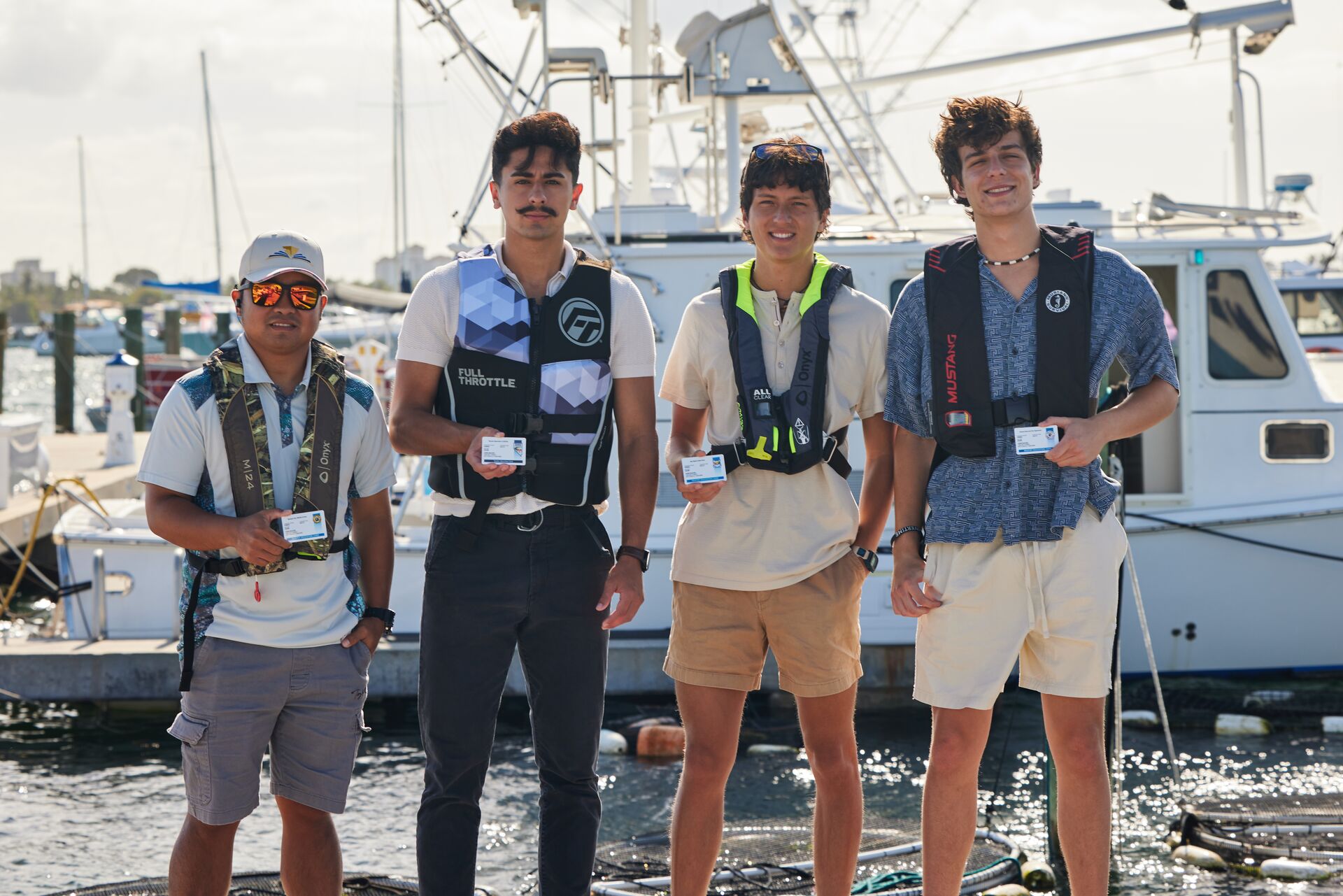
Get Certified Now, Boat Legally All Season
Getting a fine for boating without a boater education card is the least of your worries if you're caught without your card. There are liability exposure and insurance gap issues that are even more important to consider.
Fortunately, you can get certified quickly, permanently, and affordably when you choose the course for your state through Boat-Ed. Our courses are fully online, self-paced, and state-approved, so you can be ready to boat with confidence in just a few hours.

Frequently Asked Questions (FAQs)
Q: What's the typical fine for boating without a card?
A: The penalty varies by state. First-time fines commonly range from about $25 to $500, though some states impose higher penalties or classify the violation as a misdemeanor. Check your state's boating authority for the current requirements and penalties.
Q: Can my boat be impounded?
A: Yes, in some states. Depending on the circumstances and local laws, authorities may impound your vessel or suspend your boating privileges for certain violations.
Q: Does insurance cover an accident if I'm uncertified?
A: It depends on your insurance policy and state law. Operating a boat without the required certification could reduce your payout or lead to a denied claim if you're involved in an accident.
Q: Is a quick trip without a card still illegal?
A: Yes. If your state requires a boater education card, operating a boat without one is still a violation, even if you're only making a short trip.
Q: Are there exceptions for rentals or guided tours?
A: Sometimes. Many states have special rules for rental boats that allow operators to complete a dockside safety briefing or rental safety checklist instead of presenting a boater education card. However, these exceptions aren't universal, and the requirements vary by state.
Q: What if I'm certified in another state?
A: Most states recognize NASBLA-approved boater education cards issued by other states through reciprocity agreements. You'll still need to follow the boating laws of the state where you're operating.
Q: Can I take the course to reduce a fine I already got?
A: In some states, completing or proving you already have a valid boater education card may allow a citation to be reduced or dismissed. Whether that's available depends on your state's laws and the circumstances of the violation.