How Are Channel Markers Boating Related?
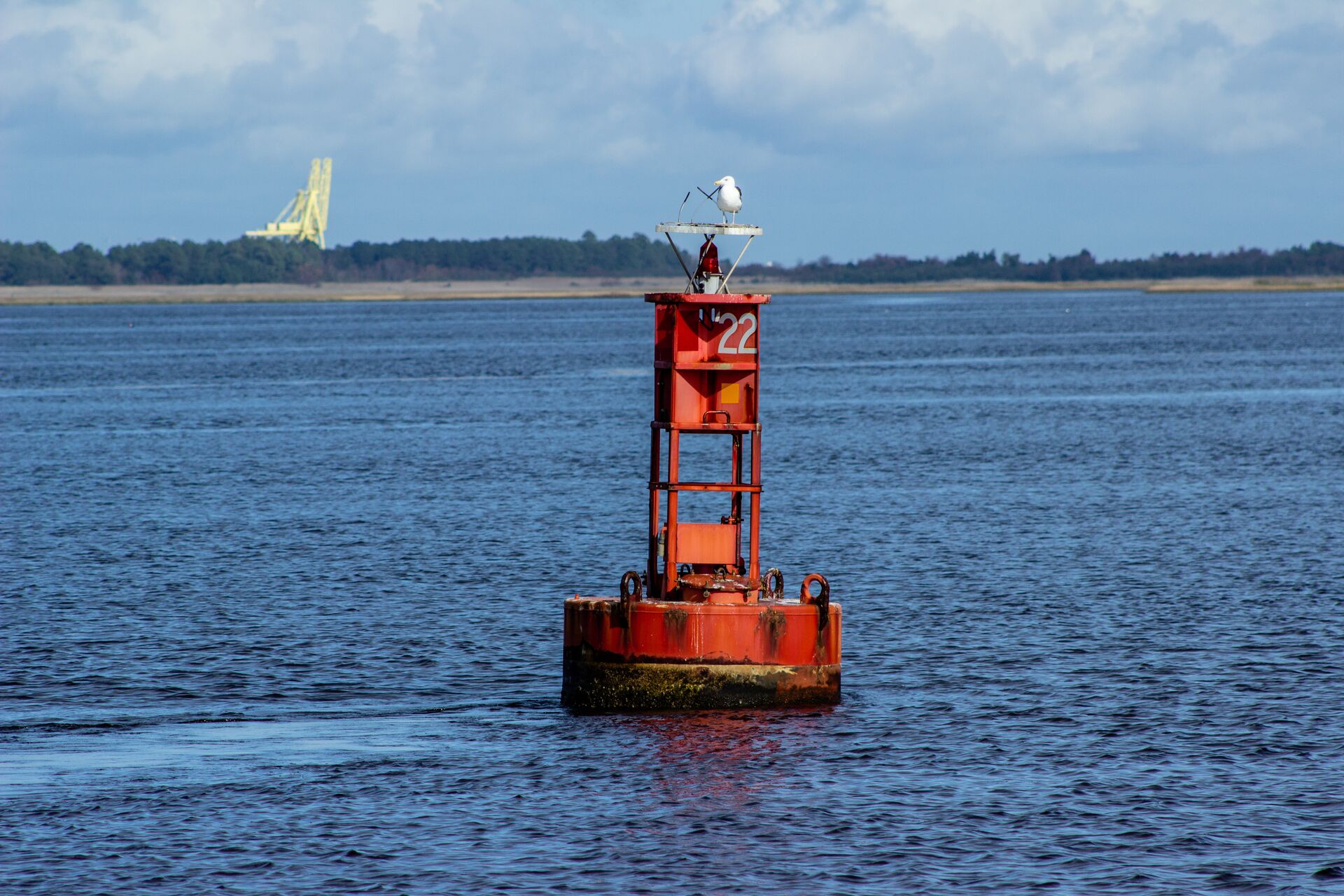
If you're thinking about channel markers, boating safety and navigation are probably also top of mind. Channel markers play a big role in helping you and other boaters traverse the waterways, so it's essential to understand how they work and what they mean.
Here's what you need to know about these crucial markers and how you can use them to navigate, abide by right-of-way rules, and protect yourself and others.
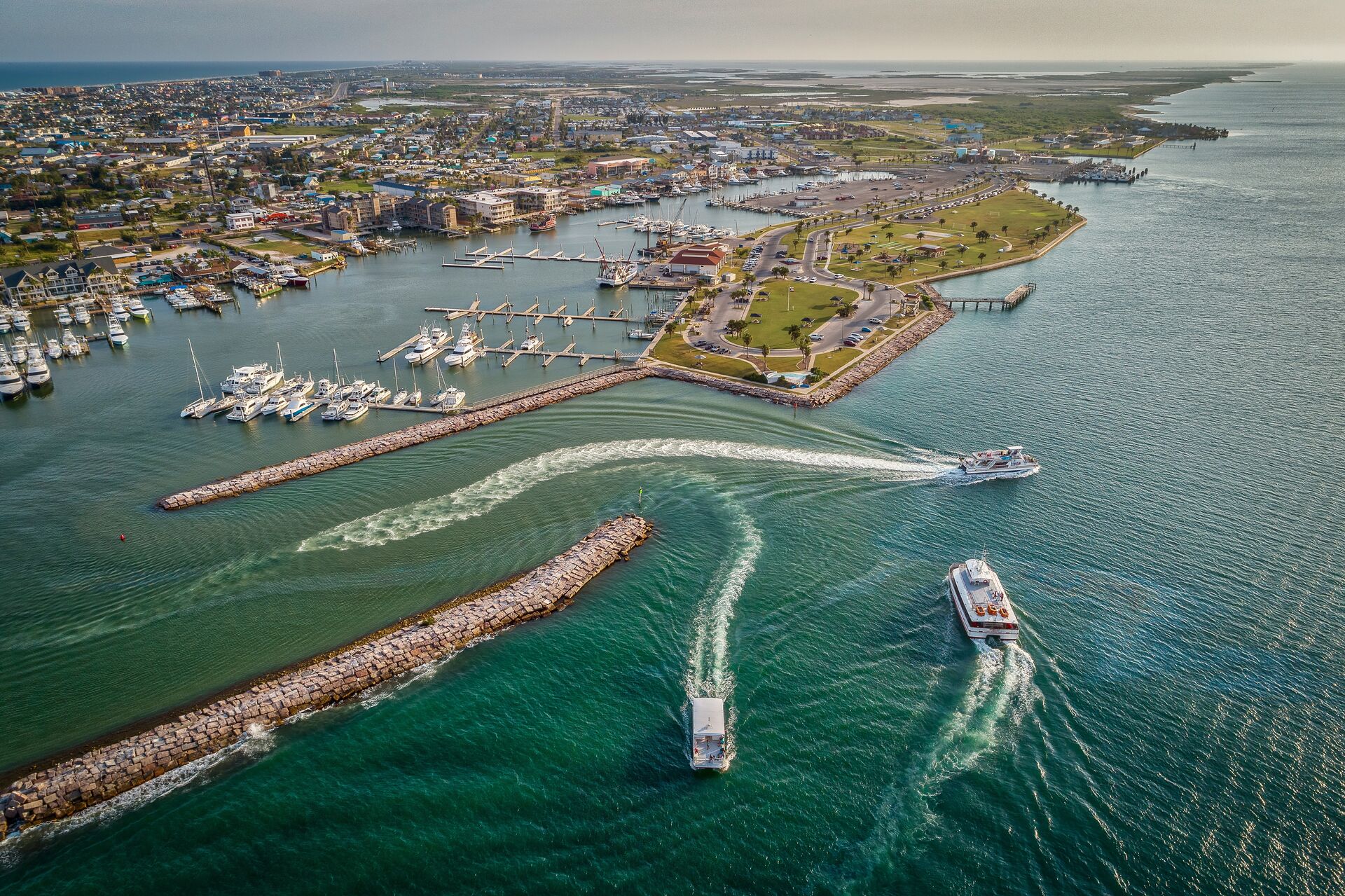
What Are Channel Markers for Boating?
Channel markers are either floating or fixed navigation aids that help you locate and navigate safe water routes. They mark not only channels, but also hazards and boundaries.
These markers help boaters avoid running aground or hitting underwater obstacles, and they keep your vessel on a safe path, making it much easier to steer clear of other boats. Markers are part of the U.S. Aids to Navigation System (ATON), which the U.S. Coast Guard manages.
Rules for Boating Navigation Markers
Follow boating navigation markers whenever you see them on the water, and always err on the side of safety by operating within marked channels (when present). Pay close attention to the shapes, colors, and numbers on the markers around you, so you can more easily understand positioning.
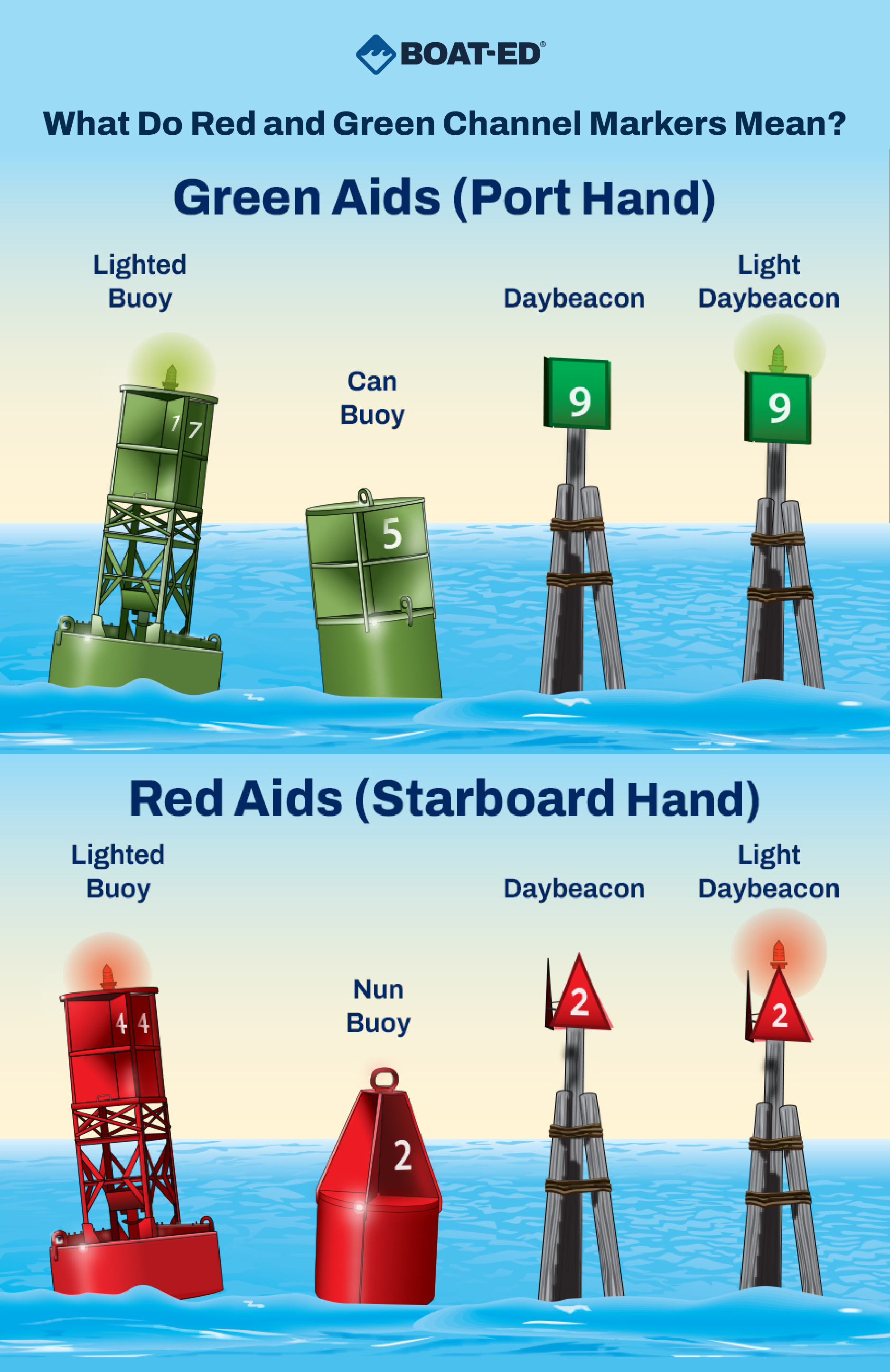
- Red markers have even numbers and are cone-shaped ("nuns")
- Green markers have odd numbers and are can-shaped ("cans")
When you're coming back from being at sea, always follow the "red right returning" rule to avoid ending up in another vessel's path.
Never assume the markers you see are only lights. Shapes, colors, and topmarks are just as important as the lights displayed on these essential navigation aids.
In addition to following navigational markers, make sure to listen for boating sound signals. These add to the information you have when you're traveling on the water and can be crucial if it's dark, foggy, or visibility is otherwise low. When you combine markers and boat sound signals, you can get a clearer picture of what's around you and avoid risks.
What Do Red and Green Channel Markers Mean?
If you're looking at buoy colors, boating can be easier, since the colors give you essential navigation data. Red and green navigation buoys also help keep boaters safe by indicating right-of-way.
For example, red markers indicate the right (starboard) side of the channel when returning from sea. Green markers indicate the left (port) side when returning from sea. Together, these mark the safe passage route for vessels.
Note the numbers on the markers as well. They increase as you travel upstream or inland. Marker numbers can help you estimate how far you've traveled, and when paired with buoy colors, boating navigation can be more straightforward.
What Side of a Buoy Should You Pass On?
With a proper understanding of channel markers, boating is safer and less complicated.
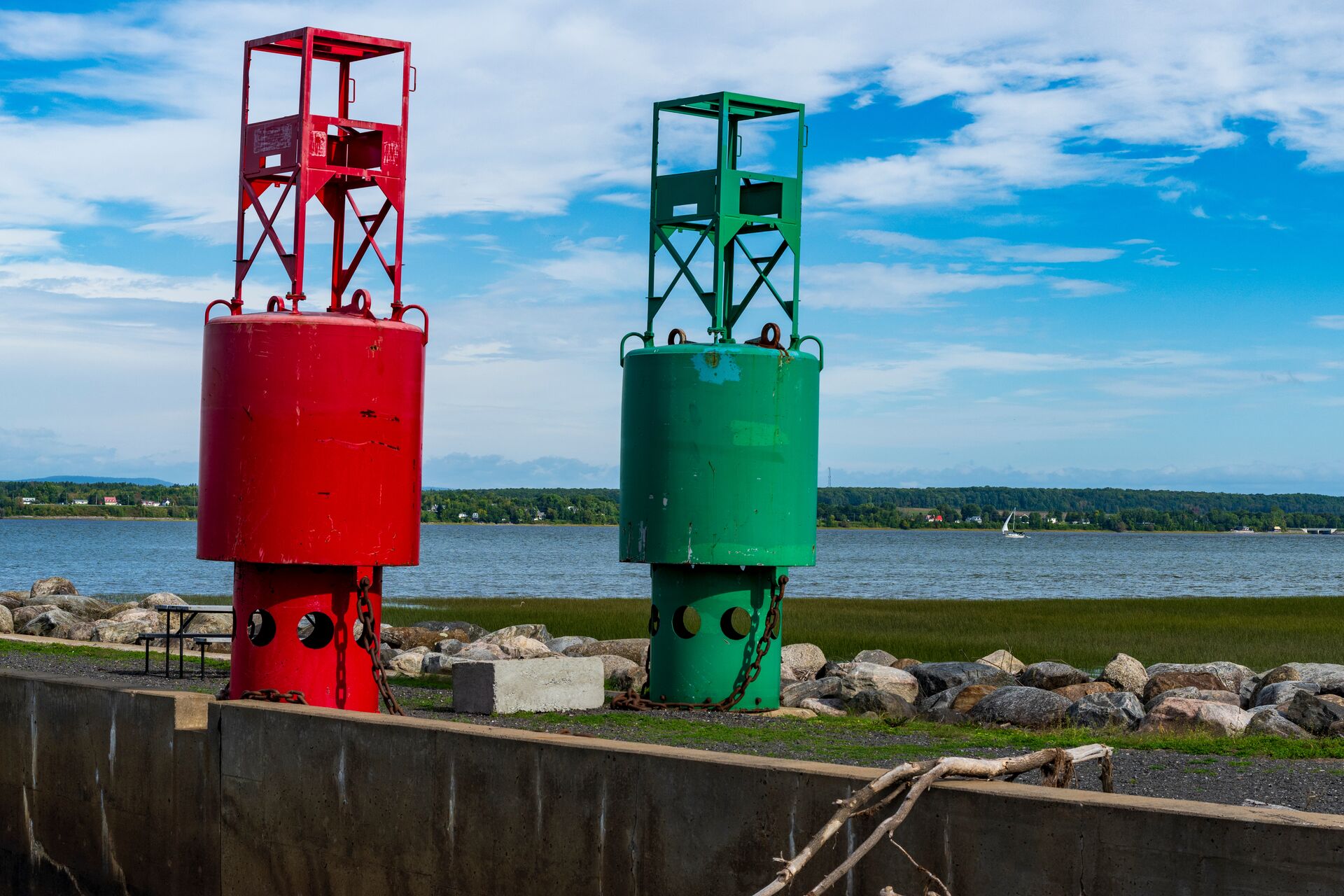
- If you see a red buoy, pass with it on your starboard (right) side if you're returning from sea and heading inland.
- Pass with green buoys on your port (left) side when you're traveling inland.
If you're heading out to sea, the opposite rules apply, and you'll keep red buoys on your left side and green buoys to your right. By navigating on the correct side of the buoys, you reduce accident risk, including the potential for a collision with another vessel.


What Is the "Red Right Returning" Rule?
The "red right returning" rule is a memory aid for navigating channels. It means you should always keep the red channel markers on your starboard (right-hand) side when you're returning from the sea or heading upstream.
This rule applies to all U.S. waterways, as well as the IALA-B navigation system. Follow proper navigation rules at all times, even if you're having fun on local waterways in a small boat. Failing to do so could result in serious issues, such as accidents or fines.
How to Learn More About Channel Markers, Boating, and Navigation
There are many ways to gain knowledge about channel markers and boating safety.
For example, the U.S. Coast Guard's "Aids to Navigation" resources and the Navigation Rules handbook provide more detailed information on navigation markers. The U.S. Power Squadrons and Coast Guard Auxiliary offer free or low-cost classes, and you can also access nautical charts from NOAA (National Oceanic and Atmospheric Administration).
When the weather is nice, practice on the water with experienced boaters or instructors.
Local or online boating safety courses (like Boat-Ed)—which are often requirements to operate a boat legally—will also help you learn about channel markers, navigation aids, and boating terminology, so you know what to expect and how to relay information to others. Boater safety courses are highly valuable, even if your state doesn't require them.

Learn More About Safe Boat Navigation with Boater Education
Understanding proper navigation on the water is crucial for safe, responsible boating. So, don't leave the dock without taking a boat education course to stay safe on the water.
Even if you're a seasoned boater, a refresher course can provide you with more up-to-date knowledge to increase your safety and improve your boating experiences. You might also need boater education to meet the legal requirements for boating in your state or on Canadian waters.
Boat-Ed makes it easy to learn about navigation (and more) through our online courses for boaters in the U.S. and Canada!
Make sure you have the safety knowledge you need and meet the requirements for your region.

Frequently Asked Questions (FAQs)
We have answers to questions about boating navigation markers!