Do You Need a Boating License in Maine?

If you live in Maine and were born on or after January 1, 1999, you need a boating safety certificate to operate a motorized vessel over 25 horsepower. That includes not only standard boats, but also personal watercraft (PWC) such as jet skis.
This requirement took effect January 1, 2024, and applies to inland and territorial waters. When you get your boating license, it's valid for life, and you won't need to renew it.
So, do you need a boating license in Maine? Yes, most boaters do! Here's what to know about getting one and why it's so important.
Do You Need a Boating License in Maine?
While Maine doesn't require a traditional "license" like a driver's license, operators of motorized vessels with more than 25 horsepower need a Boating Safety Education Card. The requirements for this card depend on your age, the type of watercraft you're using, and the engine's horsepower.
It's essential to note that this means some boaters won't need a safety card, but it's still a good idea to get one. Taking a boating safety and education course can make you more confident, keep you safer, and also protect other boaters and the environment.
- If you're a younger boater or a PWC user, you'll need to get your boating license before heading out on the water.
- If you're an older boater or you're operating a vessel that's less than 25 horsepower, having a boating education card is still a great way to ensure you're properly prepared.
Even if it's not required, we still definitely recommend it.
What Is a Boating Safety Education Card?
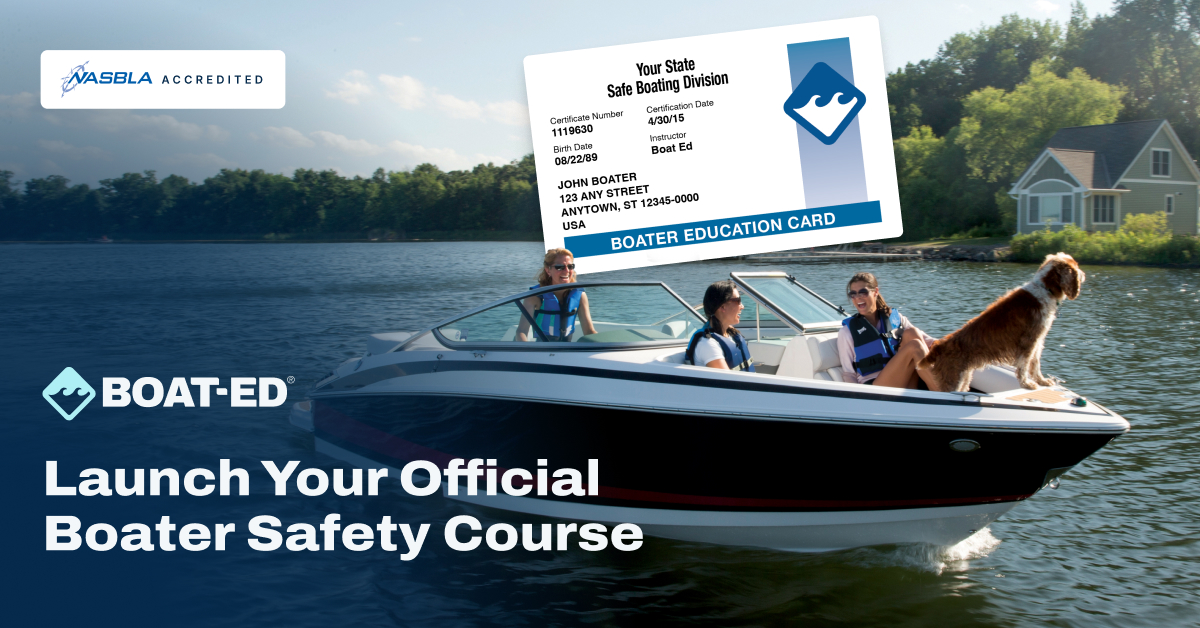
A Boating Safety Education Card proves you've completed a state-approved boating safety course. This card is issued after you take a course approved by the Maine Department of Inland Fisheries & Wildlife (MDIFW) and the National Association of State Boating Law Administrators (NASBLA).
Once you complete your course and pass the exam at the end, you'll get a card that's valid for recreational motorized vessel operation. While it's not technically a "license," it serves a similar purpose and keeps you in legal compliance when you're enjoying Maine's waterways.
What Are the Mandatory Certification Requirements?
So, do you need a boating license in Maine? Probably, but not everyone does.
There are some mandatory certification requirements you'll need to follow.
| Maine Boating License Requirements by Age: | ||
Age Range | Needs Certification? | Details |
Born on or after January 1, 1999 | Yes | Anyone born on or after January 1, 1999, needs a Boating Safety Education Card to operate a personal watercraft (PWC) or a motorized vessel with over 25 horsepower. If you're operating a PWC, you also need to be at least 16 years old. |
Born before January 1, 1999 | No | People born before January 1, 1999, are exempt from the mandatory education requirement. |
However, even if you fall into the requirement category, it's still valuable to take a safety course. The more you know about boater education and the state's laws surrounding it, the safer you'll be while boating. Once you get your boating license, it's valid for life.
Age Restrictions and Supervision Rules
Age plays a big role in boater education. It's not just about whether you're required to have a license, but also about additional restrictions for younger boaters to keep them and others safe on the water.
Maine Boating Age Restrictions and Rules: | |
| Age | Rules |
Under 12 Years Old | Boaters under 12 years old can operate motorized vessels with up to 10 horsepower on their own. If they want to operate boats between 10 and 25 horsepower, they need supervision from someone who's at least 16. They're not allowed to operate any motorized vessel over 25 horsepower at all, regardless of supervision. |
Ages 12 to 15 | Boaters between the ages of 12 and 15 can operate motorized vessels up to 25 horsepower on their own. If they want to operate vessels with more than 25 horsepower, they'll need to be certified, based on being born after 1999. |
Personal Watercraft (PWC) Rules
No one under 16 may operate a personal watercraft, regardless of horsepower or supervision status. The goal is to ensure that all PWC operators have the proper skills and training to increase their safety, including both age and boating certification.
2026 Maine Life Jacket Law Update
While life jackets have always been important for boating safety, Maine has recently updated its requirements. This was done to increase protection for children and younger boaters, to reduce accidents and injuries.
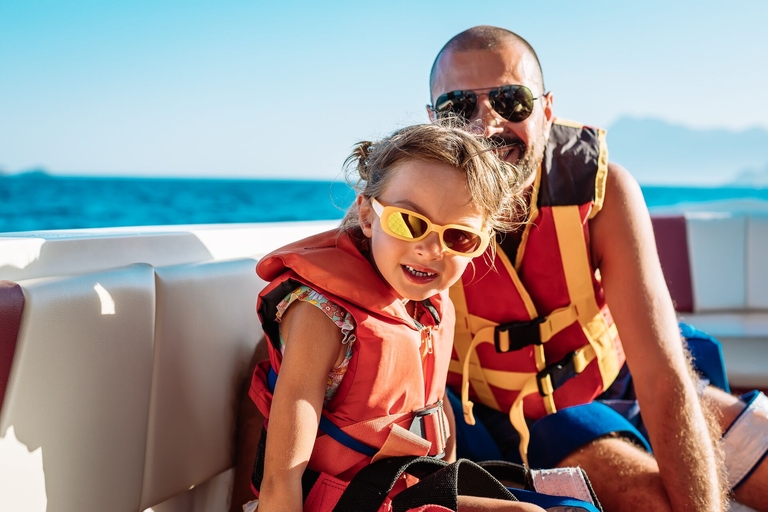
New Rule (Effective January 1, 2026): As of January 1, 2026, children 12 and under must wear a U.S. Coast Guard-approved life jacket at all times while on a boat underway.
Previously, this rule only applied to children 10 and under. The change was made to reflect an increased focus on waterway safety throughout the state.
How to Get Your Boating License in Maine
Getting certified to boat in Maine is a simple process. With just a few steps and the cost of a boating license and safety course, you can be out on the water in just a few hours.
Step 1: Take an Approved Course
The course you choose must be approved by MDIFW and NASBLA (like Boat-Ed).
Taking an approved course helps you get the proper education and ensures you can get your boating license.
Step 2: Choose Your Format
There are online options like ours at Boat-Ed. There are also in-person classes taught by trained volunteers available throughout Maine.
You can find the schedules for these classes listed on the MDIFW website.
Step 3: Pass the Course
Once you complete your lessons and pass the final exam, you'll get your Boating Safety Education Card. The exam is generally open-book and multiple-choice, but it's important to study the lessons and ensure you understand safe boating practices before taking it.
Reciprocity with Other States
Maine recognizes NASBLA-approved boating education and safety cards from other states. That means visitors and seasonal boaters can legally boat on Maine waters with their cards, and you can take your Maine boating license to other states and boat on their waters, as well.

Get Your Boater Education Card in Maine with Boat-Ed
Even if it's not required to meet the regulations in Maine, we strongly recommend taking a boating safety course to help you gain better knowledge of safety, navigation, emergency procedures, and current boating laws.
It's fast and easy to get your boating license through us at Boat-Ed, so you can start enjoying Maine's incredible lakes, rivers, and coastline safely and with confidence.
Frequently Asked Questions (FAQs)
Q: Do you need a license to drive a boat in Maine?
A: Maine does not issue a traditional boating license. Instead, the state requires a boater safety education certificate. Anyone born after January 1, 1999, who wants to operate a motorboat greater than 25 horsepower or a personal watercraft (PWC) on Maine's inland waters or territorial sea must complete an approved boater safety and education course. Boaters born before January 1, 1999, are not required to complete a course, though it is strongly recommended.
Q: How do you get a boating license in Maine?
A: Maine uses boating education certificates rather than a traditional boating license. To get one, you need to complete a boating safety course that meets Maine's NASBLA-approved standards. Once you pass and pay the course fee, you can print your Certificate of Completion right away. Courses are available online for $30–$80. When taking the course through Boat-Ed, you'll pay $49.95.
Q: Does a Maine boating license work in New Hampshire?
A: Yes. Most states accept boating education cards from other states as long as the course is NASBLA-approved, and New Hampshire is no exception. That means a valid Maine boater education certificate works in New Hampshire. Keep in mind that you must still follow New Hampshire's boating laws while on its waters, including any applicable age and horsepower requirements.
Q: Can you drink a beer while driving a boat in Maine?
A: The operator cannot drink while boating. Boating under the influence (BUI) is illegal in Maine. Operating a recreational vessel with a blood alcohol concentration of .08 or higher is against state law, and BUI applies to drugs as well as alcohol. Maine's zero-tolerance law for underage drivers also applies to underage boaters: if you are under 21 and operating a boat, any alcohol in your system can lead to your arrest.
Q: What are you required to have on a boat in Maine?
A: State law requires each person on board to have a properly fitting U.S. Coast Guard-approved life jacket. Boats longer than 16 feet must also carry a throwable PFD. If your boat has any enclosed compartments or a false floor, you must carry a charged, accessible Coast Guard-approved fire extinguisher. As of January 1, 2026, children 12 and under must wear a U.S. Coast Guard-approved PFD while on any watercraft that is underway, with exceptions if the child is below decks or in an enclosed cabin. You are also required to carry your current boat registration on board and display a valid registration number and year sticker on the vessel.