Do You Need a Boating License in Massachusetts?

If you're asking, "Do you need a boating license in Massachusetts?" the answer is likely yes, because everyone will soon be required to have one (based on the latest updates to the state's laws), and you might as well get it now.
| Massachusetts Boating License — Quick Facts | ||
| Who Needs It By April 1, 2028, all motorized boat operators | How Long is it Valid? Good for Life | How to Get It Take a state-approved boater safety course |
In this Guide:
- Do You Need a Boating License in Massachusetts?
- What Is the Massachusetts Boater Safety Certificate?
- What Are the Mandatory Certification Deadlines?
- How to Get Your Massachusetts Boating Certificate
- Reciprocity with Other States
- Massachusetts Vessel Registration Requirements
- Get Your Boater Education Card in Massachusetts with Boat-Ed
- Frequently Asked Questions (FAQs)
Do You Need a Boating License in Massachusetts?
The short answer is yes, you need (or will soon need) a boating license in Massachusetts.
The state has begun rolling out a mandatory boater education requirement. If you operate a motorized boat or a personal watercraft (PWC) like a jet ski on the state's waterways, you'll need to have a license.
The Hanson-Milone Boater Safety Act, passed in January 2025, is driving the change, with the state phasing in age-based requirements:
If you were born after January 1, 1989, you needed to complete the course by April 1, 2026. But you have until September 1, 2026, before penalties are assessed.
If you were born on or before January 1, 1989, you’ll have until April 1, 2028, to complete the course.
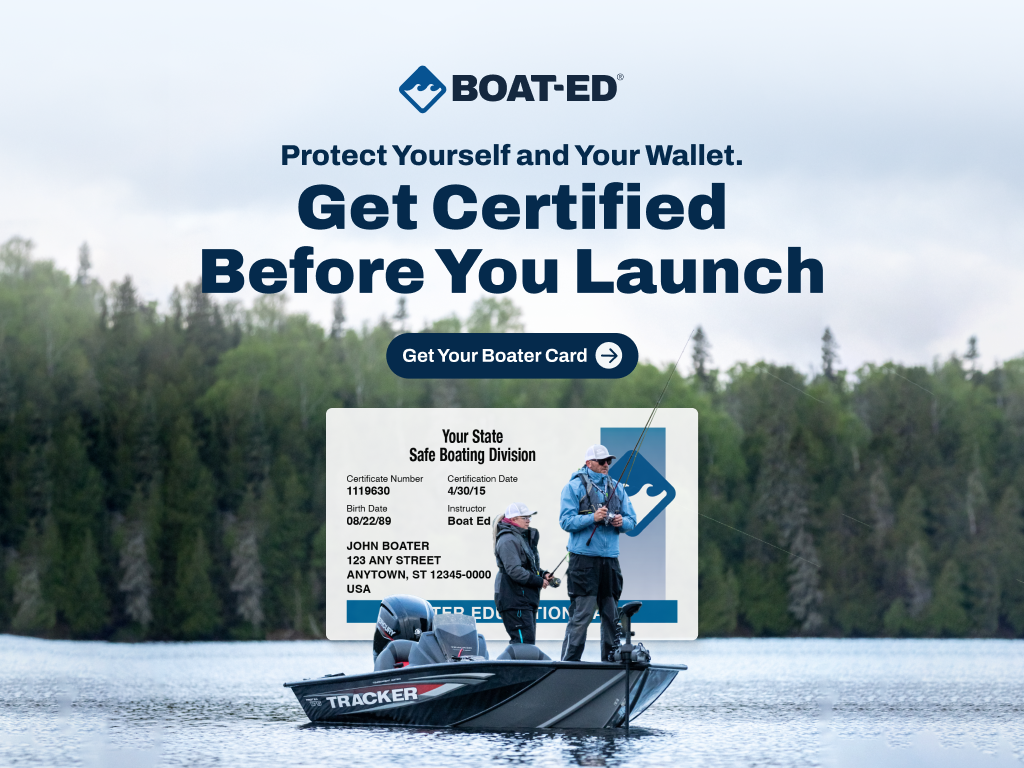
It's important to note that, while many people use the term "boating license," it's actually a boater safety certificate. Earning it shows you understand standard navigation rules, emergency procedures, and environmental protections.
Once you have your certificate, you'll also have reciprocity with other states, making it convenient if you want to boat while traveling.
What Is the Massachusetts Boater Safety Certificate?
The Massachusetts boater safety certificate is proof of competency. It shows that you've completed a boating safety course that's approved by the National Association of State Boating Law Administrators (NASBLA).
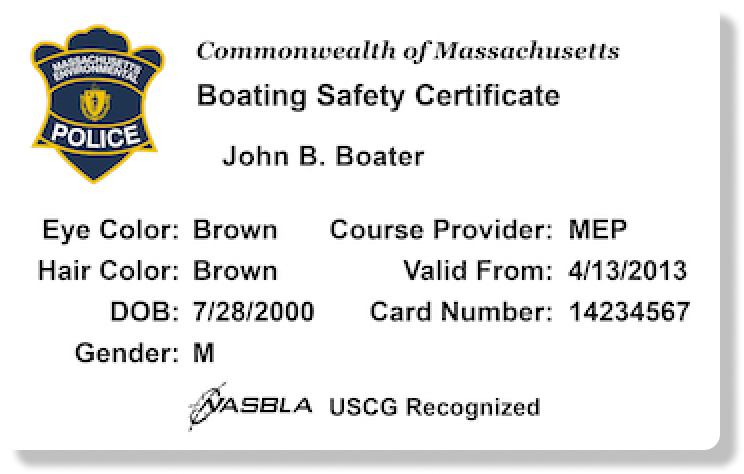
If you're operating a recreational motorboat or PWC on the state's waterways, you'll be required to obtain it.
Not only does having this certificate help improve overall waterway safety, but it can also reduce boating accidents. Soon, it will be a legal requirement for all boaters, unless they're on private waterways.
What Are the Mandatory Certification Deadlines?
Since the law has recently changed, let's highlight the new deadlines again.
Mandatory Boater Education Deadlines for Massachusetts Boaters |
|
Even though the first April deadline has passed for boat operators born after January 1, 1989, you can still get your certificate (and you should). Just don't boat until you get it, so you won't have to worry about noncompliance.
Eventually, all motorized boat operators will need certification, so there's no reason not to go ahead and get your boating license. The cost of a safety certificate is low, and it doesn't take long to earn one.
Current Youth and PWC Requirements
The Massachusetts boating handbook explains all the rules, so you know what currently applies and what will be changing. But until full implementation has taken place, there are some specifics to follow.
Kentucky Youth and PWC Requirements: | |
Children under 12 | Cannot legally operate a motorboat at all unless they're directly supervised by someone who's at least 18. |
| Children ages 12 to 15 | Can operate a motorboat with more than 10 horsepower only if they're certified. They need to carry that certificate with them or have adult supervision (18+) on board. |
| Children ages 16 to 17 | Must complete a course to operate a PWC and carry their certificate with them. |
| Children under 16 | Cannot operate a PWC under any circumstances. |
How to Get Your Massachusetts Boating Certificate
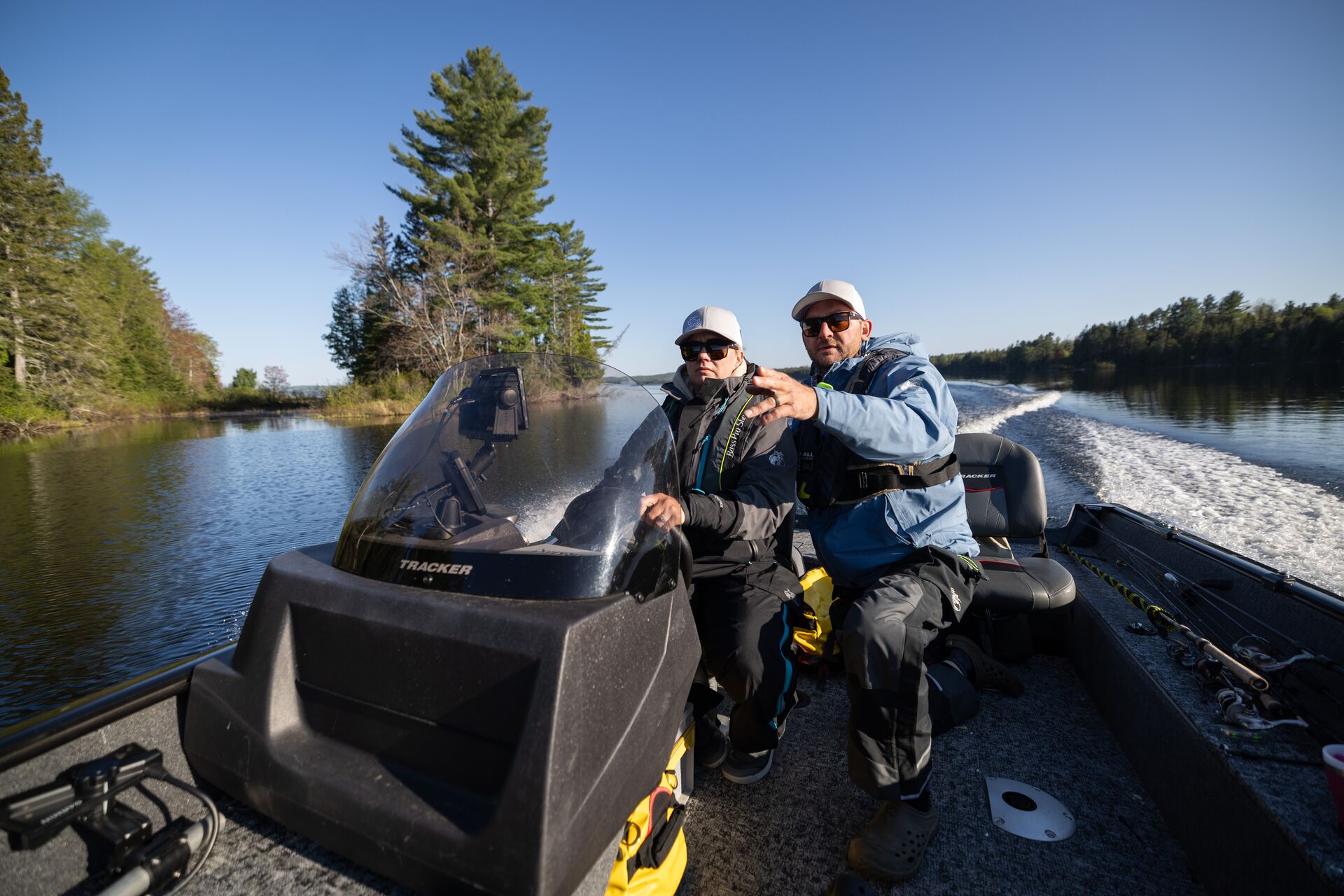
Now that you know the answer to the "Do you need a boating license in Massachusetts?" question (it’s yes, now, or yes, very soon), you might next ask how. To get your license or boating safety certificate, you’ll need to take an approved boating safety course, for which you have several options.
- Approved Courses: Any course you take must be approved by the Massachusetts Environmental Police (MEP). Choosing a MEP-approved course ensures you're getting quality education that's recognized by the state.
- Classroom Courses: Classroom courses typically take 10 to 12 hours. But these courses are often free, and can be good choices for first-time boaters and hands-on learners who want an in-person experience.
- Online Courses: Online courses offer flexible, self-paced options, available through approved providers like us at Boat-Ed. Generally, you can complete an online course in three to five hours, usually for a fee. No matter whether you use an in-person or online course, your boating license will be valid for life and doesn't expire.
Reciprocity with Other States
If you have a NASBLA-approved certificate from another state, you can boat in Massachusetts through reciprocity. That's helpful for out-of-state boaters who want to explore the area's waterways and the state's natural beauty.
Massachusetts Vessel Registration Requirements
Along with getting a boating license, you’ll need to register your vessel.
All motorboats require registration, which you can get through the Massachusetts Division of Marine Fisheries or your local County Clerk.
Remember: registering your vessel is separate from obtaining certification to operate it, and you may need both to comply with the law.
Get Your Boater Education Card in Massachusetts with Boat-Ed
Frequently Asked Questions About the Massachusetts Boating License (FAQs)
We have answers to some of the top questions about Massachusetts boating licenses.
Q: Does Massachusetts require a boater's license?
A: Massachusetts is gradually requiring all boaters to complete a boating safety course before operating a motorized boat or personal watercraft (PWC). Once you pass an approved course, you’ll receive a boater safety certificate that meets the state requirement.
Q: What is the new Massachusetts boat law?
A: The Hanson-Milone Boater Safety Act creates a statewide boating education requirement for operators of motorized boats and PWCs. The law is being phased in over several years, with different deadlines based on age.
Q: How do I get my boating license in MA?
A: To get your Massachusetts boating certificate, you’ll need to complete a state-approved boating safety course. After successfully finishing the course, you’ll receive a certificate that allows you to legally operate qualifying vessels in Massachusetts and earn reciprocity in other states.
Q: What is required on a boat in MA?
A: Massachusetts law requires boats to carry basic safety equipment, including properly fitted life jackets, navigation lights, and a sound-producing device such as a whistle or horn. Additional equipment may be required depending on the vessel's type and size.
Q: How long is a boating license good for in Massachusetts?
A: A Massachusetts boater safety certificate is valid for life. Once you complete an approved boating safety course, you won’t need to renew your certificate.