
How to Get Your Pleasure Craft Operator Card (Canada)
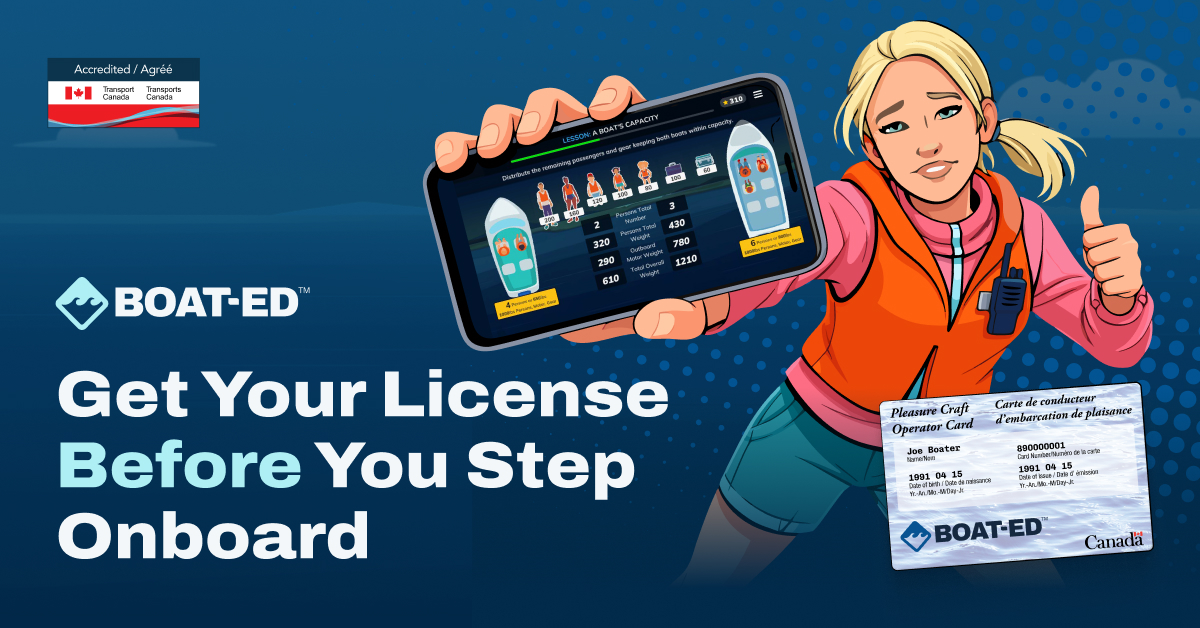
Getting on the water in Canada starts with one credential: the Pleasure Craft Operator Card, commonly known as the PCOC. Canada does not issue a traditional boating license — instead, the federal government requires a PCOC for anyone operating a motorized pleasure craft on Canadian waters.
The PCOC is issued through Transport Canada–accredited course providers under the authority of Transport Canada's Office of Boating Safety, and it is valid for life.
Unlike the rules in many U.S. states, there is no birth-year exemption and no engine size minimum for the PCOC requirement in Canada. If you operate any motorized pleasure craft — including a vessel with an electric trolling motor — you must carry a valid PCOC.
This guide walks you through how to get your Canadian PCOC, step by step.
What Is the Pleasure Craft Operator Card?
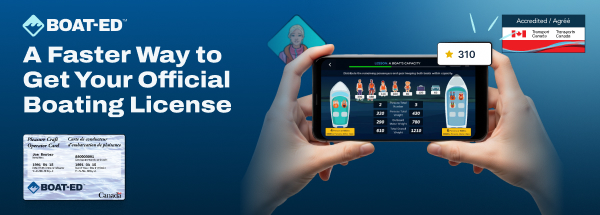
The Pleasure Craft Operator Card (PCOC) is what most people mean when they search for a Canadian boating license. It is not a traditional license — it is proof that you completed a Transport Canada–accredited boating safety course and passed the required exam.
The PCOC is issued through accredited providers under the authority of Transport Canada's Office of Boating Safety. It is valid for life, does not expire, and does not require renewal. Once you earn it, you carry it aboard your vessel whenever you operate any motorized pleasure craft on Canadian waters.
A note on 2026 PCL changes: Transport Canada updated Pleasure Craft Licence (PCL) rules effective December 31, 2025. PCLs now require renewal every five years. These changes apply to the boat's identification number only.
Your PCOC is completely unaffected and remains valid for life.
Who Needs a Pleasure Craft Operator Card?
Under the Canada Shipping Act, 2001, anyone operating a motorized pleasure craft on Canadian waters must carry proof of competency. For most boaters, that means a PCOC. The requirement applies regardless of age, engine size, or vessel type — including vessels fitted with electric trolling motors.
There is no birth-year cutoff and no horsepower minimum. If it has a motor and you are operating it recreationally on Canadian waters, you need a PCOC.
Exemptions for the Pleasure Craft Operator Card
| You May Be Exempt from the PCOC Requirement If: |
| You are a non-resident visitor operating your own foreign-registered vessel in Canada for fewer than 45 consecutive days and carry valid proof of competency from your home country. |
| You are operating a non-motorized vessel (canoe, kayak, paddleboard, rowboat, etc.). |
| You hold an equivalent proof of competency, such as a U.S. Coast Guard Captain's License or a NASBLA-approved boater education card. |
| You are operating in Nunavut or the Northwest Territories, where the PCOC requirement does not currently apply. |
| You are operating a rental vessel and have completed the required rental safety checklist. |
Canadian Boater Card Requirements by Age
Are you exempt from the PCOC?
| Canada's Boater Card Requirements (by Age): | ||
| Under 12 (unsupervised) | May operate a pleasure craft with a motor up to 10 HP only | Yes |
| 12–15 (unsupervised) | May operate a pleasure craft with a motor up to 40 HP only | Yes |
| Under 16 (any circumstances) | May not operate a PWC under any circumstances | N/A |
| 16 and older | No horsepower restrictions; PWC allowed with PCOC | Yes |
PWC rule: No one under 16 years of age may operate a personal watercraft under any circumstances in Canada, regardless of supervision or PCOC status.
How to Get Your Pleasure Craft Operator Card (Step-by-Step)
In just three easy steps, you can get your PCOC in Canada (boater safety certificate).
Step 1: Complete a Transport Canada–Accredited Boating Safety Course
You can complete the required course online or in person. Both options must be accredited by Transport Canada's Office of Boating Safety and lead to the same lifetime PCOC.
- Online course: The Boat-Ed Transport Canada–accredited online boating course is self-paced and available on any device. You can save your progress and complete it over multiple sessions. Most students finish in three to five hours.
- In-person classroom course: Transport Canada–accredited classroom courses are offered by approved providers across Canada. These include the required exam and are typically completed in one day.
There is no minimum age requirement to take the Boat-Ed online course. The Boat-Ed Canada course fee is $69.95 CAD. Course costs across accredited providers range from $30–$70 CAD.
Step 2: Pass the Final Exam
After completing the course material, you must pass the Transport Canada boating safety exam. You must score at least 75% to pass. After passing, you can print a temporary PCOC immediately and go boating right away.
Step 3: Receive Your PCOC and Hit the Water
Your temporary PCOC is valid immediately upon printing. Your permanent, wallet-sized Pleasure Craft Operator Card arrives by mail in approximately 30 days.
Transport Canada requires you to carry your PCOC aboard the vessel whenever you operate a motorized pleasure craft on Canadian waters. Your temporary PCOC is legally valid while you wait for the permanent card.
Always carry your card when boating. Operating without a PCOC is a violation of the Canada Shipping Act, 2001, with a standard fine of $250.

Course Formats and Costs
What are the various formats and costs to get a Canadian Pleasure Craft Operator Card?
| Canadian Boater Education Course Formats and Costs: | ||||
| Online | Boat-Ed | $69.95 | Self-paced (a few hours) | Yes — included at end of course |
| Online | Other Transport Canada–accredited providers | $30–$70 CAD | Self-paced | Yes — included at end of course |
| In-Person Classroom | Transport Canada–accredited providers | Free | 1 day | Yes — included |
What to Bring to Get Your Card
To get your card, you'll need the following:
- Government-issued photo ID
- Payment for the course
- Proof of age, if requested by the course provider
Reciprocity: Is Your PCOC Valid in Other Countries?
Yes. The Canadian PCOC is recognized by the U.S. Coast Guard and meets NASBLA standards, which means it is accepted in U.S. states and territories that honor NASBLA-compliant cards. Review Canadian Boating Laws and Regulations for full details on operating across international borders.
Visiting boaters from other countries may operate on Canadian waters for fewer than 45 consecutive days using valid proof of competency from their home country. After 45 days, a PCOC or equivalent Canadian proof of competency is required.
Start Your Canadian Boater Safety Course Today
The Transport Canada–accredited Boat-Ed course is self-paced, available on any device, and recognized nationwide across all Canadian provinces. Earn your lifetime Pleasure Craft Operator Card and get on the water with confidence.
Frequently Asked Questions
Who needs a Canadian PCOC?
Anyone operating a motorized pleasure craft on Canadian waters must carry a PCOC or equivalent proof of competency. This applies regardless of age, engine size, or vessel type, including vessels with electric trolling motors. There is no birth-year exemption and no horsepower minimum. The requirement applies in all provinces, except in Nunavut or the Northwest Territories.
Does it expire?
No. The Pleasure Craft Operator Card is valid for life. Once you earn it, you never need to renew it or pay any renewal fee. Note that the 2026 Transport Canada changes affecting Pleasure Craft Licences do not apply to the PCOC.
Is it valid in other countries?
Yes. The Canadian PCOC is recognized by the U.S. Coast Guard and meets NASBLA standards, so it is accepted across the United States and in other countries that honor equivalent proof of competency. When boating internationally, always verify the specific requirements of your destination country or state before launching.
Can I take the course online?
Yes. Transport Canada accredits several online course providers, including Boat-Ed. The Boat-Ed online course is self-paced and available on any device. After completing the course and passing the final exam, you can print a temporary PCOC immediately and go boating right away.
What if I'm visiting from another country?
Non-resident visitors operating their own foreign-registered vessel in Canada for fewer than 45 consecutive days are not required to obtain a PCOC, provided they carry valid proof of competency from their home country. After 45 consecutive days, the full PCOC requirement applies. Visitors operating a Canadian-registered or Canadian-licensed vessel (including rentals) are subject to the full requirement regardless of the length of their stay.
What's the penalty for boating without a PCOC?
Operating a motorized pleasure craft in Canada without a valid PCOC is a violation of the Canada Shipping Act, 2001. The standard fine is $250, and additional charges may apply. Transport Canada inspectors and local marine enforcement officers patrol Canadian waterways and can stop operators to verify compliance. Always carry your card on board.
Are PWC rules different?
Yes. Canada's PWC rules are stricter than the general pleasure craft rules. No one under 16 years of age may operate a personal watercraft under any circumstances, regardless of supervision, engine size, or PCOC status. Operators 16 and older must hold a valid PCOC to operate a PWC.
How long does the course take?
Most students complete the Boat-Ed online course in three to five hours. You can work at your own pace, save your progress, and log back in at any time. After passing the final exam, you can print your temporary PCOC and get on the water immediately — no waiting required.