NASBLA Boating Course vs. Free Alternatives: What You Get With Each
Free boating safety courses can be a valuable starting point, but they're not always the official course your state requires. If you're comparing a NASBLA-approved boating course like Boat-Ed against a free alternative, the differences go beyond price.
Boat-Ed differs from free options like the BoatUS Foundation course, and from free in-person classes run through state agencies, in three key ways.
- Courses are developed directly with state boating agencies.
- Content is updated when state laws change.
- Customer support is available throughout the course, not just at signup.
Free courses can be a legitimate option in many states, since providers like BoatUS Foundation hold NASBLA approval and are officially accepted in dozens of states. But if your state requires its own designated course, a generic free option (or one that hasn't kept pace with your state's regulations) may not fulfill that requirement.
Before you enroll in any course, it helps to know exactly what you're comparing. Here's how a NASBLA boating course vs free alternative breaks down, feature by feature, so you can pick the right one for your state and your budget.
What Counts as a "Free" Boating Course?
"Free" boating education generally falls into two categories.
- The first is a NASBLA-approved (National Association of Boating Law Administrators) online course such as the BoatUS Foundation course, which is free to complete in most states (a suggested donation is added at checkout, and a small number of states charge an upfront fee that the provider collects on the state's behalf).
- The second is a free in-person class, often taught by volunteer instructors through organizations like the U.S. Coast Guard Auxiliary or America's Boating Club, and coordinated through your state wildlife or natural resources agency.
Both types can satisfy your state's legal requirement, but only if the specific course appears on your state's approved list. You can verify a provider's current standing directly through NASBLA, and checking how to verify a NASBLA-approved boating course before you start is worth the five minutes it takes.
What You Get With Boat-Ed (a Paid Course)
Boat-Ed has partnered directly with state boating agencies for more than 40 years and serves as the official course provider in all 50 states and Washington, D.C.
That direct relationship means the course content is not a generic national curriculum with a state label attached. It reflects each state's specific laws, waterway rules, and licensing requirements, and it's built and maintained in coordination with the agency that enforces them.
Boat-Ed courses are also recognized on the USCG boating safety courses directory, in addition to NASBLA and each state agency.
That partnership also means content stays current. When a state updates a boating law, a speed zone, or an equipment requirement, Boat-Ed's course reflects that change because the agency itself is part of the update process.
Comparing Boat-Ed to Free Alternatives
Use this comparison to see how a state-agency-partnered course stacks up against BoatUS Foundation and other free options across the categories that matter most before you enroll.
Boat-Ed vs. Free Boater Safety Courses | ||
| Feature | Boat-Ed | Free Alternatives |
| State recognition | Official course provider in all 50 states and D.C. | Varies. BoatUS Foundation is officially accepted in 37 states, free in-person classes vary by state availability |
| NASBLA approval | Yes, in all 50 states | BoatUS Foundation: yes. Some free in-person or third-party options are not NASBLA-approved, so verify before enrolling. |
| State agency partnership | Direct, long-term partnerships nationwide | No direct agency partnership for online free courses; in-person free classes are often coordinated with, but not developed by, the agency |
| Content update cycle | Updated in coordination with state agencies as laws change | Updated periodically by the provider, but not co-developed with agencies in real time |
| Customer support | Live support available | Support center or email support; live assistance is limited |
| Mobile experience | Fully mobile-friendly; Boat-Ed+ available on iOS and Android | Mobile-friendly in most cases, though interactive or app-based formats are less common |
| Total cost | $30–$80 depending on state and format | Free in most cases, though some states require a fee and a permanent card may cost extra |
How to Choose the Right Boater NASBLA Boating Course vs Free Options
With free and paid options both potentially valid in your state, the decision comes down to a few practical checks. Here's how to work through it.
- Check your state's approved provider list first. Visit your state boating or wildlife agency's website and confirm which specific providers, free or paid, fulfill your state's legal requirement before you register for anything.
- Don't treat NASBLA approval and state approval as the same thing. A course can hold NASBLA approval and still not satisfy your state's requirement, so verify both before you start.
- Add up the real cost of your certification, not just the sticker price. A "free" course can carry a card fee, an upfront state charge, or a suggested donation, which narrows the cost gap with a paid, state-partnered course.
- Decide how much support you want along the way. If you'd rather have live help available if you get stuck, factor that into your choice, since support availability varies more between providers than course content does.
- Confirm the course reflects your state's current laws. Ask whether the provider updates content directly with your state agency or on its own schedule, especially if your state has changed a boating law or equipment rule recently.
You only want to take a course once to earn your certification (which is valid for life). So, be sure the course you take meets your state's and NASBLA's requirements.
Why This Comparison Matters Before You Enroll
Both a NASBLA-approved online course and a free in-person class can meet your state's requirement, so the deciding factor usually comes down to what your state actually accepts and how much support you want along the way.
A free course that isn't accepted in your state means starting over with an approved option, which costs more time than the money you saved.
Keep a few things in mind as you evaluate your course options:
- If you want a course built specifically around your state's laws and backed by direct agency partnership, Boat-Ed remains the official course option in all 50 states.
- If your state accepts a free NASBLA-approved course and you're comfortable with less hands-on support, that option can work just as well for meeting the legal requirement.
- Some marine insurers, including Progressive, also offer boat insurance discounts to boaters who complete a NASBLA-approved course, regardless of whether it was free or paid.
No matter what, confirm your state's specific boating laws and approved provider list before you commit to a course, since a certificate that doesn't fulfill your state's requirement can't be reissued after the fact. And if you plan to boat across state lines, understanding how your license transfers between states is worth confirming too.
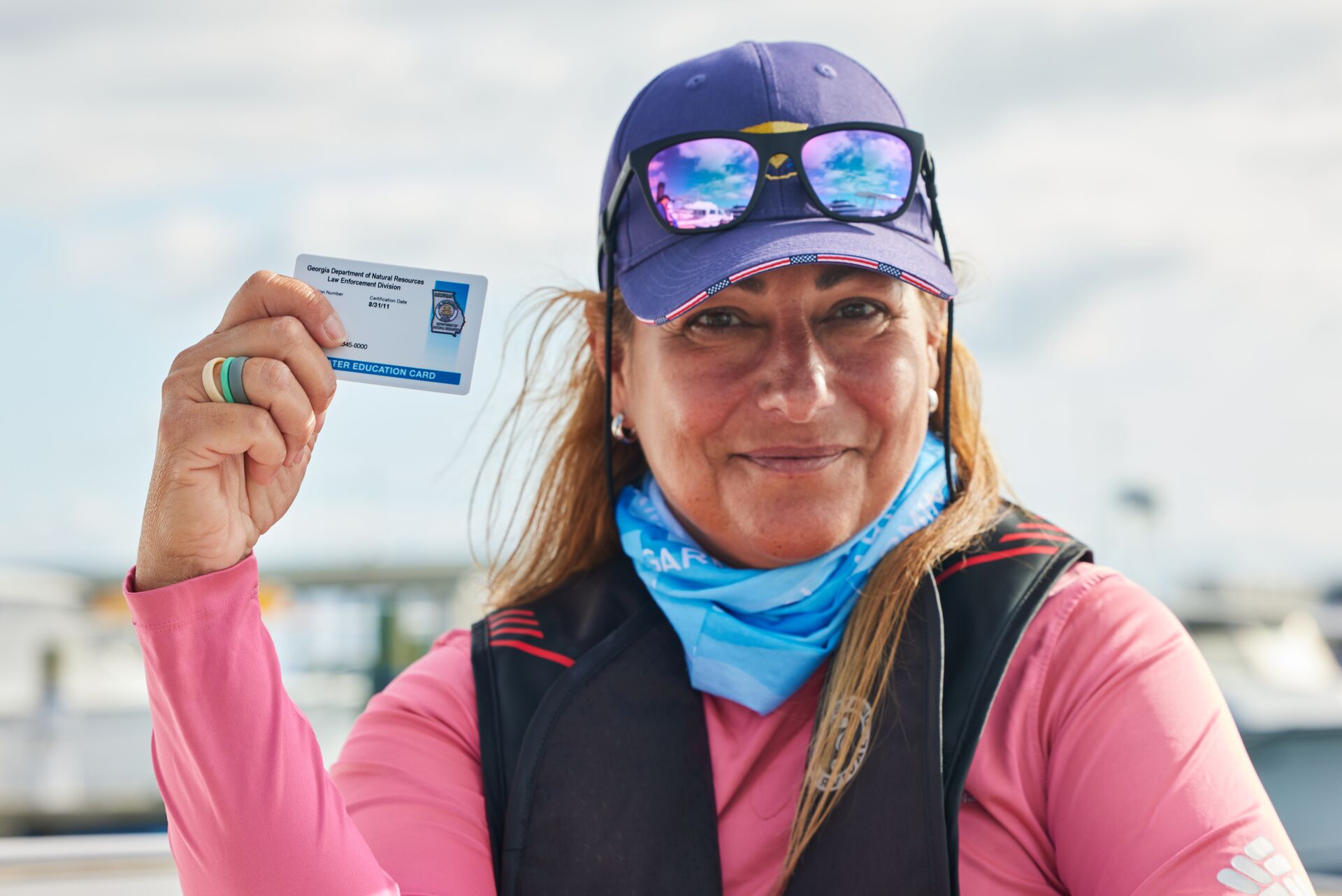
Choose the Boater Safety Course That Fits Your State's Requirement
Free courses have a place, especially for boaters who just want a refresher or live in a state where a free option is fully accepted. But for the official, state-issued certification most boaters need, a course built directly with your state's agency, like Boat-Ed, remains the most direct path to a valid boater education card.
Find your state's official boating course at Boat-Ed and get started today.
Frequently Asked Questions About Boat-Ed vs. BoatUS
Q: Are free boating courses NASBLA-approved?
A: Some are, and some aren't. The BoatUS Foundation course, for example, holds NASBLA approval and is officially accepted in 37 states, but other free courses may not have gone through the NASBLA approval process at all. Always check the provider's approval status before enrolling.
Q: What's the difference between NASBLA-approved and state-partnered?
A: NASBLA approval means a course meets national education standards set by the National Association of State Boating Law Administrators. State partnership means the course was built directly with a specific state's boating agency and reflects that state's exact laws. A course can hold one without the other, so both matter when choosing a provider.
Q: Will a free course work in my state?
A: It depends on the course and your state. The BoatUS Foundation course is officially accepted in 37 states but does not fulfill the legal requirement in the rest. Check your state boating agency's approved provider list before you start any course.
Q: Do free courses keep up with law changes?
A: Most reputable free providers update their content periodically, but they don't have the same direct, ongoing coordination with state agencies that a state-partnered course has. That gap can matter if your state recently changed a boating law or equipment requirement.
Q: What customer support comes with each?
A: Boat-Ed offers live customer support throughout the course. Free alternatives typically offer a support center or email-based help, with less availability for real-time assistance if you get stuck.
Q: Are free courses harder to pass?
A: Not necessarily. Course difficulty depends more on the provider's content design than on price, and both free and paid NASBLA-approved courses require passing a standardized final exam. Course length and format vary more than difficulty between providers.
Q: Will I be at any disadvantage with a free certificate?
A: If your state officially accepts the free course, no, the certificate carries the same legal weight as any other approved course. The only disadvantage arises if the free course isn't accepted in your state, which means retaking an approved course to meet the requirement.