How Does a Trolling Motor Work?
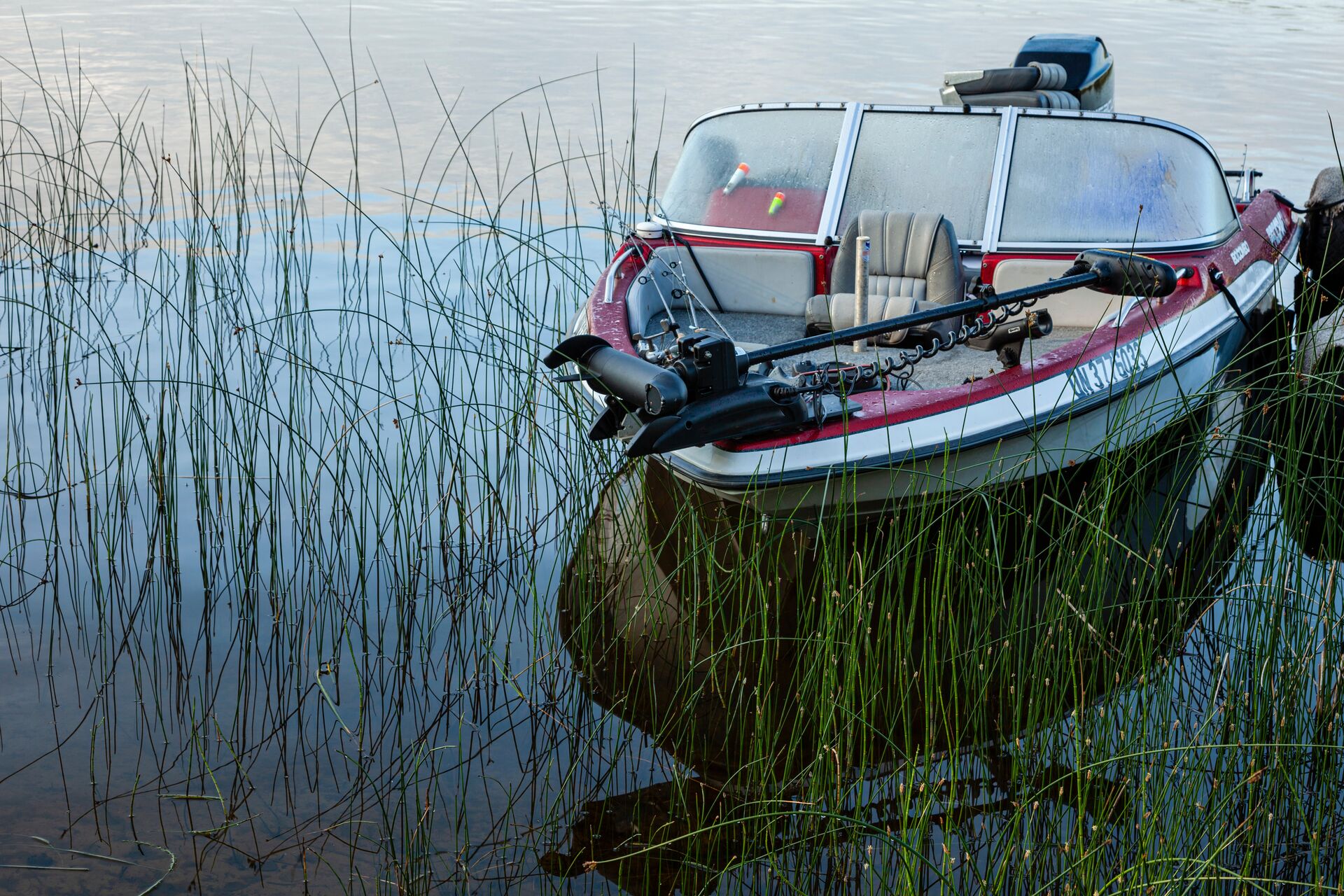
A trolling motor works by converting electrical energy from a battery into mechanical energy that then spins a propeller and moves a boat quietly through the water.
Even if you have a sailboat or a smaller boat that you typically propel with paddles, you may want to have a trolling motor. This type of motor is small and self-contained and is generally used to move a boat around at slow speeds.
This kind of motor can be extremely valuable when fishing and navigating a small boat, especially in shallower water or tight spaces. Before you choose one of these motors for your boat, though, you want to understand how they work and what you can do with them so you can make the best choice for your needs.
Updated September 10, 2026
What Are the Components of a Trolling Motor?
Several parts make up this kind of motor, and they all affect how well it works for your needs and goals. Knowing about the main components and how they work together can help you choose a motor you'll be happy with.
Electric Motor
The first principal component is the electric motor, which plays a significant role in propelling the boat.
There are two different types of electric motors: brushed and brushless. Both have big benefits, and which one you choose will depend on how you plan to use your motor.
Although the brushed version isn't as standard anymore, it can still be a great motor. It's generally easy to work on and offers enough power. However, brushless versions typically require less maintenance, are quieter, and are frequently more powerful.
If you're fishing a lot, brushless can be the better option due to less noise disturbing the fish.
Propeller
Another component is the propeller, which takes the power from the electric motor and converts it into thrust that pushes the boat through the water.
The propeller's design is essential for both efficiency and performance, and you'll want to take the time to choose one that will meet your boating needs.
Shaft
The shaft is also part of the trolling motor, connecting the electric motor to the propeller. It's made of sturdy material and has to be the right length to help you navigate properly and transfer adequate power.
You can get shafts in different lengths and materials depending on your desired motor.
Mounting Bracket
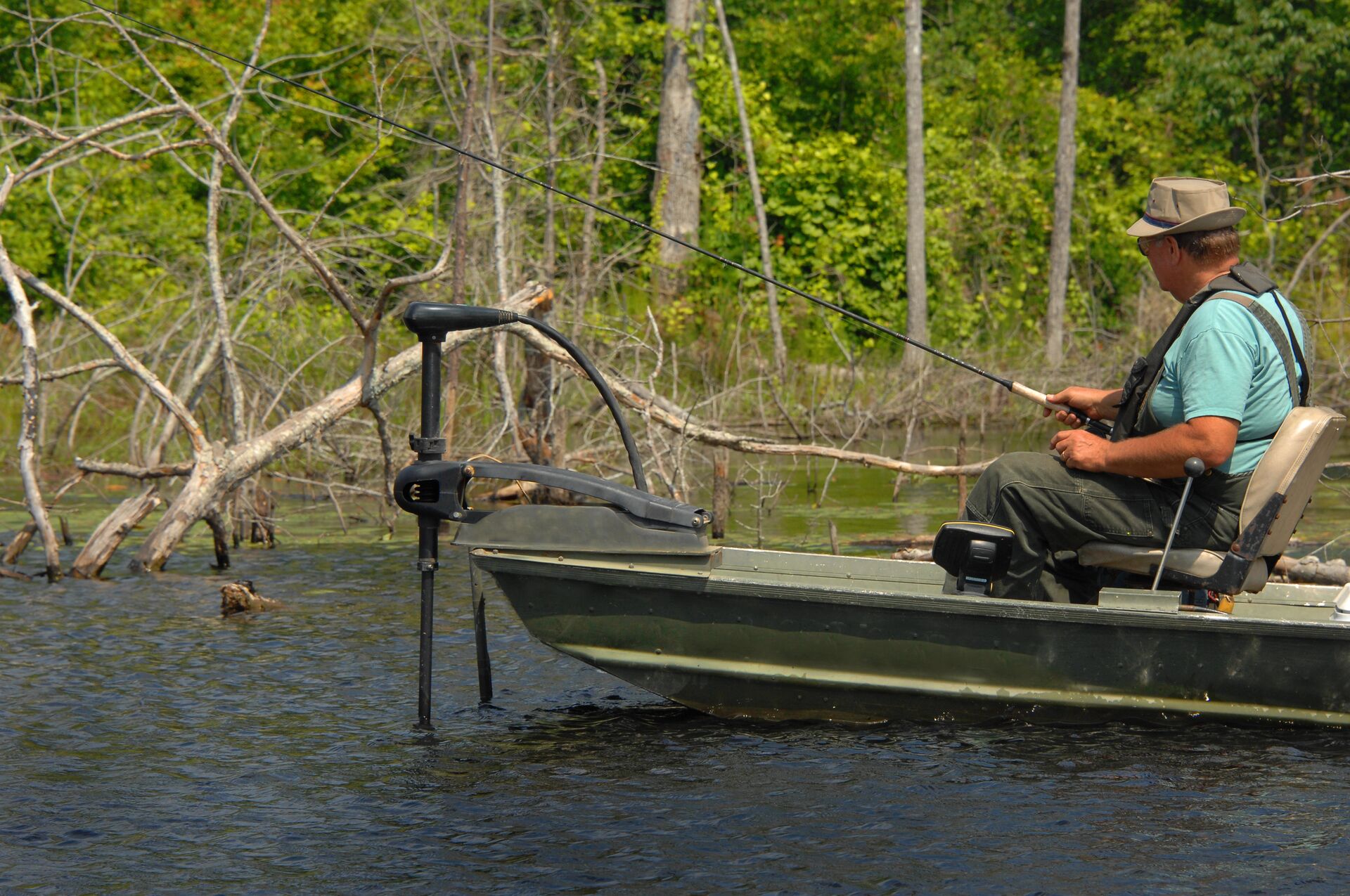
There is also a mounting bracket for the motor, which attaches it to the boat. Depending on your boat, other motors, and desired maneuverability, you can choose from bow, transom, or engine mount options.
Control Mechanism
Most people think of a small motor on the back of the boat with a tiller handle for steering. That's a pretty standard setup, but it doesn't have to be yours if that doesn't work for you.
For increased convenience, there's also the option for a foot pedal or remote control.
Power Source
Typically, these motors operate on batteries. Options include AGM (absorbent glass mat), lithium, and lead-acid types, and choosing one often depends on how much maintenance you want to perform and the level of battery life you're looking for.
You don't want to get caught far away from shore with a motor with no battery life left.

How a Trolling Motor Works
These motors operate simply.
The battery is the power supply, and electrical energy from that battery is supplied to the motor. The motor then takes in that electrical energy and converts it to mechanical energy, which in turn creates what's needed to rotate the propeller.
The propeller's rotation generates thrust by pushing against the water. The force the rotation creates moves the boat, and control mechanisms allow you to steer the ship and adjust its speed.
How to Use a Trolling Motor
Once you understand the parts of a trolling motor, putting one to work is straightforward. A few consistent habits will keep you safe on the water and help your equipment last longer.
Follow these steps every time you head out.
- Check the battery and power switch. Before leaving the dock, confirm your battery is fully charged and connected to the motor. Locate the master power switch (usually on the motor head or foot pedal) and turn it on.
- Deploy the motor into the water. Pull the release handle or cord toward you to disengage the locking pin. Lower the motor from its travel position until the propeller is fully submerged.
- Set the right depth. Most trolling motors run best with the motor head submerged about 12 inches below the surface. Running the motor too shallow can expose the propeller and cause damage.
- Choose your control method and steer. Depending on your setup, you'll steer with a tiller handle, a foot pedal, or a remote. If you're new to angling for beginners, practice steering at low speed in open water before you try positioning the boat for a cast.
- Adjust your speed as conditions change. Start at the lowest speed setting and increase gradually until you find a pace that matches wind and current. Lower speeds also help conserve battery life.
- Stow the motor when you're finished. Turn off the power switch, lift the motor out of the water, and lock it back into its travel position. Check the propeller for debris or damage before you put it away.
With practice, these steps become second nature, so you can focus on maneuvering quietly into position instead of the mechanics of the motor.

Staying Safe When Using These Motors
Among the best tips to stay safe while boating is taking good care of your equipment, including any and all motors your boat uses. Conduct routine checks and regular inspections for wear and tear, with particular attention paid to the electric motor and propeller.
Battery Care
Just like the propeller and motor, you need to care for and maintain the health of your battery. That includes proper charging and good storage practices.
If you aren't using your boat for a while, you must be sure you're protecting your battery.
Cleaning and Lubrication
Cleaning the motor regularly can help keep it operating smoothly for years. You also want to apply lubrication to moving parts because it prevents corrosion and ensures your motor's smooth operation when needed.
Taking good care of your motor makes it easier to rely on without worry.

Learn More About Motorized Boating Safety with Boat-Ed
Before you get out on the water and try out your new trolling motor, take the time to learn more about operating a motorized boat.
Taking an online boater safety course through Boat-Ed is one of the best ways to learn everything you need to know to boat safely and legally in your state. This knowledge will give you more peace of mind and help you have safer adventures, no matter what type of motor you ultimately choose for your boat.
Choose the course for your state or take our course for Canadian boaters and start learning!


Content most recently reviewed and updated September 10, 2026.
Frequently Asked Questions (FAQs)
Q: What is needed to run a trolling motor?
A: A trolling motor needs a compatible battery (usually a 12-volt deep cycle marine battery), the correct wiring or connectors to link the battery to the motor, and a secure mount on your boat, kayak, or canoe. You'll also need a control method, such as a tiller handle, foot pedal, or remote, to steer and adjust speed. Before launching your boat, check that your battery has enough capacity for your motor's size and your planned time on the water.
Q: How fast will a 70lb trolling motor go?
A: Thrust affects how much resistance a motor can overcome, but it doesn't directly translate to top speed. Most trolling motors, including 70-pound thrust models, top out at around 5 miles per hour regardless of thrust rating. The actual speed depends on boat weight, hull shape, and water conditions like wind and current.
Q: Can you hook a trolling motor straight to a battery?
A: Yes, trolling motors are designed to connect directly to a 12-volt deep cycle marine battery using the included wiring and connectors. Higher-thrust motors that run on 24 or 36 volts need two or three 12-volt batteries wired in series to reach the required voltage. Always match your battery type and connections to the motor manufacturer's specifications.
Q: Does a trolling motor need to be in water to run?
A: No, a trolling motor should never be run out of water. The motor relies on water to cool itself and to give the propeller something to push against. Running it dry can overheat the motor and damage internal components. Always deploy the motor fully into the water before turning it on.
Q: How big of a boat will a 55lb trolling motor push?
A: As a general rule of thumb, a trolling motor needs about 2 pounds of thrust for every 100 pounds of fully loaded boat weight. This includes passengers and gear. That puts a 55-pound thrust motor in range for boats weighing roughly 2,500 to 2,750 pounds, which typically covers many boats in the 16- to 18-foot range.
Q: How fast will a kayak go with a 30 lb thrust trolling motor?
A: A 30-pound thrust motor is a common choice for kayaks and canoes. Most kayak setups top out at around 3 to 5 miles per hour. Actual speed depends on the kayak's weight, hull design, and paddler or gear load, along with wind and current. Lighter, narrower kayaks tend to reach the higher end of that range.
Q: How long will a trolling motor run on one battery?
A: Trolling motor run time depends on the battery's amp-hour (Ah) capacity and the speed setting you use, since higher speeds draw more power. A fully charged deep cycle battery can often power a trolling motor for several hours at low speed, but that time drops significantly at higher speeds. Carrying a spare battery or choosing a higher-capacity battery can help extend your time on the water.