Do You Need a Boating License In Indiana?

To operate a motorized vessel with more than 10 horsepower on public waters in Indiana, you need to be at least 16 years old and have a valid driver's license. That's true not just for standard boats but also for personal watercraft (PWC) such as jet skis. If you're 15 or older and don't have a driver's license, you must complete a boater education course and earn your boater education card.
So, do you need a boating license in Indiana? You may or may not need a boating safety card, which many states call a boating license, based on your age and the type of vessel you're operating.
Here's how to decide, and the steps to get your card.
| Indiana Boating License — Quick Facts | ||
| Who Needs It Boat or PWC operators under the age of 15 without a driver's license | Validity Good for Life | How to Get It Take a state-approved boater education course |
In this Guide:
- Do You Need a Boating License in Indiana?
- What Is a Boater Education Card?
- What Are the Key Requirements & Exceptions for Operating a Boat in Indiana?
- How to Get a Boater Education Card
- When to Carry Your Boater Card on the Water
- Tips for Ohio Boaters Visiting Indiana
- Get Your Boater Education Card in Indiana with Boat-Ed
- Frequently Asked Questions (FAQs)
Do You Need a Boating License in Indiana?
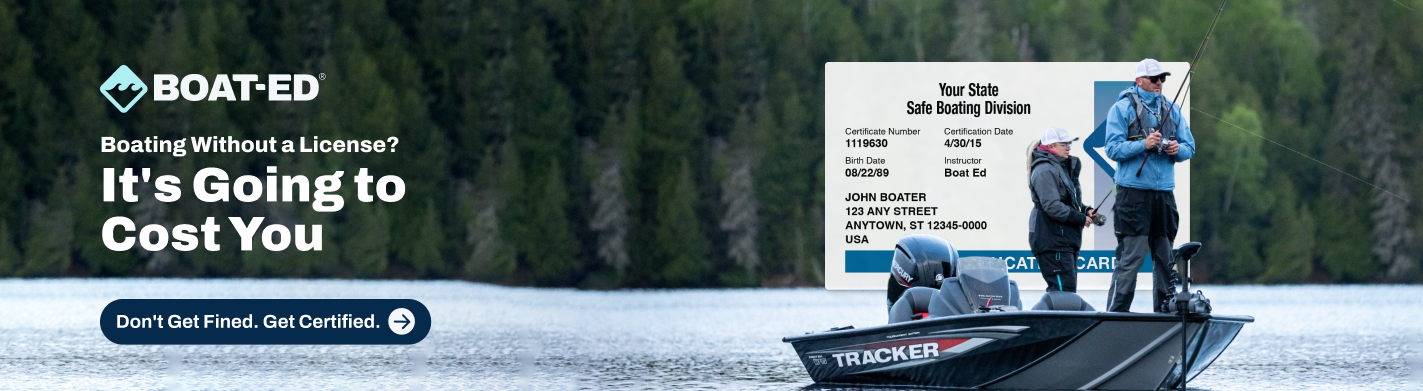
The state of Indiana doesn't issue a traditional "boating license," but many operators need a boater education card. If you're 15 or older and don't have a driver's license, you'll be required to take a course and get your card to boat legally on Indiana's waterways.
Additionally, many people from Ohio come to Indiana to boat. If you plan to do that, and you have an Ohio boater education card, you're probably already covered, because many states have reciprocity for boating education. It's important to check local laws for the location where you're boating, but your Ohio certificate should be enough in most cases.
What Is a Boater Education Card?
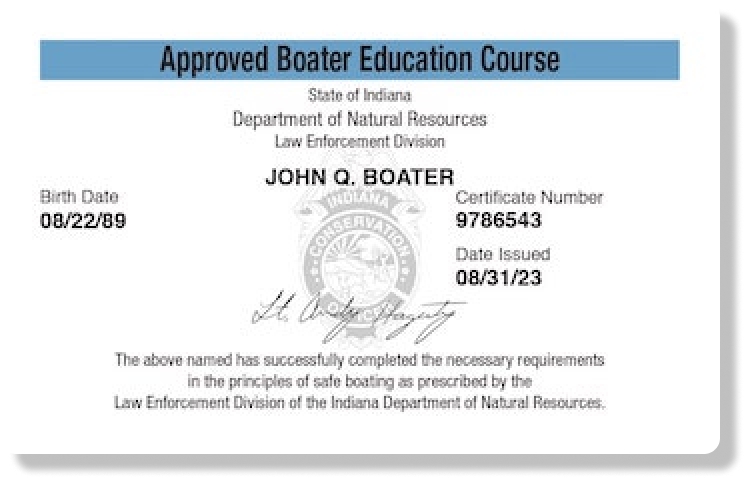
The boater education card is proof of competency and indicates that you've passed an approved boating safety course. It's not the same as a driver's license, but many people commonly refer to it as a license.
This card is required for certain operators in Indiana and is recognized in many other states if you decide to visit other boating locations. One of the biggest benefits is that a boater education card doesn't expire, so you'll never have to worry about renewing it.
What Are the Key Requirements & Exceptions for Operating a Boat in Indiana?
Indiana has specific requirements for operating a motorized vessel, along with a few exceptions to the need for a boating license.
Understanding Indiana's boating rules before getting out on the water is essential for safe boating.
Age Restrictions
Boater Education Card Requirement
The boater education card is required if you're 15 or older and don't have a driver's license. You can get yours by passing a DNR-approved boating safety course, such as the course we offer here at Boat-Ed.
Card Validity
Once you earn your card, it's valid for life. Unlike a driver's license, you'll never have to renew it or take additional educational courses to keep it.
Out-of-State Boaters (Important for Ohio Boaters)
Again, Indiana generally honors certifications from other states. If you completed an approved Ohio course and have a boater safety card, you're typically covered to boat in Indiana, as well.

How to Get a Boater Education Card
So, do you need a boating license in Indiana? It depends on your age and other requirements. But generally, it's a good idea to have your boater safety card before hitting the water.
Fortunately, getting one is a simple process. Plus, the cost of a boating license is low.
Following the steps below makes it easy to get your certificate and start boating in no time.
How to Get a Boating License in Indiana: |
|
Whent to Carry Your Boater Card on the Water
When operating a motorized vessel in Indiana, ensure you always have either your driver's license or a boater education card with you at all times.
Even if you have one of these documents, failing to carry it with you can lead to fines and other penalties. You'll need to be able to show proper documentation to law enforcement if you're stopped for any reason while boating.
Tips for Ohio Boaters Visiting Indiana
If you're an Ohio boater visiting Indiana, it's crucial to double-check your certification before you travel. That way, you know you'll meet state requirements.
Also, be sure to follow Indiana-specific boating laws for speed zones, proper safety equipment, and other details. When in doubt, carry your documentation and be ready to show it to law enforcement if asked.
Get Your Boater Education Card in Indiana with Boat-Ed
Indiana prioritizes safety on the water by encouraging motorized boat and PWC operators to take a boater safety course. Even if you're not required to take a safety course, doing so can help encourage safe boating habits and protect you and others on Indiana's waterways.
It's fast and easy to get your Indiana boating license through Boat-Ed! Then, you'll be ready to head out on your boat with confidence.
Frequently Asked Questions About the Indiana Boater Card (FAQs)
Q: Do I need a license to drive a boat in Indiana?
A: Indiana does not issue a traditional boating license, but the state uses your driver's license as your primary credential to operate a motorboat or PWC over 10 horsepower. If you are at least 15 years old and do not have a valid Indiana driver's license, you must complete a state-approved boater education course and carry an Indiana BMV ID card showing course completion while on the water. Boaters under 15 may not operate a motorboat or PWC over 10 horsepower under any circumstances.
Q: What is the 3 R rule in boating?
A: The 3 R rule in boating stands for Reduce, Recognize, and React. It's a framework used in boater safety education to help operators manage risk on the water. Reduce the chance of an emergency by planning ahead and following safe boating practices. Recognize hazards early, and React quickly and calmly if something goes wrong.
Q: What is the biggest boat you can drive without a boater education card in Indiana?
A: In Indiana, the boater education requirement applies to motorized vessels, so the size of the boat is not the determining factor — the type of propulsion is. If you are at least 15 years old, and the vessel has a motor, you need your boater education card regardless of the boat's size. Non-motorized vessels like canoes or kayaks are exempt from this requirement.
Q: What is the golden rule of boating?
A: The golden rule of boating is to treat other boaters and waterway users the way you would want to be treated, with courtesy, awareness, and respect. In practice, this means maintaining safe speeds, yielding appropriately, and keeping noise and wake to a considerate level. It also means never boating under the influence and always being prepared to assist someone in distress.
Q: What is the difference between a boating license and a boating certificate?
A: A boating license and a boating certificate are terms that are often used interchangeably, but they are not technically the same thing. Most U.S. states, including Indiana, issue a boater education certificate or card (not a license) after a person completes an approved safety course. Unlike a driver's license, the boater education card does not need to be renewed and does not require a skills test administered by the state.
Q: What are you required to have on your boat in Indiana?
A: Indiana law requires every vessel to carry a U.S. Coast Guard-approved life jacket for each person on board, and children under 13 must wear one while the boat is underway. You are also required to have a throwable flotation device on boats 16 feet and longer, a fire extinguisher on most motorized vessels, and a sound-producing device such as a horn or whistle.
Q: Is a boating license good in every state?
A: Indiana's boater education card is widely recognized across most U.S. states through reciprocity agreements, but acceptance is not guaranteed everywhere. Some states have their own specific requirements and may not honor cards issued in other states, so it is always smart to check the regulations for any state where you plan to boat. If you are traveling to Canada, different rules apply, and you may need a Pleasure Craft Operator Card.