How to Take a Boating Safety Course Online: What to Expect

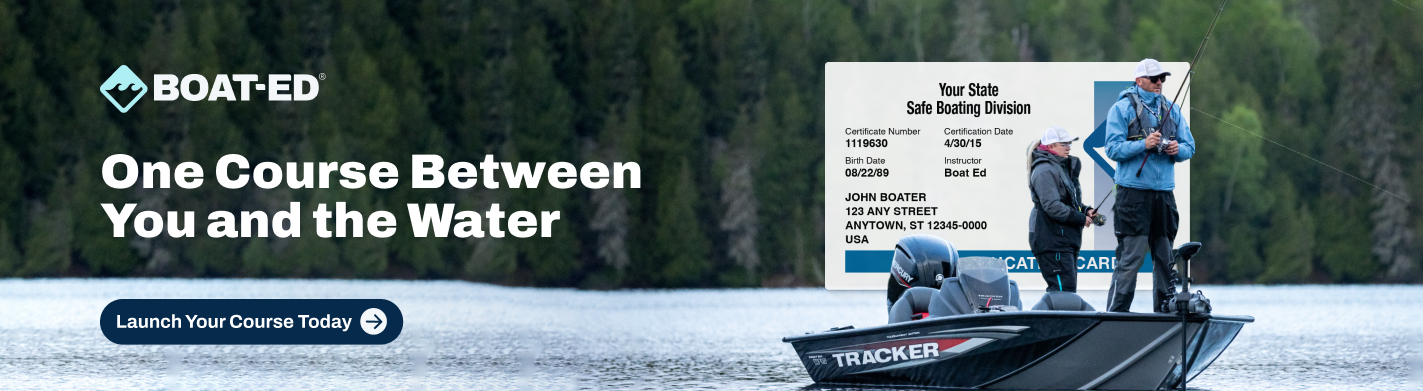
An online boating safety course teaches state boating laws, navigation rules, safety equipment requirements, and emergency procedures through video lessons and interactive content. Boat-Ed's online course is developed directly with state boating agencies (it's the official course in most states). You work at your own pace, take a final exam, and receive your boater education card on completion.
Most students complete getting their U.S. boating license in a single sitting or across a few short study sessions, and the online boating safety course experience follows a predictable path from signup to certification.
Here's a quick look at what to expect, followed by a full walkthrough.
| Online Boating Safety Course — Quick Facts | ||
Time to Complete 3–8 Hours | Devices Supported Phone, Tablet, Computer | Certification Fee $30–$80 |
Why Take a Boating Safety Course Online?
Boaters with formal safety training are involved in fewer accidents than those with no training at all, according to the recreational boating statistics report published by the U.S. Coast Guard. That's the core reason most states require an approved course before you can legally operate a motorized vessel.
Taking the course online simply removes the scheduling barrier. You can study from home, on a lunch break, or between other commitments, and pick up exactly where you left off.
Boat-Ed vs. Other Online Boating Courses
Not every online course is built the same way, and the differences matter when it comes to state recognition and support.
Boat-Ed vs. Other Online Boating Courses: Comparison | ||
| Comparison | Boat-Ed | Other Online Courses |
| Developed | With State Agencies | Yes, built directly with each state's boating authority Varies by provider |
| State Recognition | Official course in most states | Varies by state and provider |
| Certification Fee | $30–$80 depending on state | Varies by provider |
| Customer Support | Phone, chat, and email support | Varies by provider |
| Certificate Delivery | Temporary certificate immediately, permanent card arrives by mail | Varies by provider |
Before choosing any course, confirm it meets your state boating course requirements. Requirements are set at the state level, so the same course can be accepted in one state and unrecognized in another.


How to Take a Boating Safety Course Online
Every state's course looks a little different, but the general process follows the same seven steps from signup to certification.
- Choose Boat-Ed for your state. Select your state's course page (using the green button above) to confirm you're taking the NASBLA-approved boating course version built for your local regulations.
- Create an account with your name, address, and date of birth. This information is used to generate your official certificate once you pass.
- Start chapter 1, and pause and return anytime. Your progress saves automatically, so you can log out and pick up later without losing your place.
- Work through the chapters and quizzes (3–8 hours). Each chapter ends with a short quiz to check your understanding before you move on.
- Take the final exam when you're ready. The exam covers material from all chapters, and most states allow retakes if you don't pass the first time.
- Pay the certification fee. Boating license costs vary by state, typically running $30–$80 for U.S. courses.
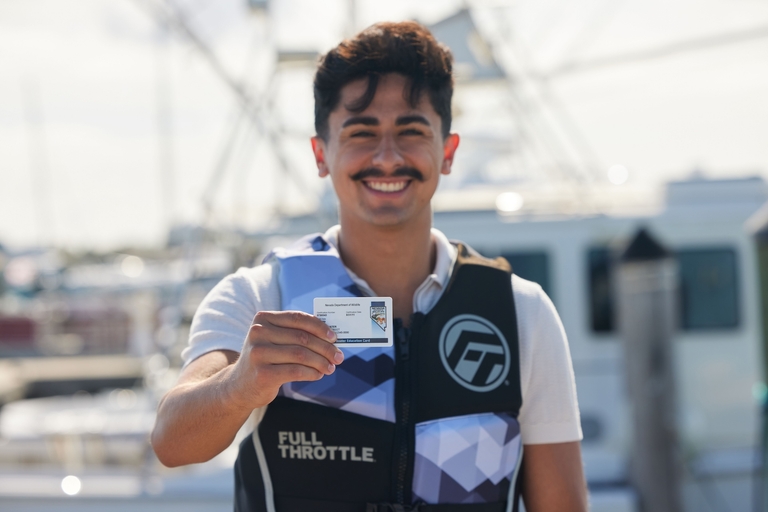
- Download your temporary card immediately. Your permanent card arrives by mail, usually within a few weeks.
Start to finish, most boaters complete the online boating safety course experience in one to two sittings. There's no deadline pressure since you set the pace, and nothing in the process requires you to visit a classroom or take a day off work.
What to Expect From the Online Boating Safety Course Experience
Beyond the step-by-step process, a few practical details shape what your time in the course actually looks like.
The course works on a phone, tablet, or computer, so you're not tied to a desk to finish it. Certified boaters may also qualify for boat insurance options with participating providers, since insurers often view formal training as a lower-risk indicator.
If you relocate after certifying, using your card elsewhere is usually straightforward, since most states recognize NASBLA-approved certificates from other states.

Get Certified Today Through the Boat-Ed Online Boating Safety Course Experience
From account creation to a printable temporary card, the entire process is designed to fit around your schedule instead of the other way around. Once you understand the seven steps, there's nothing unpredictable about what happens next, and you'll be ready to get on the water with the right certification in hand.
Frequently Asked Questions (FAQs)
Q: Is an online boating course the same as in-person?
A: Both formats teach the same core safety curriculum set by NASBLA, but online boater safety courses let you learn at your own pace instead of a set class schedule. Some states also offer an interactive online option with added simulations and scenario-based practice. Either format results in the same boater education certificate once you pass the final exam.
Q: Which online course does my state recognize?
A: Requirements vary by state, so check your state boating agency's approved provider list before you register. Boat-Ed develops its courses directly with state agencies, so the correct version for your state is available on that state's dedicated course page. Always confirm approval before you pay, especially if you're comparing multiple providers.
Q: Can I complete the course on my phone?
A: Yes, Boat-Ed's online courses work on smartphones, tablets, and computers. You can switch devices mid-course since your progress saves automatically when you log out. This makes it easy to study in short sessions between other commitments.
Q: How does the online final exam work?
A: The final exam for your boater education course is a multiple-choice test based on the material you just studied, usually requiring a score of 75–80% to pass depending on your state. Most states allow you to retake the exam if you don't pass on the first attempt. You can typically take it immediately after finishing the last chapter, with no separate scheduling required.
Q: What's the difference between Boat-Ed and free courses?
A: Boat-Ed courses are developed directly with state boating agencies, so the curriculum matches your state's specific laws and requirements. Free courses may be NASBLA-approved but aren't always accepted in every state, so it's worth verifying state recognition before choosing a free option. The certification fee for a paid course typically also covers customer support and faster certificate processing.
Q: Do I need to print anything to take the course?
A: No, the entire boater safety course, including quizzes and the final exam, is completed online. After you pass, you can download and print a temporary certificate, but printing isn't required to start or finish the coursework itself. Many boaters simply keep a digital copy on their phone.
Q: Will I need to retake if I move states?
A: In most cases, no. Boater education certificates are typically recognized across state lines if your original course was NASBLA-approved, though some states apply extra rules for personal watercraft or younger operators. Check your new state's boating agency to confirm your existing certificate meets local requirements.